Business to pour $492 million into ginseng and herbs project
The city’s Finance Department said the area would be farmed in two rural mountainous communes of Trà Linh and Trà Tập at 1,400m above sea level.
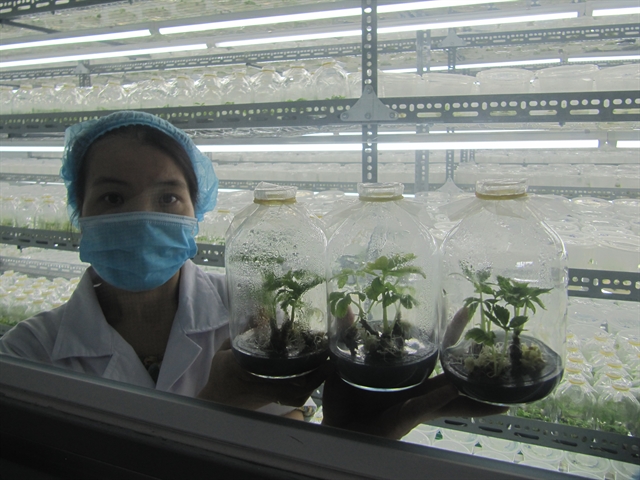
ĐÀ NẴNG — Thaco Agri company, a member of multi-industry private Thaco Group, has proposed a plan to develop a high-tech farm to produce, process and cultivate Ngọc Linh ginseng.
Covering an area of 1,203ha, the farm will have an investment of VNĐ12.3 trillion (US$492 million).
The city’s Finance Department said the area would cover two rural mountainous communes of Trà Linh and Trà Tập at 1,400m above sea level.
The department reported that Thaco Agri plans to build a medicinal herbs production centre and forestry-canopy herbal plantation zone on an area of 2,616ha in Đức Phú and Tam Anh communes.
The group said it had completed a survey on a sustainable medicinal herb farming zone, as well as a study on building a global trademark for the traditional Vietnamese ginseng.
Last year, Thaco Group signed a Memoranda of Understanding (MoU) with China's state-run pharmaceutical group Sinopharm and partners in Jilin, China, on developing Ngọc Linh ginseng in central Việt Nam.
Ngọc Linh ginseng has traditionally been farmed on more than 1,600ha of land in the mountains west of Đà Nẵng City.
Sâm Sâm Company has already opened a $5.4 million factory to produce ginseng capsules, essential oils, cosmetics, drinks, tea and food supplements at Tam Anh Industrial Park.
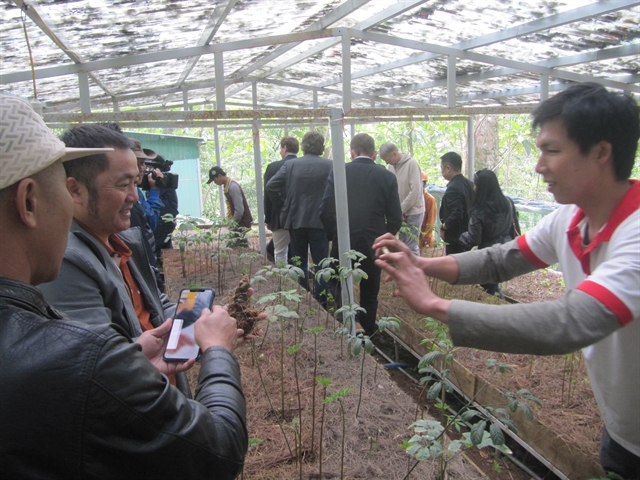
Earlier, Đà Nẵng City and Hamyang County in the province of Gyeosangnam, Korea, also inked a MoU on hi-tech farming and production of Ngọc Linh ginseng.
To date, 25 businesses and 1,800 households in the region have leased forest canopy areas to grow Ngọc Linh ginseng.
The development of the ginseng and medicinal herbs zone in the region would help contribute to Việt Nam’s goal of achieving net-zero carbon emissions by 2050, the city’s Agriculture and Environment said. — VNS