BSR strengthens crude supply, technology capabilities for smarter refinery operations
BSR has recently held a series of meetings with international crude oil and petroleum product suppliers as part of efforts to identify and diversify feedstock sources for the Dung Quất Oil Refinery.
HÀ NỘI — PetroVietnam Refinery and Petrochemical Corporation (BSR) is stepping up efforts to diversify crude oil supplies for the Dung Quất Oil Refinery while exploring advanced technologies for smarter refinery operations.
The move comes as the company expands engagement with international energy and technology partners.
BSR recently held a series of meetings with international crude oil and petroleum product suppliers as part of efforts to identify and diversify feedstock sources for the Dung Quất Oil Refinery.
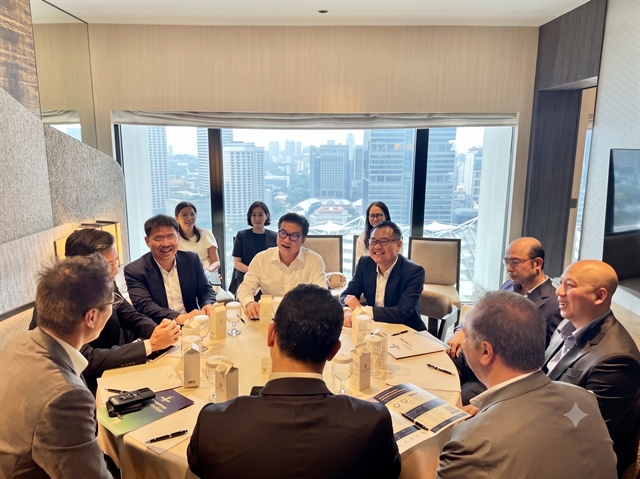
At the Asia Pacific Petroleum Conference 2026 (APPEC 2026) in Singapore, a BSR delegation led by General Director Nguyễn Việt Thắng met existing suppliers and potential new partners to discuss market developments, supply capabilities, ongoing cooperation programmes and future opportunities.
Organised by S&P Global Energy, APPEC brings together energy companies, suppliers, traders and other participants across the international energy value chain.
During the event, BSR held discussions with crude oil and feedstock suppliers, including SOCAR, ExxonMobil, Chevron, PETCO (Petronas), ADNOC, Glencore, PTT, PNX and Petrolimex Singapore.
It also met shipping and brokerage companies Clarksons, SSY and McQuilling, as well as oil market information and analysis providers S&P Global Energy, Argus and Wood Mackenzie.
In addition, the company met Argentina's YPF to learn about each other's capabilities and discuss potential crude oil supply cooperation. The two sides explored opportunities to organise working programmes and field surveys in Argentina and other South American markets.
With long-standing partners including SOCAR, ExxonMobil and Chevron, BSR sought to reinforce cooperation, advance signed memoranda of understandings and promote long-term crude oil transactions.
Discussions with other suppliers focused on potential transactions involving crude oil and other feedstocks, as well as stronger coordination and information sharing to help respond to market volatility.
With shipping partners, BSR exchanged information on the oil tanker market and transportation options to increase flexibility in arranging crude deliveries to the Dung Quất refinery.
Alongside efforts to strengthen feedstock supplies, BSR is exploring technologies that could support its development of a smart refinery.
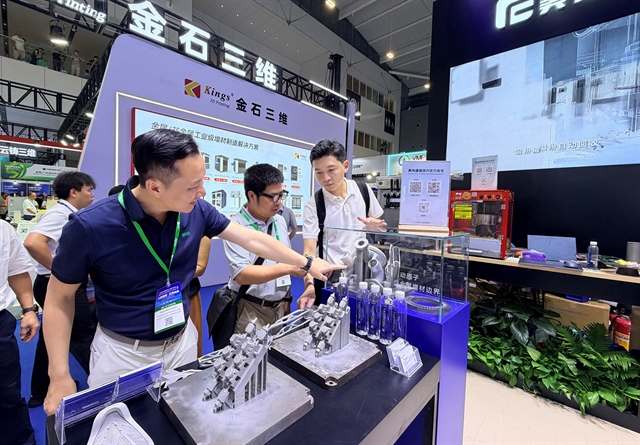
During a working trip to China, the delegation attended the 25th International Internet of Things Exhibition (IOTE 2026) and the Artificial General Intelligence Conference and Exhibition (AGIC 2026) in Shenzhen.
Technologies on display spanned the IoT value chain, including chips, sensors, radio-frequency identification (RFID), communication modules, edge computing, artificial intelligence of things (AIoT), embedded systems, AI computing and storage, data solutions and smart manufacturing platforms.
BSR representatives examined IoT, AIoT, edge computing, robotics, sensors, automation and data analytics technologies, while also visiting research, development and high-tech manufacturing facilities in Shenzhen.
These included facilities developing autonomous forklifts, industrial-scale additive manufacturing and 3D printing, advanced LED displays and autonomous passenger vehicles.
The delegation also visited the Huaqiangbei technology and hardware supply-chain ecosystem to study connections between research, technology, manufacturing and markets.
BSR has already developed a digital infrastructure incorporating the SAP S/4HANA enterprise resource planning system and platforms covering production, maintenance, commercial operations and product sales.
Power BI reporting, centralised data infrastructure and real-time operational monitoring solutions have also been deployed.
On this foundation, BSR is gradually applying AI and advanced analytics to specific refinery operations. Predictive maintenance, equipment condition analysis, early-warning systems and Digital Twin technologies are being studied and deployed to improve equipment reliability, reduce the risk of unplanned shutdowns and optimise operations.
Digital solutions are also being studied and implemented for key processing units, including the crude distillation unit (CDU) and residue fluid catalytic cracking unit (RFCC), with a focus on operational optimisation, energy consumption and production efficiency.
BSR is also expanding digitalisation into procurement, finance, product management, sales and delivery processes. In the next phase, the company plans to apply AI to market forecasting, business optimisation, trading, supply-chain management and production and business performance analysis.
Under its smart refinery orientation, BSR plans to integrate operational technology (OT), information technology (IT) and enterprise management data, while further developing data analytics, AI and machine learning, digital twin, predictive maintenance and automation capabilities across its value chain. — BIZHUB/VNS