Agro-forestry-fishery exports up in four months
Việt Nam’s export turnover of agro-forestry-fishery products reached an estimated more than $23 billion in the first four months of 2026, up 5.4 per cent year-on-year, according to the Ministry of Agriculture and Environment (MoAE).
HÀ NỘI — Việt Nam’s export turnover of agro-forestry-fishery products reached an estimated US$23 billion in the first four months of 2026, up 5.4 per cent year on year, according to the Ministry of Agriculture and Environment (MoAE). However, export value in April alone was estimated at nearly $6.1 billion, down 3.8 per cent from the previous month and 0.8 per cent year on year.
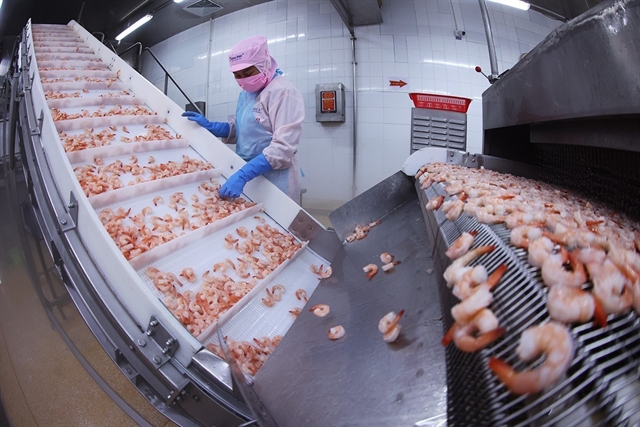
Of the total, agricultural products accounted for about $12.7 billion, up 1.5 per cent; livestock products $245 million, up 45.5 per cent; fisheries about $3.6 billion, up 11.9 per cent; and forestry products $5.8 billion, up 0.8 per cent.
Asia remained the largest export market, accounting for 44.1 per cent of total turnover, followed by the Americas and Europe with shares of 20.9 per cent and 15.8 per cent respectively. Export value to Asia rose by 11.5 per cent, Europe 3.7 per cent and Oceania 19.8 per cent, while shipments to the Americas and Africa fell by 3.5 per cent and 26 per cent respectively.
China continued to be the largest importer, making up 21.1 per cent of total exports, followed by the United States at 18.5 per cent and Japan at 7 per cent. Exports to China surged by 28.8 per cent, while those to Japan edged up 1.3 per cent and shipments to the US declined by 4.8 per cent.
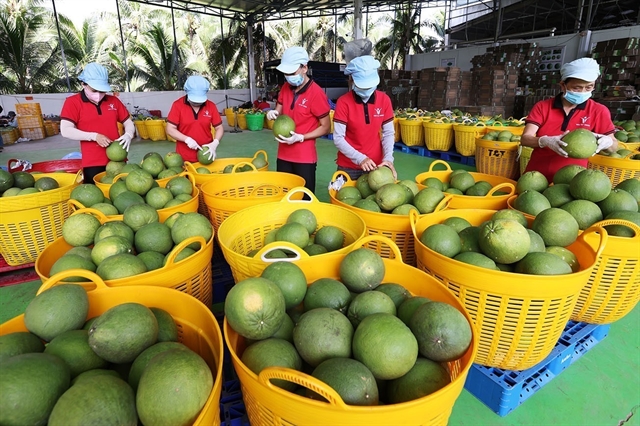
Exports of key commodities showed mixed trends. Pepper and fruit and vegetables posted strong growth, with pepper exports reaching 95,100 tonnes worth $614.4 million, up 20.9 per cent in value and fruit and vegetable exports rising by 22.3 per cent to almost $2.1 billion.
Meanwhile, several commodities saw declines in export value despite higher volumes. Coffee exports rose by 15 per cent in volume but fell by 7.8 per cent in value due to a sharp drop in prices. Rubber and cashew nuts also recorded slight declines in value, while rice exports dropped by 11.1 per cent. Tea exports decreased in both volume and value.
Growth in those commodities was concentrated in several Asian markets, particularly China, which recorded increases of 80.8 per cent, 44.4 per cent and 49.6 per cent in imports of coffee, rice and fruit and vegetables.
Other markets also saw notable gains, including the US for pepper (up 54.2 per cent), Thailand for cashew nuts (up 58.6 per cent) and Indonesia for rubber (2.2-fold increase).
In contrast, declines were recorded in several markets, including the Philippines, Brazil, Côte d’Ivoire and the United Arab Emirates. Global price fluctuations remained a key factor affecting export performance.
Challenges
Việt Nam is currently one of the world’s leading exporters of agricultural products, with several commodities achieving substantial export turnover. However alongside these opportunities comes mounting pressure from its export markets.
In these export markets, labelling, packaging and packing specifications form an integral part of product quality and safety standards. In demanding markets, every piece of information on a label is regarded as a legal commitment. Even minor inaccuracies can result in a product being deemed non-compliant and consequently rejected.
Nevertheless, under traditional approaches, many Vietnamese enterprises still do not pay attention to those issues, causing numerous shipments to be returned or destroyed, leading to significant financial losses and reputational damage.
Besides that, export markets are evolving rapidly, marked by the proliferation of technical barriers and green standards. Major markets now impose stringent requirements not only on quality and price but also on traceability, carbon emissions, circular economy practices and social responsibility.
The European Union (EU) provides a notable example. In addition to its strict food safety regulations, the EU is introducing a series of new policies concerning packaging, the environment and chemicals.
With regard to labelling and information, all packaging must, by no later than August 12, 2028, display waste-sorting labels in accordance with harmonised EU standards to guide consumers in waste separation.
By January 2030, packaging must also include identification information on substances of concern. These are not merely technical requirements but criteria used to assess a product’s sustainability.
Significantly, the EU is shifting its approach to controlling pesticide residues from risk assessment to hazard assessment. Under this framework, if an active substance is considered potentially harmful to human health or the environment, the permissible residue level may be reduced to extremely low levels or even close to zero. This means the export goods have almost no margin for error.
According to Deputy Director of MoAE’s Plant Production and Protection Department Nguyễn Quý Dương, in the context of increasingly stringent standards, quality control must begin at the production stage.
Enterprises need to have a thorough understanding of production processes, the types of chemicals used, pre-harvest intervals and the permissible residue limits in each market.
“It is not feasible to wait until goods reach the border to address these issues. Without control from the outset, risks are unavoidable,” Dương said.
A positive signal is that in 2025, the number of EU alerts concerning Vietnamese agricultural products fell by nearly 50 per cent, from 114 cases in 2024 to 60. However this does not necessarily indicate reduced risk, as regulations continue to be updated and tightened.
Speaking to Công Thương (Industry and Trade) newspaper, Associate Professor Dr Nguyễn Thường Lạng, an economist and senior lecturer at the National Economics University’s School of Trade and International Economics, said that the greatest weakness of Vietnamese enterprises today lay not in product quality but in management systems and production organisation. Minor errors such as a single line on a label or a small detail in packaging could become major barriers in the process of international integration.
As export market standards continue to rise and markets grow increasingly exacting, meticulous attention to every detail is no longer optional. It is a prerequisite for Vietnamese agricultural products to expand sustainably in global markets. — VNS