Agricultural sector maintains export growth in Q1 but faces declining prices
HÀ NỘI — The agricultural sector sustained export growth in the first quarter of 2026, though falling prices across several key commodities have weighed on overall export value, highlighting the need to improve growth quality.
Speaking at a regular press briefing on agricultural production and business held on April 1, Trần Gia Long, deputy director of the Planning and Finance Department under the Ministry of Agriculture and Environment, said that Việt Nam’s agro-forestry-fishery export turnover reached US$16.69 billion in the first quarter, up 5.9 per cent year-on-year.
In March alone, export value was estimated at $6.02 billion, marking a sharp 47.8 per cent increase compared to February, but still 1.5 per cent lower than the same period in 2025.
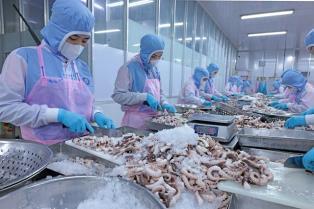
Agricultural exports totaled $8.93 billion in the first quarter, up 4.1 per cent, while seafood exports reached $2.62 billion, rising 13.3 per cent. Livestock exports, though modest in scale, surged 54.3 per cent to $197.7 million. Meanwhile, forestry exports declined 2.4 per cent.
Asia remained Việt Nam’s largest export market, accounting for 45.1 per cent of the total share and posting a strong 15.3 per cent growth. In contrast, exports to the Americas fell 3.4 per cent, while Africa saw a sharp decline of 29 per cent.
Việt Nam’s top three export markets were China (accounting for 22.1 per cent), the US (18.3 per cent), and Japan (7.1 per cent). Exports to China surged 37.6 per cent, and Japan recorded modest growth, while shipments to the US dropped 5.2 per cent.
At the conference, Deputy Minister of Agriculture and Environment Phùng Đức Tiến noted that despite global economic uncertainties, the sector achieved an overall growth rate of 3.78 per cent, with exports reaching $16.69 billion and a trade surplus of $4.78 billion, up 12 per cent.
He emphasised that volatile energy prices are impacting the entire production chain – from fisheries and farming to processing and logistics.
Meanwhile, ongoing geopolitical tensions, including the prolonged Russia–Ukraine conflict, and rising trade protectionism continue to exert pressure.
However, thanks to more than four decades of sector restructuring and the accumulated momentum from 2025, Việt Nam’s agricultural sector has maintained stability.
Rising volumes, falling prices
During the conference, the ministry also showed that a notable paradox emerged that export volumes increased, but the overall value declined due to falling prices in several key commodities.
Coffee serves as a prime example. In the first quarter, coffee exports reached 577,300 tonnes, up 12.6 per cent in volume, yet export value fell 6.4 per cent to $2.71 billion.
The average export price dropped 16.9 per cent to approximately $4,696.8 per tonne. Germany, Italy, and Spain remained major buyers, while China saw a significant surge in imports.
Similarly, rice exports totaled 2.3 million tonnes, up 0.2 per cent, but value declined 7.8 per cent to $1.11 billion. The average export price fell 8 per cent to $480.1 per tonne.
The Philippines continued as the largest market, accounting for more than half of total exports, while exports to China rose sharply and shipments to Ghana declined significantly.
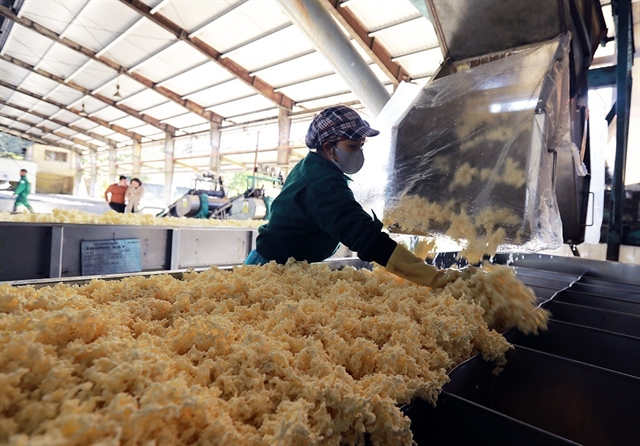
Rubber exports also faced price pressure. Export volume rose 8 per cent to 411,200 tonnes, but value increased only 2.4 per cent, as average prices dropped 5.1 per cent to $1,828.3 per tonne.
China remained the dominant market, accounting for around 70 per cent of total exports, despite an 8.5 per cent decline in shipments.
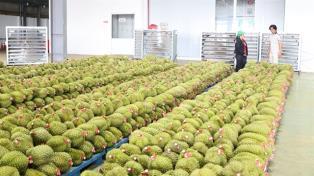
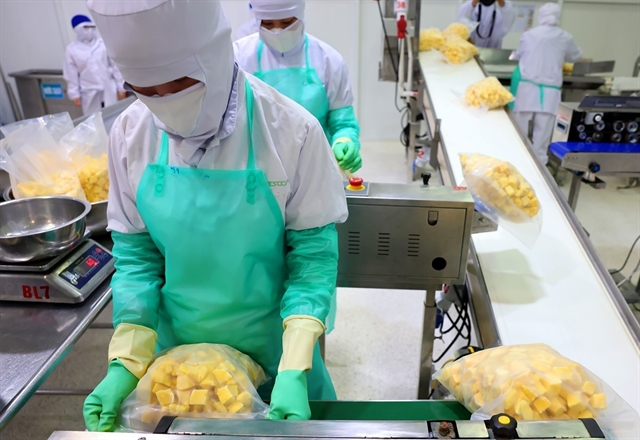
Other commodities showed mixed trends, including cashew and tea, while fruit and vegetable exports stood out with a strong 32.1 per cent growth, largely driven by demand from China.
Sectoral divergence became increasingly evident. Seafood exports maintained strong momentum, reaching $2.62 billion, up 13.3 per cent year-on-year.
China, Japan and the US remained the largest markets, with exports to China surging 58.5 per cent, Japan growing 4.8 per cent, and the US declining slightly by 2.9 per cent.
In contrast, the wood and wood products sector faced difficulties, with export turnover falling 3.5 per cent to $3.81 billion. The US remained the largest market, accounting for 48.8 per cent of the total share, though demand weakened.
Meanwhile, exports to China rose 48.5 per cent, and Japan increased 7.9 per cent. Some markets, such as the Netherlands, saw strong growth, while South Korea recorded a sharp decline.
Deputy Minister Tiến stressed that, amid declining prices for key commodities such as coffee, rice and rubber, sustaining growth cannot rely solely on increasing output. Instead, the sector must focus on enhancing value-added production, diversifying markets, and promoting deep processing.
At the same time, effectively leveraging free trade agreements, improving quality standards, and reducing dependence on a few major markets will be crucial to ensuring sustainable growth.
According to the ministry, from now until the end of 2026, the sector will continue refining growth scenarios and implementing synchronised solutions to meet its targets, while laying the groundwork for the 2026–30 development period. — VNS