Advertising technology bolsters tourism
In addition to preferential policies and programmes attracting tourism, business and marketing strategies play a key role for Vietnamese tourism to achieve success in 2025.
HCM CITY — In addition to preferential policies and programmes attracting tourism, business and marketing strategies play a key role for Vietnamese tourism to achieve success in 2025.
Last year marked a successful year for Vietnamese tourism with a record-breaking 21.2 million international arrivals. It was a definitive turning point for the industry, surpassing the pre-pandemic peak of 2019 by nearly 18 per cent.
According to the Việt Nam National Authority of Tourism, growth was fueled by a robust mix of markets, with India surging by 48.9 per cent, Cambodia by 44.8 per cent, China by 41.3 per cent and Japan by 14.4 per cent.
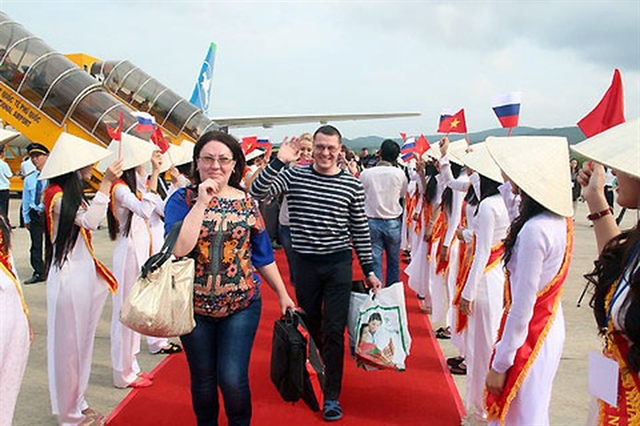
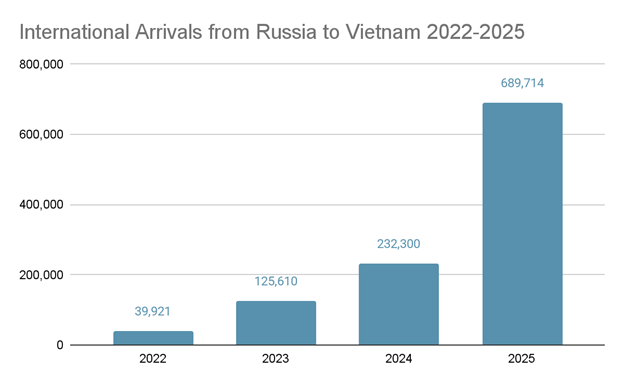
Of the foreign visitors, Russia emerged as the fastest-growing major source market in 2025. With nearly 690,000 arrivals, the market recorded a staggering 197 per cent over 2024, officially eclipsing the pre-COVD record of 647,000 arrivals set in 2019.
The successful story is attributed to efforts by the country and companies in the sector.
Thư Nguyễn, AdTech Strategy & Business Development Expert of Yango Ads, said the real story of 2025 is a structural shift featuring a transition from volume-led growth toward a model built on "user intent" and data-driven precision.
Thư quoted a report of the Russian Travel Industry Association (RTI) which informed that Việt Nam cemented its position as a top destination for package tours in 2025, supported by favourable visa policies and an expanded network of direct and charter flights.
The rapid re-ignition of charter routes from Moscow and other major Russian cities to hubs like Cam Ranh and Phú Quốc provided the necessary "bridge" for this surge.
For Russian travellers, Việt Nam has increasingly positioned itself as a competitive all-inclusive alternative, combining year-round warm weather, family-friendly safety, and cost efficiency - factors that have reshaped travel preferences away from traditional European destinations during the winter season.
According to Thư, this remarkable increase serves as a compelling case study for the evolving role of advertising technology (AdTech). Previously, tourism relied on broad seasonal promotions based on nationality.
In 2025, modern AdTech infrastructure allowed stakeholders to move beyond broad demographic targeting toward behavioural and contextual signals. By identifying users actively searching for winter-sun destinations, families comparing long-haul resort packages, or travelers consuming wellness tourism content, AdTech acted as a precision filter, she explained.
This behavioural targeting ensured that Việt Nam appeared in front of "high-intent" segments, such as families and wellness-seekers looking for 10-to-28-day stays, long before they booked.
By targeting high-value travelers interested in destinations like Nha Trang, AdTech ensured that visitors arrived "pre-qualified." These travelers are statistically more likely to travel in larger groups, book higher-category accommodations, and spend significantly beyond basic sightseeing.
Việt Nam’s tourism policy has repeatedly emphasised the need to shift from high-volume tourism toward higher value per visitor.
AdTech has become one of the most practical tools for executing this strategy by enabling market diversification without duplicating spend and discovery based on traveler intent rather than nationality, Thư said
This technological evolution mirrors a broader government shift toward digitalisation, supported by the launch of the “Visit Viet Nam” national tourism platform. While the platform provides the unified data infrastructure for data-led decision making, AdTech platforms effectively act as policy multipliers, translating strategic intent into scalable, real-time outcomes.
The success of 2025 demonstrates that when digital strategies respect user intent, the result is a more predictable growth model.
Attracting high-intent travelers is only the first half of the journey. As the ecosystem matures, the focus must now expand toward the "last mile" of the visitor experience.
Success in 2026 will depend on how effectively Việt Nam continues to remove friction from the traveler’s journey - addressing critical areas like payment gateway interoperability and digital service seamlessness - to ensure that global intent is fully converted into high-value impact on the ground, Thư said.