VN-Index likely to correct towards 1,630-point support level
After four consecutive weeks of losses, the VN-Index on the Hochiminh Stock Exchange (HoSE) closed last week at 1,686 points, down 5.67 per cent from the previous week, marking its steepest weekly decline since tensions in the Middle East escalated again in early March.
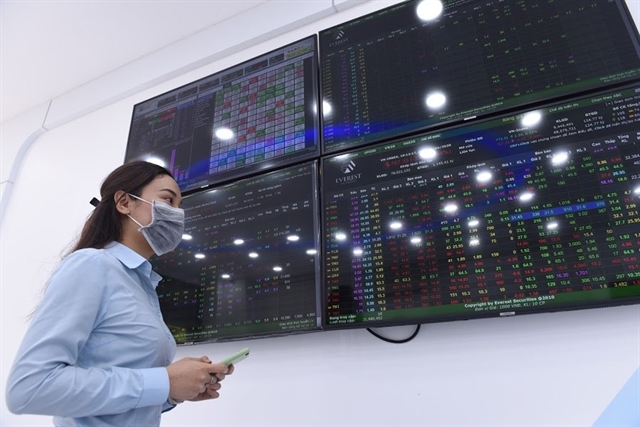
HÀ NỘI — The domestic stock market remains under pressure as geopolitical tensions, surging oil prices and new US trade measures continue to weigh on investor sentiment, with the upcoming second-quarter earnings season expected to become a key test for the market after its sharpest weekly decline in months.
After four consecutive weeks of losses, the VN-Index on the Hochiminh Stock Exchange (HoSE) closed last week at 1,686 points, down 5.67 per cent from the previous week, marking its steepest weekly decline since tensions in the Middle East escalated again in early March.
On the Hanoi Stock Exchange (HNX), the HNX-Index also struggled, posting one gain and four losing sessions to end the week at 272.99 points, down 6.41 per cent.
Market liquidity surged as selling pressure intensified. Average daily trading value reached approximately VNĐ20.1 trillion (US$764 million), up more than 21 per cent from the previous week, while trading volume rose by over 24 per cent.
Foreign investors added to the pressure, recording net sales of roughly VNĐ3.73 trillion on the HoSE.
Analysts say the latest downturn has been driven by multiple external factors.
Internationally, Brent crude oil climbed back above US$100 per barrel amid escalating tensions in the Middle East, reigniting concerns over inflation.
At the same time, yields on the 10-year US Treasury rose to around 4.7 per cent, while expectations strengthened that the US Federal Reserve would maintain a restrictive monetary policy stance.
Nguyễn Thế Minh from An Bình Securities (ABS) said both oil prices and US Treasury yields remained in short-term uptrends, suggesting that inflation risks have yet to ease.
Investor sentiment was also affected by the latest trade policy announcement from US President Donald Trump's administration regarding Việt Nam.
According to Minh, the new 12.5 per cent tariff under Section 301 replaces the previous baseline tariff rather than being added to it, dispelling earlier concerns that total duties could reach 32.5 per cent.
Nevertheless, the formal introduction of a long-term tariff barrier has heightened concerns over export-oriented sectors, particularly textiles and footwear, although the macroeconomic impact is expected to be less severe than initially feared.
Domestically, the market decline was amplified by margin calls and deleveraging as the VN-Index broke through several technical support levels.
Analysts at Saigon - Hanoi Securities (SHS) say that strong selling pressure dominated the first three sessions of the week, with trading volume rising sharply alongside falling prices, reflecting increased forced selling related to margin financing.
Attention is now shifting to a series of economic events that could shape global monetary policy expectations during the final week of July.
The market's primary focus will be the upcoming Fed policy meeting. While investors largely expect interest rates to remain unchanged, they will closely watch remarks from Fed Chair Kevin Warsh for clues on the policy outlook in the coming months.
In Việt Nam, the second-quarter earnings season is entering its busiest period and is expected to become the main factor differentiating stock performance following the recent broad-based sell-off.
Investors will also monitor developments at Phu Nhuan Jewellery (PNJ) after a series of sharp declines, as well as market reactions to financial results from other leading listed companies.
The market's downward trend has yet to show meaningful signs of improvement, according to SHS, as many large-cap stocks remain in correction territory while pressure to reduce margin positions persists following elevated margin debt in the second quarter.
Kirin Securities (CSI) analysts believe the VN-Index is likely to extend its correction toward the 1,630-point support level, although they do not rule out a short-term rebound to around 1,720 points before the index resumes its downward movement.
While earlier market expectations centred on attractive valuations supporting a recovery, particularly around the 1,650-1,670-point range, analysts have adopted a more cautious stance as technical indicators remain weak.
SHS recommended investors maintain balanced portfolio allocations and focus on fundamentally strong market leaders operating in strategic sectors with superior growth prospects.
CSI also advised against opening new long positions after earlier exploratory trades failed to generate profits, while recommending disciplined risk management and partial profit-taking should the VN-Index rebound toward the 1,720-point resistance level. — BIZHUB/VNS