VIS 2026 drives resource connectivity, tech commercialisation in HCM City
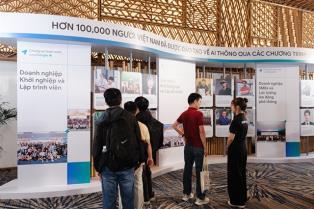
International investors, tech pioneers, and policymakers are gathering in HCM City from October 13 to 15 for the Vietnam Innovation Summit 2026 (VIS 2026) to drive technology transfer and commercialisation.
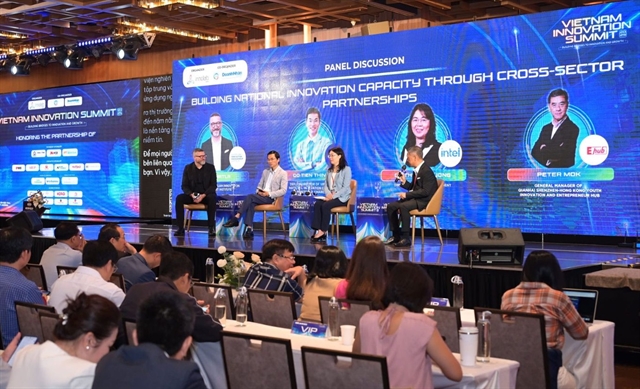
HCM CITY — International investors, tech pioneers and policymakers are gathering in HCM City from October 13 to 15 for the Vietnam Innovation Summit 2026 (VIS 2026) to drive technology transfer and commercialisation.
The annual flagship event, co-organised by InnoLab Asia and the city’s Department of Science and Technology, focuses on aligning venture capital with research and expanding market access.
The three-day summit addresses key regulatory developments, including Law No.18/2026/QH16, to establish controlled sandboxes and accelerate digital transformation.
With the theme "Critical Mass - The New Currents of Innovation: Vietnam at the Centre of a Global Realignment", the summit focuses on creating actionable cooperation projects for local enterprises, tech startups and research institutions.
Speaking at the event on Wednesday, Trần Trọng Tuyên, deputy director of the city’s Department of Science and Technology, said the city is transitioning towards a growth model driven primarily by productivity, technology, knowledge, and innovation.
"Perfecting institutional frameworks and creating a favourable environment for corporate research and technology adoption remain critical priorities."
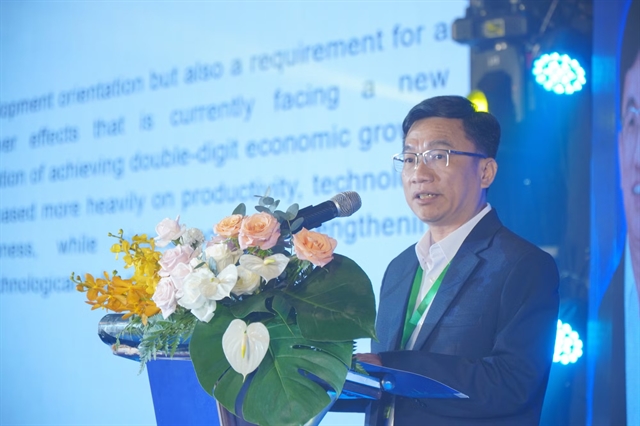
Tuyên highlighted Law No. 18/2026/QH16 on Urban Development, which took effect on October 1, as a key legal instrument opening up breakthrough mechanisms for science, technology, innovation and digital transformation.
The new regulations facilitate support for innovative startups, commercialisation of research findings and controlled regulatory sandboxes for novel technologies, products and business models.
"The core value of VIS 2026 lies not only in exchanging emerging tech trends but, more importantly, in forging substantive partnerships," Tuyên said.
The Department of Science and Technology will continue refining support mechanisms to foster links between major corporations and startups, while strengthening collaboration among research institutes, universities, and the market, he said.
From the organiser's perspective, Huỳnh Công Thắng, chairman of InnoLab Asia, said Việt Nam faces significant opportunities as global investment flows, technology and supply chains realign.
In 2025, the country recorded a strong GDP growth rate of 8 per cent, with export turnover rising by 16.7 per cent and disbursed foreign direct investment reaching US$27.6 billion.
However, against a backdrop of shifting global capital towards more selective destinations, VIS 2026 addresses the vital challenge of attracting investment tied closely to local technology absorption capacity and retaining value-added benefits within the domestic economy.
"Việt Nam does not lack talented individuals, but we lack connecting bridges," Thắng said, adding that an innovation ecosystem can only operate effectively when startups, corporations, universities, regulatory bodies, and investors jointly solve real-world problems.
Organisers aim to further boost matchmaking efficiency in 2026, building on the strong results of VIS 2025.
Last year's event attracted around 3,000 participants, facilitated 300 business matching sessions and led to 10 signed memorandums of understanding.
To date, InnoLab Asia has supported over 200 startups in accessing overseas markets, including Japan, South Korea, the United Arab Emirates, Australia and Switzerland.
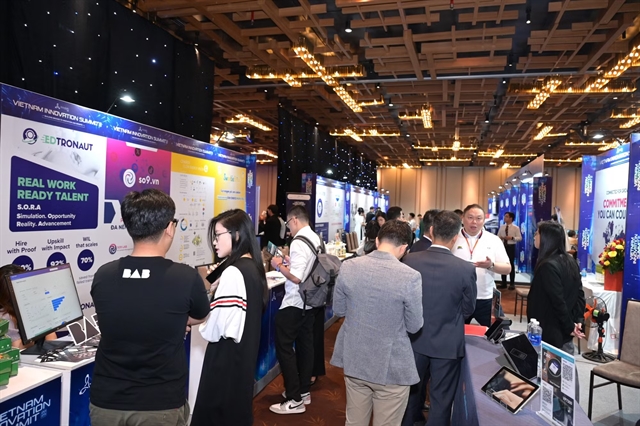
The summit features three core forums focusing on key development priorities.
Capital Without Borders outlines plans for a free trade zone and an international financial centre in HCM City. Key discussions address legal rules on foreign ownership, cross-border capital flows and talent attraction, aiming for the free trade zone to generate 20 per cent of the city's GDP by 2045.
High-Tech & Technology Transfer focuses on advanced fields like artificial intelligence, semiconductors and smart manufacturing. A session co-hosted by RMIT University Vietnam highlights the "Triple Helix" model (government–academia–industry partnership) to help bring laboratory research to commercial markets.
Green Economy & Sustainability helps local companies meet global standards such as the EU's Carbon Border Adjustment Mechanism (CBAM). Co-chaired by Masterise Group, this session guides domestic firms in applying international benchmarks to infrastructure projects to join global supply chains.
According to data presented at the event, Việt Nam ranked 43rd out of 139 economies in the Global Innovation Index 2026, placing 35th in innovation outputs and 54th in innovation inputs.
VIS 2026 is facilitating over 150 B2B matching sessions, including the ASEAN CrossConnect series co-organised with Malaysia’s Cradle Fund to connect tech enterprises directly with regional conglomerates and venture capital funds.
Looking towards 2045, Thắng said technology must stem from practical social and production needs, such as assisting farmers with weather forecasting, helping factories save energy, or improving clinical diagnostics in healthcare.
He said nurturing high-quality human resources and young entrepreneurs remains decisive for the long-term sustainability of the country's innovation ecosystem. — VNS