Vietnamese investors favour traditional assets despite diversification awareness: TVS report
A Thien Viet Securities report shows Vietnamese individual investors continue to favour bank deposits, gold and real estate, even as they recognise the need for broader portfolio diversification and long-term financial planning.
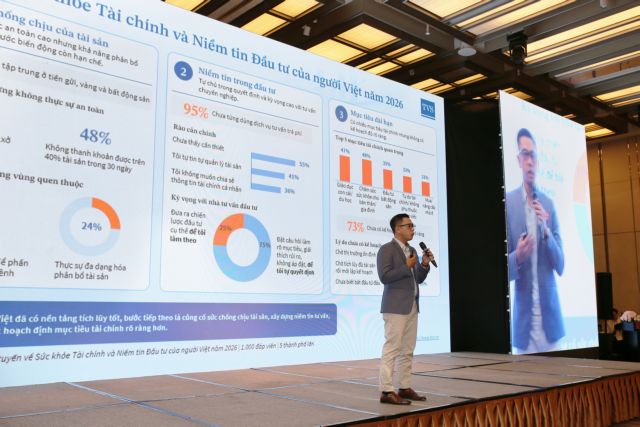
HCM CITY — Vietnamese individual investors remain heavily focused on traditional assets such as bank deposits, gold and real estate despite growing awareness of the need for portfolio diversification, according to a new report by Thiên Việt Securities (TVS).
The findings, released at the seminar “The New Way of Wealth” in HCM City on Friday, showed that many investors still rely on familiar asset classes while having limited exposure to modern financial instruments and professional wealth management services.
Lê Phạm Minh Đức, senior director of TVS’s Investment Banking Division, said the survey highlighted a gap between awareness and action in building diversified portfolios and long-term financial plans.
According to TVS’s Vietnam Financial Health & Investment Confidence Report 2026, more than 55 per cent of respondents hold two to three investment channels, while 39 per cent utilise four to five channels.
Bank deposits, gold and real estate continue to dominate the total asset portfolio of surveyed individual investors, accounting for 87 per cent.
This concentration becomes more pronounced among investors with larger asset bases. As wealth accumulates, the allocation to real estate in the portfolio increases significantly, from 29 per cent among those with assets ranging from VNĐ500 million (US$19,000) to less than VNĐ1 billion ($38,000), to 46 per cent among those with VNĐ2 billion ($76,000) or more.
In contrast, allocations to modern financial instruments like equities, bonds, fund certificates and foreign currency remain limited, not exceeding 10 per cent across any asset group.
Đức noted that the survey underscores a gap between awareness and action in portfolio diversification.
While 86 per cent of respondents agree on the importance of not concentrating assets in a single channel, 76 per cent still prioritise real estate or gold due to their perceived familiarity with these assets. This suggests that although diversification is recognised as necessary, investors tend to stick to what they know best in practice.
The TVS survey also highlights the need for guidance in wealth management, as the utilisation of paid financial advisory services remains low, with 95 per cent of respondents never having used such services.
The main impediments are not related to cost, but rather the perceived value of professional advisory services, with reasons including not seeing the need (55 per cent), confidence in self-asset management (41 per cent), and hesitancy to share financial information (36 per cent).
Discussing the global shift in wealth management towards risk mitigation, asset preservation and long-term goal planning, Đức emphasised that Vietnamese investors are moving in the same direction while still focusing on traditional asset classes.
He noted that the report provides empirical data to help investors evaluate their wealth not just in terms of size but also resilience, risk distribution and preparedness for long-term objectives.
The report also reveals a disparity between the aspiration to accumulate assets and the proactive development of long-term financial plans, with only 27 per cent of surveyed investors indicating they have a clear financial plan for themselves and their families. The financial priorities of investors similarly emphasise the importance of family in asset-related decisions. — BIZHUB