Vietnamese firms urged to build traceability systems beyond QR codes
A QR code is only a means of displaying information, while an effective traceability system must allow businesses to track products from raw materials and production to transport and distribution.
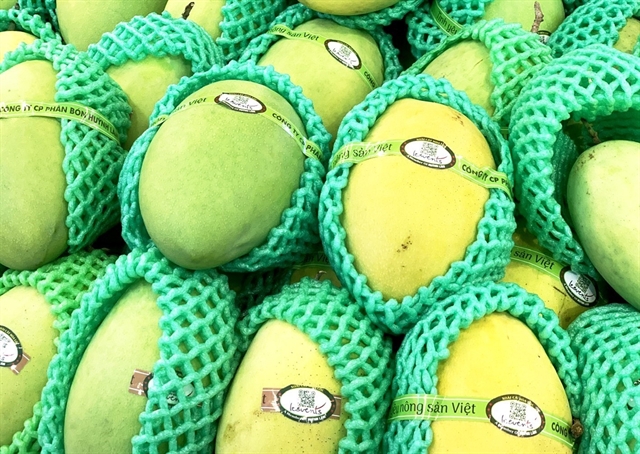
HÀ NỘI — Product traceability should be developed as a data management system for quality and risk control to improve supply chain transparency and competitiveness rather than simply just QR codes on packaging, according to officials from the Ministry of Industry and Trade and other experts.
A QR code is only a means of displaying information, while an effective traceability system must allow businesses to track products from raw materials and production to transport and distribution.
“Having a QR code does not mean a product has a complete traceability system,” Trần Hữu Linh, head of the ministry’s Domestic Markets Department, said at a seminar held recently in HCM City.
The code is valuable only when backed by a transparent data system capable of providing information about how a product was made and tracking its journey through the supply chain, according to Linh.
If a problem emerges, complete data records can help companies detect problems, identify affected batches and narrow the scope of recalls rather than having to withdraw products across the market.
Chairman of technology company Checkee Phạm Văn Quân said businesses should first identify their products clearly and determine what information needs to be managed before choosing a technology solution.
“Traceability should not stop at having a code for consumers to scan. More importantly, behind that code must be a complete and accurate data system reflecting the product's life cycle,” he said.
Data should be stored according to national standards to ensure consistency and allow information to be used and cross-checked when necessary, he added.
As the scope of traceability also varies by industry, businesses should determine which information is mandatory, what additional information they want to record and how far they need to trace products before selecting a technology solution, according to Quân.
Blockchain, AI, encryption and QR codes can all support traceability, but there is no single technology suitable for every business.
Traceability is also a tool to protect brands, safeguard consumers and meet increasingly demanding market requirements, particularly in export markets.
Businesses will need to adopt traceability gradually, as it would not be feasible to require all sectors to make the transition at the same time. However, companies should start preparing early rather than wait until traceability becomes mandatory.
As traceability requirements gradually shift from voluntary measures to mandatory requirements, businesses must invest not only in product identification, but also in upgrading supply chains, including the collection, storage and verification of information at different stages.
Businesses should focus on standardising data and processes rather than simply deciding what code to put on a product, he noted.
Quân recommended that companies use shared platforms and technology providers that can help digitise products and store data, making implementation more efficient and cost-effective.
Hoàng Thị Thu Giang, chairwoman of New Beverage Joint Stock Company, said transparent information on production processes, raw materials and products should go hand in hand with mechanisms to protect law-abiding businesses.
If legitimate companies invest in traceability while goods of unclear origin remain on the market, their motivation could be undermined, she said. Effective traceability therefore would require inspection, monitoring and strict action against violations.
Sales manager at SATO Vietnam Yuiki Aoyagi said experience in Japan showed that traceability should cover the entire production chain, from raw materials to finished products.
When quality problems occur, systems could use batch numbers, serial numbers or expiry dates to identify affected products, which would allow companies to recall only the relevant goods instead of withdrawing everything already put on the market. — VNS