Vietnamese businesses seek chance to expand market at Fruit Logistica 2026
The fair ran from February 4 to 6 and attracted 2,600 exhibitors from 90 countries and territories.
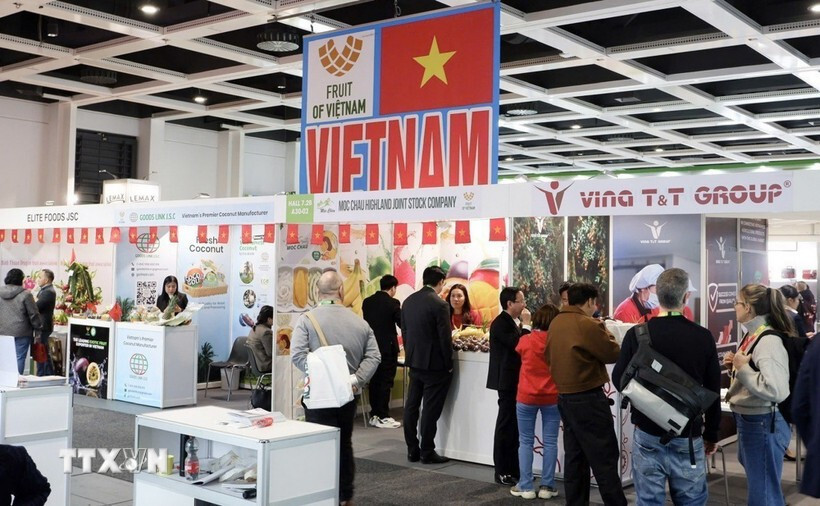
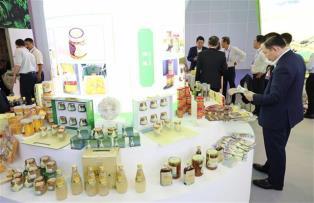
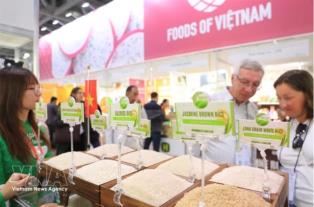
BERLIN Ten Vietnamese enterprises have showcased their fruit and vegetable products at Fruit Logistica 2026, the world’s largest trade fair for fresh produce, which was hosted at the Messe Berlin, one of Germany's largest exhibition centres.
Part of the annual National Trade Promotion Programme coordinated by the Vietnam Fruit and Vegetable Association (Vinafruit), the event was aimed at supporting domestic enterprises in accessing international markets and enhancing brand visibility for Vietnamese fruit products abroad. The fair ran from February 4 to 6 and attracted 2,600 exhibitors from 90 countries and territories.
Vietnamese enterprises focused on consolidating existing export markets while seeking new partners and expanding their presence in Europe at this year’s edition, Vinafruit Chairman Nguyễn Thanh Bình told Vietnam News Agency correspondents in Germany.
However, Bình noted that exporting to the EU remains challenging due to strict quality, food safety and technical standards. To penetrate the market more deeply, Vietnamese firms need to change their production mindset, enhance management capacity and ensure full compliance with EU regulations.
Việt Nam’s fruit and vegetable exports to Europe have shown positive signs in recent years, particularly in Germany, where export turnover in 2025 increased by more than 50 per cent. Against this backdrop, the sector is promoting market diversification to reduce reliance on traditional destinations, reflecting the long-term potential of Vietnamese agricultural products in Europe, he said.
Phạm Quốc Liêm, chairman of U&I Agricultural Corporation (Unifarm), said his company has applied high-tech agriculture with a closed production chain from seed research and cultivation to processing and export. He noted that while Asian consumers prefer fresh fruit, European customers tend to favour high value-added processed products.
Unifarm thus introduced science- and technology-based products at Fruit Logistica 2026, including a prebiotic starch made from green bananas. The product, which supports blood sugar control and digestive health, has attracted strong interest from international buyers, Liêm said.
According to enterprises, one advantage in accessing the EU market is that many Vietnamese fruits are permitted for import without lengthy negotiation procedures. In addition, effective implementation of the Việt Nam–EU Free Trade Agreement has created tariff advantages, improving the competitiveness of Vietnamese agricultural products compared to those from countries without similar agreements.
Despite these advantages, challenges remain, particularly post-clearance inspections. Nguyễn Đình Tùng, general director of Vina T&T Group, said the EU applies strict post-clearance controls on food safety, especially pesticide residues. As a result, exporters must maintain strict control throughout cultivation, processing and export stages.
High transportation and logistics costs, along with demanding preservation requirements, also pose difficulties for Vietnamese enterprises, he added.
Within the framework of the fair, Vinafruit coordinated with the Vietnam Trade Office in Germany to hold a working session with Tabea Mack, a procurement officer from the German Import Promotion Desk, to explore cooperation opportunities.
Mack said products like dragon fruit and coconuts have potential in the German market, as they are increasingly available in supermarkets. Although issues related to transportation and pricing remain, growing interest from businesses is a positive sign, she noted. VNA