Vietnam Airlines profit hit hard by rising fuel costs
Profit after tax attributable to shareholders of the parent company is projected at only around VNĐ1.1 trillion, down 85 per cent from 2025.
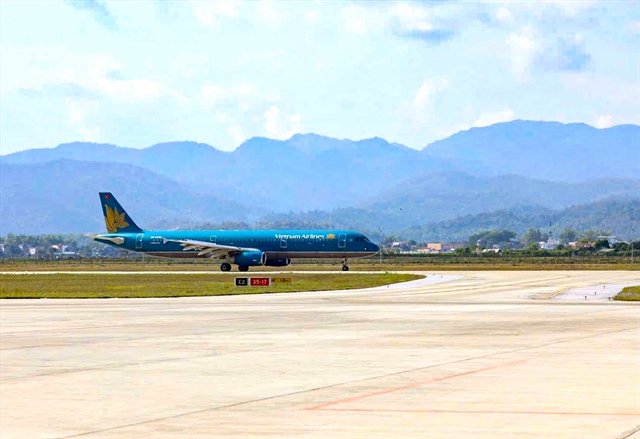
HÀ NỘI — Vietnam Airlines could post record revenue in 2026 as passenger demand continues to grow, but its profit is forecast to fall sharply as high jet fuel prices squeeze margins, according to BIDV Securities Company (BSC).
In its latest update on the national flag carrier, BSC forecast revenue of VNĐ155.6 trillion (US$6 billion) for this year, up 28 per cent from 2025 and the highest in its forecast series for the airline.
Despite the revenue growth, profit after tax attributable to shareholders of the parent company is projected to fall 85 per cent to around VNĐ1.1 trillion. The projected net profit margin would drop from 6.4 per cent to 0.8 per cent.
The main pressure comes from aviation fuel prices.
Vietnam Airlines has said its operations are profitable when Jet A1 fuel prices fall below $135 per barrel. BSC, however, said the average Jet A1 price monitored so far this year has been around $160 per barrel.
By September, the price had risen further to approximately $171 per barrel, 70 per cent higher than a year earlier and well above the $135 threshold.
BSC expects the average fuel price in 2026 to increase by around 65 per cent year-on-year. If tensions in the Middle East persist, Jet A1 prices are considered unlikely to fall below US$135 per barrel for the remainder of the year.
The impact of higher fuel costs was already evident in Vietnam Airlines' second-quarter results.
The airline reported net revenue of VNĐ38.3 trillion in the quarter, up 37 per cent year-on-year, while air transport revenue increased 20 per cent to VNĐ26.9 trillion.
However, Vietnam Airlines recorded a net loss attributable to shareholders of the parent company of VNĐ792 billion, reversing a profit of VNĐ2.8 trillion in the same period last year.
According to BSC, fuel represents one of the largest expenses for airlines. Carriers can raise airfares or impose surcharges to offset part of the increase when fuel prices rise.
Vietnam Airlines' ability to pass higher costs on to passengers, particularly on domestic routes, is nevertheless constrained by the airfare ceiling mechanism. As a result, additional fuel expenses continue to weigh on the airline’s profit margins.
Passenger demand, meanwhile, remains on an upward trajectory.
BSC forecasts Vietnam Airlines' passenger transport revenue at approximately VNĐ113.5 trillion this year, representing growth of 19 per cent. Available capacity is also projected to increase by 19 per cent, while the passenger load factor is expected to reach around 82 per cent, two percentage points higher than last year.
International markets continue to be an important driver for the airline. Việt Nam welcomed approximately 15.9 million international visitors during the first eight months of the year, an increase of 14 per cent from the same period last year.
Vietnam Airlines currently operates direct services to a number of major markets across Europe, Russia, the US and northeastern Asia. — BIZHUB/VNS