Việt Nam’s IFC takes shape after more than one month since establishment
The centre operates under a 'one centre, two destinations' model in HCM and Đà Nẵng cities, focusing on institutional breakthroughs and modern technological infrastructure.
HÀ NỘI — Việt Nam’s ambition to build an International Financial Centre is moving from blueprint to reality, with its organisational model, governance structure and core infrastructure gradually taking shape in HCM and Đà Nẵng cities just over a month after its establishment, a development officials say could reshape the country’s growth model and its position in global finance.
The centre’s official operation is expected to deliver an institutional breakthrough, attract international capital flows and lift productivity and competitiveness across the national economy.
Prime Minister Phạm Minh Chính chaired a conference on December 21 to announce the establishment of the International Financial Center in Việt Nam.
The IFC operates under a 'one centre, two destinations' model, with HCM City and Đà Nẵng serving complementary roles and a focus on institutional innovation and modern technological infrastructure.
Under this special model, the two cities are combined to optimise their respective advantages.
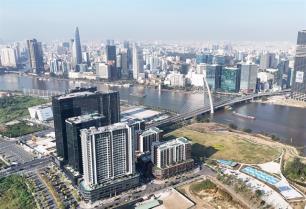
HCM City is positioned to become a large-scale financial hub, with a planned area of about 899 hectares, concentrating on core activities such as stock and bond markets, banking, fund management and international listing services.
Đà Nẵng, by contrast, with a planned area of about 300 hectares, plays a strategic supporting role.
The central coastal city is focusing on financial services linked to its strengths in logistics, maritime services, free trade and industrial–agricultural supply chains.
Minister of Finance Nguyễn Văn Thắng said the policy of developing an international financial centre is one of Việt Nam’s key institutional breakthroughs aimed at unlocking resources and transforming the growth model in line with economic restructuring.
The objective, he said, is to improve productivity, efficiency and national competitiveness.
To enhance the effectiveness of the centre’s operations, the Prime Minister issued Decision No. 2755/QĐ-TTg establishing the executive council of the International Financial Centre.
The council is chaired by Permanent Deputy Prime Minister Nguyễn Hòa Bình.
Vice chairpersons include Minister of Finance Nguyễn Văn Thắng, State Bank Governor Nguyễn Thị Hồng, Chairman of the HCM City People’s Committee Nguyễn Văn Được, and Chairman of the Đà Nẵng People’s Committee Phạm Đức Ấn.
Members of the executive council include Deputy Minister of Justice Nguyễn Thanh Tịnh, Deputy Minister of Home Affairs Nguyễn Mạnh Khương, Deputy Minister of Industry and Trade Nguyễn Sinh Nhật Tân and Deputy Minister of Agriculture and Environment Nguyễn Hoàng Hiệp.
Previously, the Prime Minister issued Decision No.1646/QĐ-TTg in August last year, establishing the steering committee for the IFC, with Phạm Minh Chính serving as its head.
Just over half a month after the IFC’s establishment, an inauguration ceremony for the Vietnam International Financial Centre in Đà Nẵng was held on January 9.
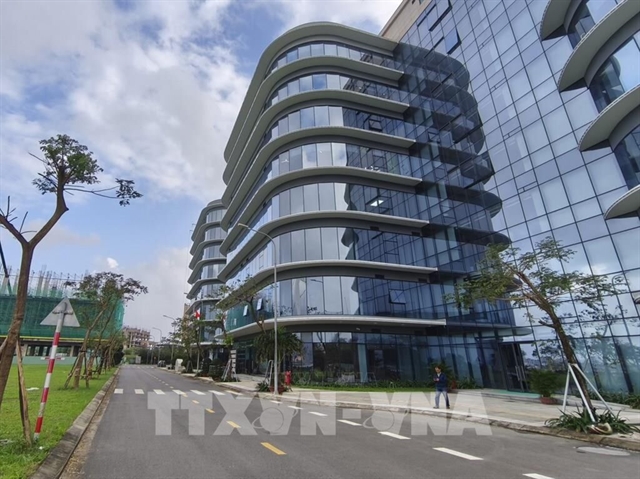
Covering about 300 hectares and developed into multiple functional subzones, the Đà Nẵng centre features digital and information technology infrastructure designed to integrate into the surrounding urban space, alongside high-quality utility services.
The layout is suited to a modern financial centre model and is intended to attract domestic and international experts and financial institutions to live and work in the city.
Investment is expected to be completed in the second quarter of next year for a 20-storey building and data storage systems, together with smart monitoring and operations infrastructure at Software Park No.2. The total floor area is planned to exceed 27,000 square metres.
The zone is designed to attract investment funds, technology companies, startups and innovation activities, while serving as a controlled testing ground for new models such as digital assets, digital currencies and digital payments.
At the first meeting of the IFC steering committee on January 16, Prime Minister Phạm Minh Chính said Việt Nam would officially launch the International Financial Center in HCM City before February 9 this year.
The launch is expected to mark a turning point in attracting international capital flows and developing high-end financial services in the country.
Along with the launch, Việt Nam will announce the centre’s operating mechanisms and official headquarters.
The development of the IFC is defined with placing people at the centre and the market as the benchmark, to make practical contributions to economic growth and generating spillover effects across the wider economy.
As a result, after around one month since its establishment, the operating model, as well as infrastructure and human resource conditions for developing the IFC in Việt Nam have been gradually completed.
Economic experts say the phased operation of the IFC opens up significant opportunities for the economy in both the short and long terms.
In the first instance, it provides an avenue for Việt Nam to integrate more deeply into global financial flows and attract international financial institutions, investment funds, asset management organisations and strategic investors.
As high-end financial services are formed and operated domestically, transaction costs, capital mobilisation and risk management for Vietnamese enterprises are expected to improve significantly, strengthening the competitiveness of production and business sectors.
At the macro level, the IFC is seen as a potential pillar supporting a shift in the growth model, from one heavily reliant on capital and labour to one driven by productivity, technology and the quality of human resources.
Policy mechanisms aligned with international practices are expected to create a controlled institutional testing ground (sandbox), helping Việt Nam refine its legal framework for finance, currency, digital assets and new business models, while allowing reforms to spread across the broader economy.
Locating the centre in two growth poles, HCM City and Đà Nẵng, is also expected to support more balanced regional economic development.
HCM City acts as the leading engine in terms of market size and financial depth, while Đà Nẵng functions as a financial services hub linked to logistics, trade and innovation.
This connectivity is seen as optimising national resources and enhancing Việt Nam’s appeal for medium- and long-term capital flows, particularly as global investors look for stable, transparent and high-potential destinations in Asia.
More broadly, the IFC is expected to help elevate Việt Nam’s position on the regional financial map, creating positive spillover effects for the capital market, banking system, business community and high-quality human resources, and contributing in practical terms to the country’s goal of rapid and sustainable growth in the coming period. — VNS