Việt Nam’s energy transition strengthens green growth prospects
Việt Nam’s energy transition is strengthening the country’s green growth prospects and business competitiveness.
HCM CITY — Việt Nam’s energy transition is strengthening the country’s green growth prospects and business competitiveness.
Access to renewable electricity is becoming a decisive factor for businesses seeking to maintain exports, attract investment and integrate more deeply into global supply chains, experts said at a forum on direct power purchase agreements (DPPA) and energy storage in HCM City on Thursday.
The forum highlighted the role of green electricity in supporting sustainable economic development amid rising international requirements on carbon emissions and environmental standards.
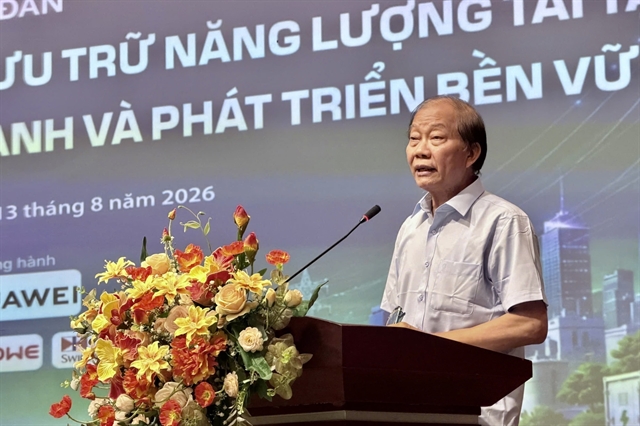
According to Hoàng Quang Phòng, vice chairman of the Vietnam Chamber of Commerce and Industry (VCCI), competitive advantages today extend beyond capital, technology and labour to include reliable and affordable access to clean energy.
The availability of renewable electricity is increasingly influencing investment decisions by multinational corporations and helping exporters meet stricter sustainability requirements imposed by international buyers.
Major export markets, including EU, the US, Japan and South Korea, have tightened regulations on carbon emissions, renewable energy use, energy traceability and environmental, social and governance (ESG) standards.
“These are no longer future trends but current market requirements,” he said, adding that businesses unable to meet such standards risk losing export opportunities and investment.
Experts at the forum said the source of electricity used in manufacturing had become an important indicator of corporate competitiveness, alongside product quality and production costs.
They noted that expanding renewable energy through the DPPA mechanism would enable businesses to reduce emissions, diversify electricity supplies and improve resilience against fluctuations in global energy markets.
The mechanism was also expected to stimulate investment in renewable energy projects while supporting Việt Nam’s commitment to sustainable development and net-zero emissions.
To strengthen the legal framework, the Government issued Decree No. 243/2026/NĐ-CP on June 26, amending regulations governing direct power purchase agreements under Decree No. 57/2025/NĐ-CP and rooftop solar power under Decree No. 58/2025/NĐ-CP.

The revised regulations are expected to improve implementation of the DPPA mechanism, facilitate businesses’ access to renewable electricity and promote a more competitive and transparent electricity market.
Dr Trần Huỳnh Ngọc, senior expert on Electricity Markets and Power Systems at AMPERES under Alluvium Group, said the DPPA mechanism had entered a new phase.
“The initial stage focused on establishing the legal framework. The next step is to ensure transactions can operate effectively, create commercial value for customers and provide sufficient confidence for financial institutions to finance renewable energy projects,” he said.
Ngọc said the amended decree would broaden participation by allowing electricity retailers in industrial parks and clusters to join both the buying and selling sides of DPPA transactions.
The list of eligible customers were expanded to include manufacturers, data centres and electric vehicle charging service providers.
For private-grid arrangements, the decree removed previous restrictions on negotiated electricity prices while introducing greater flexibility for trading surplus electricity.
It also clarified the responsibilities of electricity retailers in industrial parks for contract coordination, metering, monitoring and allocating renewable electricity among multiple users.
At the forum, Trần Quốc Tâm, vice chairman of the HCM City Renewable Energy Association (HCMREA), said HCM City was evolving into a mega urban economy centred on finance, logistics, manufacturing, innovation and high technology.
He said the city was expected to attract growing investment in data centres, artificial intelligence, cloud computing, semiconductor manufacturing, electric vehicles and industrial automation, all of which require highly reliable electricity supplies.
“A data centre may accept higher electricity costs, but it cannot tolerate power outages. Likewise, a semiconductor manufacturing plant worth billions of US dollars cannot operate with unstable voltage or even brief interruptions,” Tâm said.
He added that in the era of artificial intelligence, the reliability and quality of electricity systems would increasingly determine the competitiveness of both cities and countries.
Rather than focusing solely on expanding generation capacity and transmission infrastructure, Việt Nam should develop a smarter, more flexible electricity system capable of integrating renewable energy while ensuring stable supplies for high-value industries, he said. — VNS