Việt Nam – A strategic link in Pan-Asia Power Grid Initiative: ADB
In an interview with the Vietnam News Agency (VNA)'s reporter, Keiju Mitsuhashi, director for Energy Sector for Southeast Asia and the Pacific at ADB, underscored this strategic position, describing Việt Nam as a “truly important” part of the broader Pan-Asia Power Grid Initiative (PAGI).
HÀ NỘI — Việt Nam is viewed by senior experts from the Asian Development Bank (ADB) as a key link capable of driving the formation of a connected energy market in Southeast Asia.
In an interview with the Vietnam News Agency's reporter, Keiju Mitsuhashi, director for Energy Sector for Southeast Asia and the Pacific at ADB, underscored this strategic position, describing Việt Nam as a “truly important” part of the broader Pan-Asia Power Grid Initiative (PAGI).
The initiative was launched on Sunday at the ADB’s Annual Meeting in Samarkand, Uzbekistan, and is expected to catalyse regional energy security.
According to Mitsuhashi, Việt Nam is facing a major opportunity not only to strengthen technical connectivity but also to take a leading role in building an integrated regional energy market, moving from a national to a regional scale.
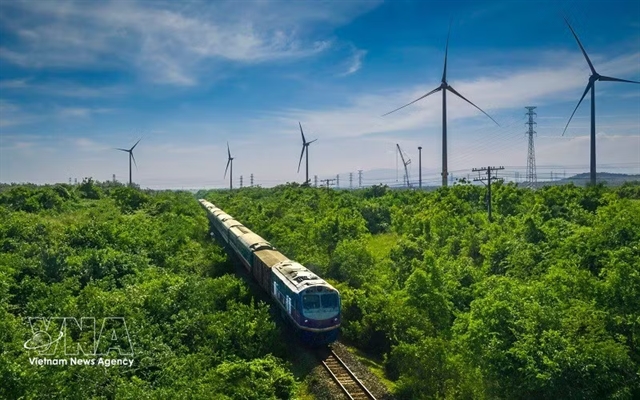
He noted that Việt Nam’s pivotal role is first reflected in its ability to promote groundbreaking multilateral connectivity. As an active member of both ASEAN Power Grid and Greater Mekong Subregion (GMS) Economic Cooperation Programme, Việt Nam is spearheading what ADB describes as “game-changing” initiatives.
A notable example is last year’s memorandum of understanding between Việt Nam, Malaysia and Singapore on exporting clean electricity from Việt Nam via subsea cables connected to Peninsular Malaysia’s national grid.
Việt Nam’s internal capacity and operational experience are also key factors behind ADB’s high assessment. Mitsuhashi said the country has demonstrated strong technical capability through stable power grid connections with neighbouring countries such as Cambodia, Laos and China.
This experience, combined with recent adjustments to the National Power Development Plan VIII, which emphasises increased imports and exchanges of renewable energy, positions Việt Nam as a model for the “bottom-up” approach advocated by ADB.
Importantly, Việt Nam’s vision extends beyond infrastructure to the development of electricity market mechanisms. ADB highly values the country’s efforts to refine its legal framework and develop a competitive domestic power market, laying the groundwork for deeper regional integration.
The PAGI forms part of a broader US$70 billion infrastructure plan unveiled by ADB President Masato Kanda to reshape the region’s energy and digital future. It comes amid mounting geopolitical uncertainty, particularly tensions in the Middle East, which have exposed vulnerabilities stemming from reliance on limited strategic corridors.
At the same time, the region faces pressing internal energy challenges. As of 2023, fossil fuels still accounted for about 72 per cent of the total energy supply, while CO2 emissions from fuel combustion surged 147 per cent between 2000 and 2022, posing serious risks to climate commitments.
At a press briefing on Tuesday, Mitsuhashi emphasised that coal is a thing of the past and urged a comprehensive, long-term approach to shift toward a clean energy ecosystem.
Despite rapid economic growth, more than 150 million people in the region still lack reliable access to electricity. With demand set to surge, pressure on national grids will increase, while renewable resources remain unevenly distributed. Experts emphasised that cross-border transmission is essential to unlock this potential.
With a target of mobilising $50 billion by 2035, including $25 billion from ADB, PAGI marks a shift from bilateral energy links to a fully regional approach. The initiative aims to integrate about 20 GW of renewable energy across borders, connect 22,000 circuit-kilometres of transmission lines, improve energy access for 200 million people, create 840,000 jobs, and cut regional power sector emissions by 15 per cent. — VNA/VNS