Việt Nam weighs small-scale nuclear power amid rising energy demand
By 2030, there could be 20-30 small reactor projects under construction or in advanced licensing stages globally, with a total market value of US$100-150 billion.
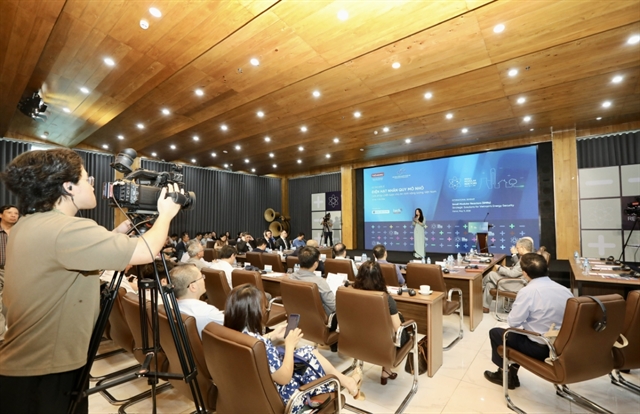
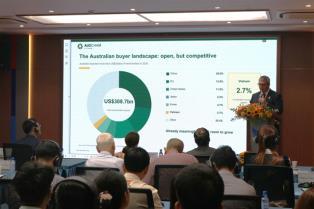
HÀ NỘI — Small modular reactors (SMRs) are emerging as a potential solution for energy security and industrial development, with projects worth billions of dollars in several countries underscoring growing global interest in the technology, a conference in Hà Nội heard on Monday.
During the event, officials, diplomats and industry representatives said SMRs could play an important role in helping Việt Nam diversify its energy mix as the country pursues its net-zero emissions target by 2050.
Đào Quang Bính, general director of VnEconomy, one of the event's organisers, said in his opening remarks that the global energy industry is at a historic turning point.
He said in the context of climate change and supply chain disruptions, the net zero commitment has become a new framework shaping investment flows.
In Việt Nam, energy security is considered a critical priority, driving demand for clean, stable and self-sufficient power sources.
Research into SMR models is tied to the development of new energy scenarios under the revised Power Development Plan VIII, providing a scientific basis for shaping a long-term, sustainable national energy strategy, Bính said.
Dmitry Aleksandrovich Raspopin, Rosatom’s representative in Việt Nam, said SMRs offer advantages in meeting modern energy needs.
The technology is described as versatile, with applications ranging from electricity generation to district heating and cooling, powering data centres and replacing conventional power plants.
He said the compact design and reduced emergency planning zones of SMRs could ease integration into urban infrastructure. The reactors are also considered suitable for smaller grids and remote areas with logistical challenges.
SMRs offer efficient land use and near-zero emissions, while providing a stable and continuous power supply independent of weather conditions, he said, adding that Rosatom is currently involved in 22 of the world’s 25 large overseas nuclear power plant projects.
At the same event, Director of New Nuclear at Laurentis Energy Partners Susie Ho said the global nuclear sector has entered what she described as an era of deployment, as countries move beyond pledges and begin building projects.
She said 2024 marked a turning point for the industry, citing commitments made at COP28 by more than 20 countries to triple global nuclear capacity by 2050. The key question now is whether these targets can be delivered in practice, she noted.
Ho said progress in nuclear development will depend on faster licensing, stronger supply chains and workforce development.
She added that the next five years will be critical in shifting from planning to execution, driven by decarbonisation goals, energy security concerns and rising demand from artificial intelligence.
Laurentis Energy Partners forecast that by 2030, there could be 20-30 SMR projects under construction or in advanced licensing stages globally, with a total market value of US$100-150 billion.
Challenges remain
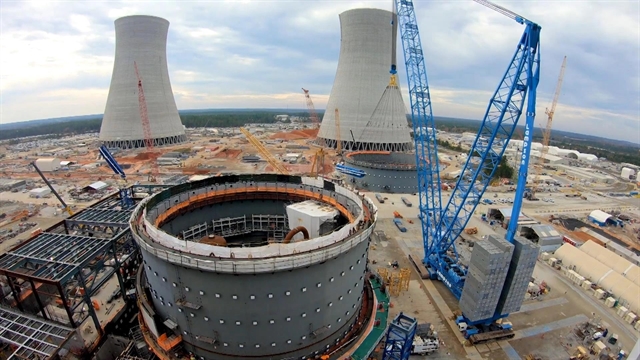
However, she also warned that the industry faces significant structural constraints, including a shortage of skilled labour, reduced deployment capacity after years of project stagnation, and an underdeveloped nuclear-grade supply chain.
Many suppliers are unable to meet strict nuclear quality standards, while certification requirements such as ISO 9001 involve high upfront costs, she said.
A key bottleneck is that suppliers are reluctant to invest without contracts, while projects cannot proceed without certified suppliers.
She also noted that the nuclear sector is competing with the rapidly expanding artificial intelligence industry for strategic materials such as copper and high-voltage electrical equipment, with AI-driven data centre demand pushing prices to multi-decade highs.
Aside from technical constraints and workforce shortages, the biggest challenge facing nuclear power remains financing, as projects require very high upfront capital, while payback periods can stretch over decades.
To address this, several countries have introduced new financing mechanisms aimed at lowering risk for investors and improving the bankability of nuclear projects.
Opportunities for Việt Nam
According to Ho, Việt Nam does not need to shoulder the full financial burden of developing nuclear power alone. Appropriate financing structures could align the interests of the State, electricity consumers and international investors.
She said that Việt Nam has both the ambition and potential to participate, stressing that the focus should now shift from feasibility discussions to building the infrastructure required to support long-term nuclear development and position the country as a clean energy industrial hub.
Ho noted that the era of nuclear power deployment has begun, adding that this is an opportunity for Việt Nam to seize.
Previously, the Ministry of Industry and Trade proposed allowing private enterprises to research and develop SMRs.
This proposal forms part of a draft resolution aimed at removing barriers to national energy development during the 2026-2030 period. Under Article 10, Chapter III of the draft, private companies would be permitted to conduct research and invest in SMR projects.
The draft resolution encourages private enterprises to participate in SMR development to supply electricity for industrial projects, such as steel plants, petrochemical complexes and data centres.
They may also engage in joint research, technology development and technology transfer.
For the public sector, State-owned corporations and research institutes will be allowed to collaborate with private investors throughout the process, from research and technological development to construction and operation. — VNS