Việt Nam targets Halal market to boost food exports
The global Halal market, serving Muslim consumers, is experiencing robust growth in several sectors, from food and pharmaceuticals to financial services and logistics, creating significant export opportunities for Việt Nam. However, turning this potential into tangible value requires Vietnamese businesses to proactively meet standards and adopt appropriate market strategies.
HCM CITY — The global Halal market, serving Muslim consumers, is expanding rapidly across sectors ranging from food and pharmaceuticals to financial services and logistics, creating significant export opportunities for Việt Nam.
However, turning this potential into tangible value will require businesses to proactively meet standards and adopt appropriate market strategies.
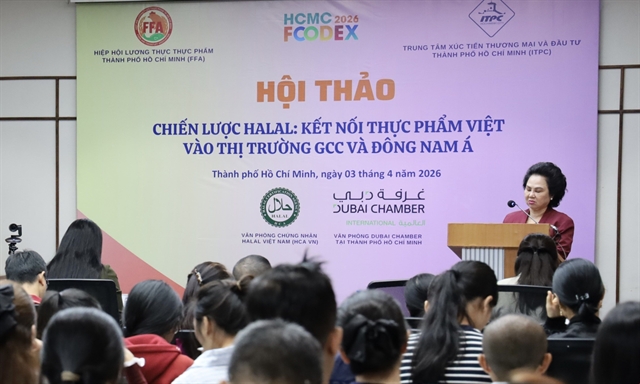
This was the key message highlighted by experts at a seminar on connecting Vietnamese food products to Halal markets in the Gulf Cooperation Council (GCC) and Southeast Asia, held on April 3 in HCM City by the Investment and Trade Promotion Centre of Ho Chi Minh City (ITPC) in collaboration with the Ho Chi Minh City Food and Foodstuff Association (FFA).
According to ITPC Deputy Director Hồ Thị Quyên, the global Muslim population has surpassed 1.9 billion, accounting for around 25 per cent of the world’s population, with approximately 63 per cent regularly consuming Halal food.
The GCC region and Southeast Asia are emerging as key markets with strong demand for Halal-certified food products.
Halal consumption is also expanding beyond Muslim consumers, driven by stringent requirements on food safety, traceability and ethical standards.
Despite these opportunities, Vietnamese businesses remain underrepresented in the Halal market. Quyên noted that only about 0.2 per cent of Vietnamese enterprises have Halal-certified products. To date, fewer than 1,000 businesses have obtained certification, with only around 50 new entrants each year.
This reflects ongoing challenges, including limited access to information, standards and certification systems, as well as the absence of structured market entry strategies.
In addition, Việt Nam’s Halal products are largely concentrated in raw or semi-processed goods, with relatively low added value.
Trương Xuân Trung, head of the Vietnam Trade Office in the UAE, estimated that the Halal economy is currently valued at around US$5 trillion and could reach $10 trillion by 2028, driven largely by demand in the Middle East, particularly GCC countries. The region imports up to 85–90 per cent of its food, offering substantial opportunities for exporting countries such as Việt Nam.
Beyond food, the Halal ecosystem is rapidly expanding into pharmaceuticals, cosmetics, fashion, packaging and Islamic financial services, as well as specialised logistics.
Emerging segments such as Halal fashion and environmentally friendly packaging are expected to reach hundreds of billions of dollars in value in the coming years.
Notably, the UAE–Việt Nam Comprehensive Economic Partnership Agreement (CEPA), which came into effect on February 3, 2026, sets out a roadmap to eliminate tariffs on 99 per cent of Vietnamese goods.
The agreement is expected to provide Vietnamese exports with a significant price advantage over competitors without a free trade agreement with the UAE.
Businesses can also leverage the UAE’s strategic position along Asia–Europe–Africa trade routes, as well as its modern seaport and airport infrastructure, to build logistics networks and expand into neighbouring markets.
In Southeast Asia, Nguyễn Thị Ngọc Hằng, marketing director of the Halal Certification Agency Vietnam, said that with more than 40 per cent of the population being Muslim, the region offers not only strong export potential but also serves as a strategic gateway into the global Halal supply chain.
Lower transport costs, along with geographical proximity and similarities in consumer preferences, make it easier for Vietnamese businesses to enter the market and expand further afield, she added.
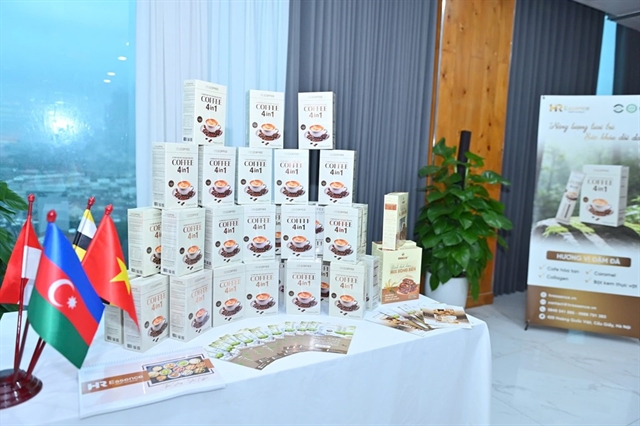
During the seminar, FFA chairwoman Lý Kim Chi emphasised that Việt Nam’s food industry is well positioned to expand exports, particularly to high-potential markets such as the GCC and Southeast Asia.
The Halal market, in particular, is among the fastest-growing segments, characterised by its large scale and increasingly stringent requirements on standards, quality and supply chain transparency.
To integrate more deeply into the global Halal value chain, Vietnamese businesses need comprehensive preparation, from improving awareness of Halal standards and investing in production processes to building brands and strengthening sustainable competitiveness.
At the same time, support from trade promotion agencies, international organisations and certification bodies will be crucial in reducing risks and maximising opportunities.
Trung also noted that Halal product requirements now extend beyond religious compliance and are increasingly aligned with food safety standards, organic agriculture and sustainability frameworks such as ESG (environmental, social and governance).
The market is witnessing strong growth in the “green Halal” trend, favouring plant-based products, biodegradable packaging and carbon reduction goals.
He added that improving compliance capacity should begin with selecting reputable Halal certification bodies and investing in dedicated production lines that meet strict market requirements.
Localisation is equally important. Packaging should feature bilingual labelling (English and Arabic), culturally appropriate imagery and flavours tailored to local tastes, with reduced use of artificial sugars.
Businesses should also diversify market entry strategies by combining traditional retail channels, such as Lulu Hypermarket and Carrefour Gulf, with e-commerce platforms including Noon.com and Amazon.ae.
Tạ Xuân Hiển, vice chairman of the Vietnam Business Council in the UAE, pointed out that one of the biggest limitations of Vietnamese exports is their heavy reliance on intermediaries and third-country exports. This not only reduces profit margins but also limits opportunities to build direct brand recognition.
To penetrate the market more effectively, products should target importers, distributors and retail chains such as supermarkets and convenience stores in the UAE, Saudi Arabia and Qatar, as well as the HORECA channel (hotels, restaurants and catering services), where demand is strong and stable.
“The Middle Eastern market consistently maintains high demand but places strong emphasis on reliable suppliers. Businesses should avoid a rushed approach or expectations of immediate returns. Market entry requires patience to build long-term trust with local partners,” Hiển said.
“It is also essential to proactively manage risks arising from limited understanding of pricing structures and region-specific logistics costs.” — VNS