Việt Nam, South Korea step up financial cooperation
Building on decades of expanding trade and investment ties, Việt Nam and South Korea are looking to deepen financial cooperation in areas including capital markets, fintech, digital payments and sustainable finance, marking a new chapter in their Comprehensive Strategic Partnership.
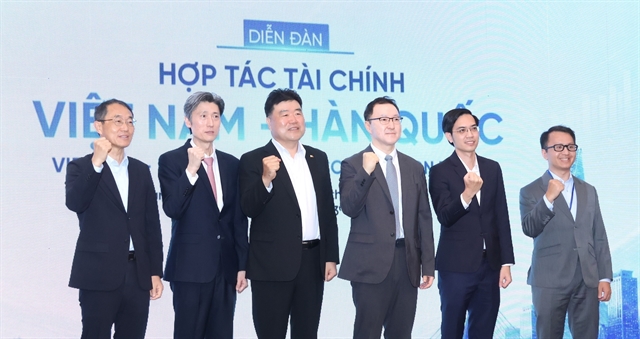
HCM CITY — Building on decades of expanding trade and investment ties, Việt Nam and South Korea are looking to deepen financial cooperation in areas including capital markets, fintech, digital payments and sustainable finance.
Speaking at the Việt Nam–Korea Financial Cooperation Forum in HCM City on Monday, Deputy Consul General of South Korea in HCM City, Kwon Tae Han, said the two countries are entering a new chapter of cooperation in financial services after more than three decades of expanding trade and investment ties.
"Since establishing diplomatic relations in 1992, Korea and Việt Nam have achieved remarkable economic cooperation," said Han.
“Today, as comprehensive strategic partners, our two countries are opening a new chapter of collaboration in the financial sector, building on our strong foundations in trade and investment.”
He described finance as "the lifeblood of the economy."
As digital transformation and artificial intelligence reshape global finance, closer cooperation between the two countries has become more important than ever, he said.
He noted that South Korea's strengths in digital finance, fintech, electronic payments, and financial infrastructure complement Việt Nam's dynamic market and rapid digital adoption.
Associate Professor Dr Nguyễn Hữu Huân, vice chairman of the VIFC-HCMC, echoed these sentiments, noting that the bilateral relationship has evolved well beyond trade and investment into an ecosystem spanning business, technology, finance, and people-to-people exchanges.
He said Việt Nam's strong economic growth has enabled the establishment of an international financial centre capable of attracting global capital.
Rather than simply hosting financial institutions, the VIFC-HCMC is envisioned as an integrated ecosystem connecting international capital, technology, and talent, and fostering innovation through regulatory sandboxes and new financial products, he said.
It would prioritise asset management, investment funds, the international capital and bond markets, green finance, fintech, cross-border payments, aviation, and maritime finance, he said.
"South Korea is regarded as one of Việt Nam's most important partners. With its well-developed capital market, sophisticated banking system, advanced technological capabilities, and extensive experience in building financial hubs such as Seoul, Busan and Incheon, South Korea offers expertise that closely aligns with the development goals of the VIFC-HCMC."
He outlined five priorities for bilateral cooperation: encouraging Korean banks, securities firms, fund managers and institutional investors to establish a stronger presence at the financial centre; developing international fundraising channels through green bonds, sustainability bonds, investment funds and project finance; expanding cross-border payment connectivity through QR payments, remittance services, trade finance, and cash management for businesses from the two nations; promoting cooperation in fintech, artificial intelligence, big data, digital identity, anti-money laundering, and regulatory sandboxes; and developing a skilled financial workforce via expert exchanges and partnerships between universities and research institutes.
He identified green finance as a particularly promising area for collaboration, noting that South Korea's strengths in clean technologies, renewable energy, battery manufacturing, smart transport, and digital infrastructure complement Việt Nam's substantial financing needs for its energy transition and net-zero emissions target.
"The VIFC-HCMC can serve as a regional platform for structuring, rating, underwriting, distributing and trading green financial products, helping connect South Korean investors with qualified projects in Việt Nam."
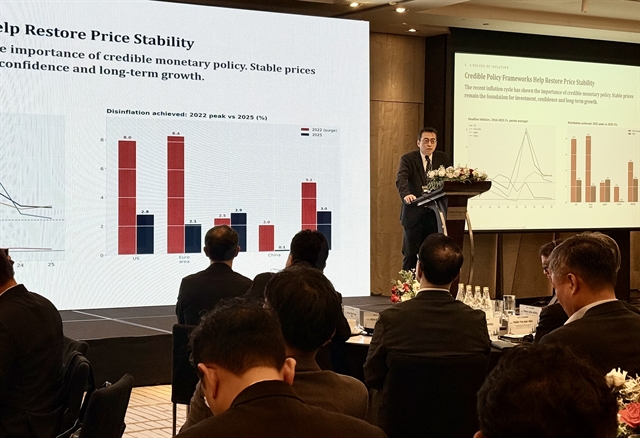
Lee Young Jick, head of the ASEAN–Republic of Korea Financial Cooperation Centre, said Việt Nam's economic role has fundamentally shifted, and it is no longer just a manufacturing destination but a primary platform within global supply chains, driven by factories relocating from China and an influx of high-tech sectors like semiconductors, smartphones, and AI data centers.
He said financial cooperation would play a critical role in supporting supply chains, innovation and industrial upgrading.
He proposed a practical agenda focused on supply-chain finance, green industrial zones, electric vehicle and battery financing, digital trade, local currency settlement, capital market connectivity, and capacity building to translate bilateral cooperation into tangible projects.
Yunsik Kim, head of global payments Infrastructure at the Korea Financial Telecommunications and Clearings Institute, outlined plans to link the two countries’ QR payment systems.
With annual travel between the two countries now exceeding five million trips, there is strong demand for seamless cross-border digital payments, which would reduce transaction costs and simplify foreign currency payments, he said.
He added that KFTC and Việt Nam's NAPAS signed an agreement in April for developing QR payment interoperability.
The forum also addressed the development of Việt Nam's non-performing loan market.
Song Min Jae of the Korea Asset Management Corporation shared his country’s experience in building an efficient distressed asset market through stronger legal frameworks, modern market infrastructure, enhanced institutional capacity, and digital platforms.
He said standardising asset data, improving transparency, broadening the investor base, developing structured investment products, and establishing a centralised trading platform would help improve price discovery, increase market liquidity, and attract professional investors. — VNS