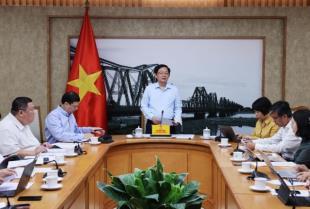
Việt Nam sets four priorities for APEC Finance Ministers’ Meeting in 2027
The four priorities are strengthening capital markets to mobilise private investment for innovative businesses; promoting data-driven finance to improve access to capital for micro, small and medium-sized enterprises (MSMEs); diversifying development finance sources; and developing young talent in the financial sector.
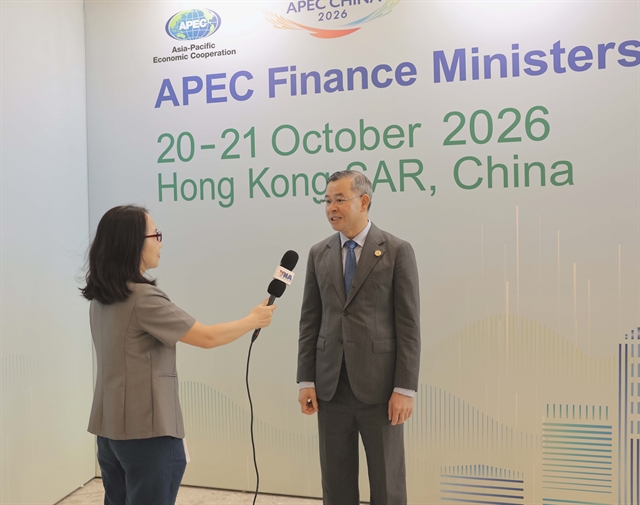
HÀ NỘI — Việt Nam has announced four priority themes for the APEC Finance Ministers' Meeting in 2027, according to Minister of Finance Ngô Văn Tuấn.
The priorities are strengthening capital markets to mobilise private investment for innovative businesses; promoting data-driven finance to improve access to capital for micro, small and medium-sized enterprises (MSMEs); diversifying development finance sources; and developing young talent in the financial sector.
Minister Tuấn said the priorities align with the Incheon Plan 2026-30 and Việt Nam’s broader development agenda. Discussions are expected to support the development of domestic financial mechanisms and policies for the 2026-30 period.
The agenda is also linked to key Politburo resolutions, including Resolution 57-NQ/TW on breakthroughs in science and technology, innovation and national digital transformation; Resolution 59-NQ/TW on international integration in the new situation; and Resolution 68-NQ/TW on private sector development.
It is further aligned with Việt Nam’s Financial Strategy to 2030 and national development objectives for 2026-30, as well as the vision for 2045 outlined in documents of the 14th National Party Congress.
In an interview with Vietnam News Agency reporters in Hong Kong (China) on Wednesday, following the conclusion of the 33rd APEC Finance Ministers’ Meeting, Tuấn discussed the meeting’s outcomes, Việt Nam’s economic performance and preparations for the country’s hosting of APEC in 2027.
He said the 2026 meeting had delivered substantive outcomes despite global economic risks stemming from geopolitical and geoeconomic tensions and climate change. Member economies adopted a joint statement reaffirming their commitment to building an open, dynamic, resilient and peaceful Asia-Pacific community by 2040, while reaching broad consensus on maintaining flexible and credible fiscal and monetary policies to safeguard regional financial stability.
During a session on macro-economic developments, the Vietnamese delegation highlighted the country’s economic performance. Việt Nam’s gross domestic product grew 9.01 per cent in the first nine months of 2026, with third-quarter growth reaching 9.95 per cent, according to figures cited by the minister.
Việt Nam’s entry into the upper-middle-income country group, the upgrading of its stock market to emerging-market status and its receipt of an investment-grade rating from an international credit rating agency for the first time have also strengthened its international standing, he said.
VN, World Bank deepen APEC 2027 cooperation
Earlier on Tuesday, Tuấn had a working session with a World Bank Group delegation led by Paschal Donohoe, managing director and chief knowledge officer on the sidelines of the 2026 APEC Finance Ministers’ Meeting, strengthening cooperation in preparation for APEC 2027, with a focus on policy priorities, support for micro-, small- and medium-sized enterprises (MSMEs) and technical assistance.
During the event, Tuấn highlighted the importance of WBG financing, technical assistance and policy advice to Việt Nam’s socio-economic development. He called on the bank to provide substantive support as Việt Nam prepares to host APEC 2027, helping the ministry align its priorities with the Incheon Action Plan and the APEC Putrajaya Vision 2040.
Stressing the key role of MSMEs, he said Việt Nam has stepped up administrative reforms and cut compliance costs for businesses by more than 50 per cent, while the National Assembly is discussing amendments to the Law on MSMEs at its ongoing session. Proposed measures include improving access to land and finance, simplifying procedures, standardising business classification criteria and enabling MSMEs to participate more extensively in public procurement.
The Ministry of Finance stands ready to work closely with the WBG to study and incorporate effective initiatives into development policies, he said.
Donohoe congratulated Việt Nam on a recent significant improvement in its sovereign credit rating and praised its efforts to manage the State budget effectively and strengthen fiscal foundations towards its goal of becoming a high-income country by 2045.
He said improving MSMEs’ access to finance would be critical to supporting double-digit economic growth. He suggested that Việt Nam consider making MSME financing a key priority under its APEC 2027 agenda, in line with the bank’s newly announced MSME strategy.
The WBG pledges specialised technical assistance and corresponding resources for this process, he noted.
The two sides also discussed progress in developing the Country Partnership Framework (CPF) for 2027-32. Tuấn urged the WBG to consider concessional financing packages, adopt more flexible disbursement arrangements and further harmonise and simplify administrative procedures to accelerate the implementation of cooperation projects.
Welcoming Việt Nam’s preparations for APEC 2027, Donohoe affirmed support for the priorities proposed by the Ministry of Finance and pledged to provide experts, share knowledge and deliver necessary technical assistance throughout the process. — VNS