Việt Nam seeks stronger foothold in Germany’s premium coffee market
Vietnamese coffee exporters are stepping up efforts to penetrate Germany’s premium coffee segment through their participation in Kaffee Campus 2026, a major coffee event organised by the German Roasters Guild (Deutsche Röstergilde e.V.)
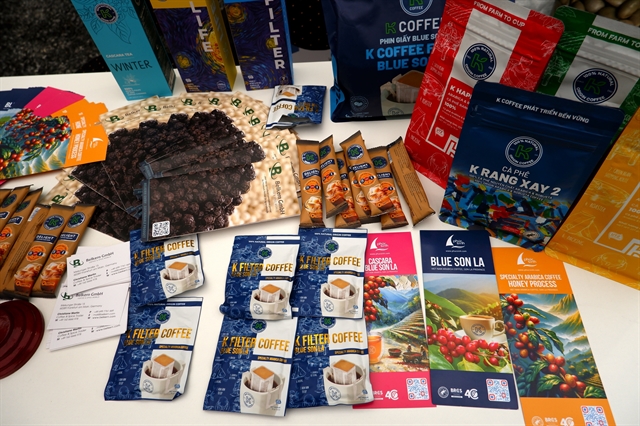
HÀ NỘI — Vietnamese coffee exporters are stepping up efforts to penetrate Germany’s premium coffee segment through their participation in Kaffee Campus 2026, a major coffee event organised by the German Roasters Guild (Deutsche Röstergilde e.V.)
The event opened on May 5 at MOA Meet Berlin, offering Vietnamese firms an opportunity to deepen access to high-value market segments while meeting the increasingly stringent standards of the European Union.
Held against the backdrop of a global shift towards sustainable consumption and supply-chain transparency, this year’s event gathered hundreds of experts, roasters and importers from across Europe. Beyond product displays, it also served as a specialised business-to-business platform where supply contracts and commercial partnerships were negotiated.
At the Vietnam pavilion organised by the Vietnam Trade Office in Germany, companies including Phuc Sinh Corporation, Dung Loi and Don Elephant introduced products aimed at the premium market. These firms are pioneering climate-resilient production models and focusing on “clean label” products to meet growing demand among German consumers.
Their presence at Kaffee Campus 2026 also reflected a broader transition by Vietnamese enterprises from supplying raw materials to developing specialty coffee and branded roasted products.
Christian Kallenbrunnen, who is in charge of marketing at the German Roasters Guild, said member companies are increasingly seeking direct sourcing from producing countries such as Việt Nam, particularly high-quality green coffee that can deliver distinctive flavour profiles for German consumers.
Germany is currently Europe’s largest importer of green coffee, with market revenue approaching 20 billion euros (US$23.5 billion). Average annual coffee consumption stands at about 167 litres per person. With roughly 2,500 active roasters, the market offers substantial room for Vietnamese exporters.
Linh Uyên, director of Don Elephant, said European buyers are increasingly interested in authenticity and traceability. Competitive advantage now depends not only on output but also on the story behind the beans, including ethnic minority cooperative models and cultivation under primary forest canopies.
Industry representatives noted that Germany’s market is gradually shifting from Arabica towards high-quality Robusta as climate change affects supply. Although Việt Nam remained Germany’s second-largest coffee supplier after Brazil with export turnover of $1.22 billion in 2025, its coffee is still largely associated with industrial processing.
They stressed that stronger branding, compliance with the EU’s anti-deforestation regulation, geographical indication requirements and traceability standards will be essential for Vietnamese coffee to secure wider access to German supermarket chains. — VNA/VNS