Việt Nam seeks more competitive start-ups
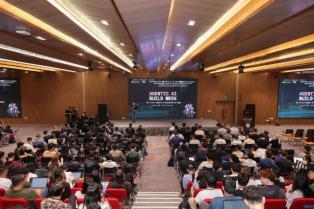
Major innovation hubs, including Hà Nội, HCM City, Đà Nẵng and Hải Phòng, are now all listed among the world's top 1,000 start-up ecosystems, with HCM City entering the global top 100 for the first time after climbing 12 places to rank 98th.
Ly Ly Cao
HÀ NỘI — Việt Nam's start-up ecosystem is no longer simply trying to catch up. As innovation hubs expand, investment gathers pace and technology entrepreneurs look beyond the domestic market, the country's ambition is shifting towards a more demanding goal: building globally competitive technology companies capable of shaping the next wave of economic growth.
According to the 2026 Global Startup Ecosystem Index released by StartupBlink, Việt Nam climbed five places to rank 50th globally, marking its highest position ever.
The improvement reflects not only the rapid expansion of the country's startup ecosystem but also the early impact of policies promoting science, technology, innovation and digital transformation under Resolution 57, adopted by the Communist Party in December 2024.
Yet, behind the improved rankings lies a more fundamental challenge: transforming promising ideas into innovative enterprises capable of competing in global markets.
Across the country, policymakers, universities and local authorities are increasingly focusing on creating an ecosystem that supports startups throughout their growth journey rather than simply encouraging new business creation. The objective is to nurture technology companies capable of developing strategic products, commercialising research and integrating into global value chains.
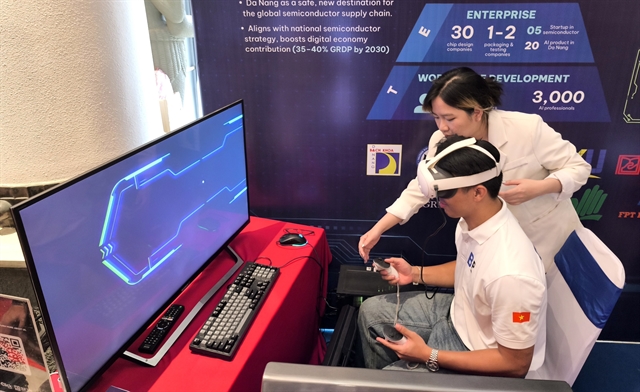
Among Việt Nam's emerging innovation centres, Đà Nẵng has emerged as one of the country's most dynamic innovation hubs. The central city has adopted a systematic approach to building an innovation ecosystem by combining favourable policies with investment in infrastructure, talent development and business support.
Phạm Thị Ngọc Quyên, deputy director of the Đà Nẵng Department of Science and Technology, said the city considered sci-tech and innovation one of its strategic breakthroughs for socio-economic development.

Over recent years, Đà Nẵng had prioritised sectors including semiconductors, digital transformation and smart cities, while Resolution 57 had provided additional momentum to accelerate accelerating innovation-led development.
"Leveraging special policy mechanisms approved by the central government, the city has introduced incentives covering taxation, accommodation, infrastructure and investment to attract technology companies and develop a high-tech ecosystem," Quyên said.
Those policies are already producing tangible results. Đà Nẵng currently hosts three start-up support centres, 12 incubators, three maker spaces, eight co-working spaces, six investment funds, 20 educational institutions and around 200 innovative start-ups. Together, they provide entrepreneurs with access to mentoring, finance, research and commercialisation opportunities.
The city is also implementing its Innovation City initiative, alongside programmes to develop high-quality technology talent and smart urban infrastructure.
Nguyễn Viết Toàn, director of the Đà Nẵng Innovation Start-up Support Centre, said the city's long-term objective would extend beyond improving international rankings.
"Our ultimate goal is to build technology enterprises and innovative start-ups capable of competing internationally and creating real value for the economy," he said.
The strategy appears to be yielding results. In 2024, Đà Nẵng entered StartupBlink's list of the world's top 1,000 start-up ecosystems for the first time. By 2026, it had climbed 342 places to rank 554th globally.
Policies and talent
The momentum is being mirrored at the national level. Major innovation hubs including Hà Nội, HCM City, Đà Nẵng and Hải Phòng are all listed among the world's top 1,000 start-up ecosystems, with HCM City entering the global top 100 for the first time after climbing 12 places to rank 98th.
Officials attribute the progress to a stronger policy framework supporting science, technology and entrepreneurship.
The 2025 Law on Science, Technology and Innovation marked an important milestone by legally defining strategic technologies and strategic technology products for the first time. Building on the legislation, the Government has identified 10 national strategic technology groups that will receive priority for development.
Under the implementation plan for Resolution 57, Việt Nam aims to increase the number of start-ups by 30 per cent, establish between 30 and 50 university and research institute spin-offs, and develop at least three major innovation and start-up centres in its three largest cities.
By the end of 2025, Việt Nam had approximately 4,000 innovative start-ups, including two technology unicorns and numerous high-potential companies from the private sector.
Universities are also taking on a larger role in transforming scientific research into commercial products. At Hanoi University of Science and Technology, innovation has become central to the institution's long-term development strategy.
Its president, Professor Lê Anh Tuấn, said the university were restructuring its education, research and innovation activities to build a fully integrated innovation ecosystem where high-quality education, scientific research and commercialisation would be seamlessly connected.
"The goal is to enable technology to move from laboratories to the market as quickly as possible," he said.
On June 27, the university launched its Interdisciplinary Innovation Space, bringing together research institutes, laboratories, creative studios, co-working spaces and corporate partners under one roof.
The facility is designed around the triple helix model linking government, universities and businesses, with an initial focus on four national priorities: digital transformation, green transition, the low-altitude economy and smart cities.
However, Tuấn argued that stronger institutional reforms would still be required to unlock Việt Nam's innovation potential. He called for greater investment in research infrastructure, simplified administrative procedures, faster approval processes for scientific projects and clearer legal guidance on intellectual property valuation and university spin-offs.
"Many research projects have strong technologies and interested business partners but cannot move forward because of an unclear legal framework and limited flexibility in valuing intellectual property and sharing benefits," he said.
He also proposed accelerating the operation of national venture capital funds and science and technology development funds while expanding innovation financing mechanisms at universities and research institutes.
Government leaders believe nurturing technology entrepreneurs will be essential as Việt Nam enters a new stage of development driven by digital transformation, artificial intelligence (AI) and deeper international integration.
Deputy Prime Minister Nguyễn Văn Thắng said young entrepreneurs were becoming an increasingly important force in creating jobs, commercialising new technologies and bringing Vietnamese innovations to international markets.
"Many Vietnamese technology companies founded by young entrepreneurs have already introduced digital products, software and AI solutions to global markets," he said.
"That demonstrates that, in the digital era, the distance between an idea conceived in Việt Nam and the global market has never been shorter."
Thắng called for stronger long-term support networks for start-ups through mentorship in finance, governance and technology while reaffirming the Government's commitment to improving the investment environment and expanding access to capital, land, data and scientific resources.
"There can be no rapid progress without innovation, no sustainable growth without good governance, and no lasting success without integrity," he said. — BIZHUB/VNS