Việt Nam positions itself as a bridge for deeper CPTPP–EU economic cooperation
Việt Nam is leveraging its 2026 CPTPP chairmanship to strengthen economic resilience and deepen cooperation between the Comprehensive and Progressive Agreement for Trans-Pacific Partnership (CPTPP) and the European Union (EU).
HCM CITY — Việt Nam is leveraging its 2026 CPTPP chairmanship to strengthen economic resilience and deepen cooperation between the Comprehensive and Progressive Agreement for Trans-Pacific Partnership (CPTPP) and the European Union (EU).
Against a backdrop of growing geopolitical uncertainty, supply chain disruptions and slower global trade growth, policymakers and business leaders gathered in HCM City this week to explore how closer collaboration between two of the world's most advanced trade blocs could reinforce an open, rules-based trading system while creating new opportunities for sustainable growth.
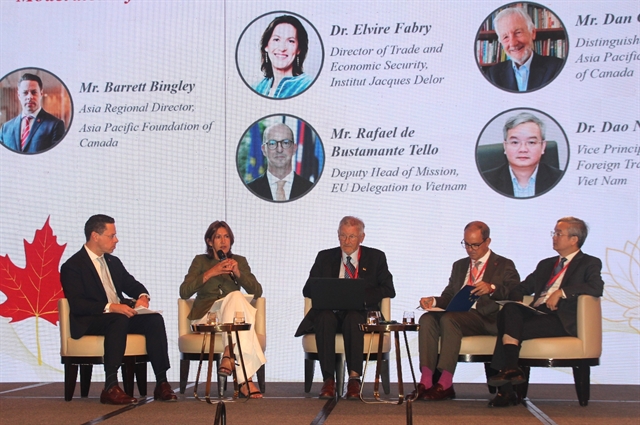
The discussions took place at the Canada–Việt Nam Forum on Economic Resilience and Cooperation between CPTPP and European Union Economies, held on the sidelines of the third Senior Officials' Meeting (SOM3) under Việt Nam's CPTPP Chairmanship Year 2026.
More than a diplomatic event, the forum reflected an emerging consensus that strengthening links between CPTPP members and the EU has become increasingly important as governments and businesses seek to diversify markets, reduce strategic vulnerabilities and accelerate the transition towards greener and more digital economies.
Speaking at the opening session, representatives from Việt Nam and Canada stressed that the current international landscape demands stronger partnerships built on transparency, resilience and predictable trade rules rather than protectionism.
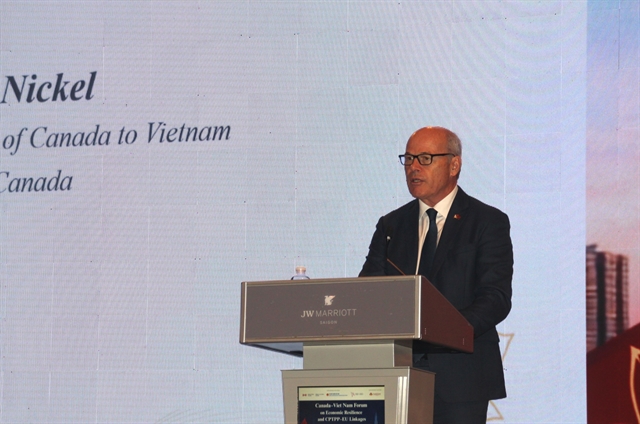
Canada's Ambassador to Việt Nam Jim Nickel noted that Canada and Việt Nam have become increasingly important partners in the Indo-Pacific, with bilateral cooperation expanding well beyond traditional trade into innovation, clean technology, sustainable development and supply chain resilience.
He said the relationship demonstrates how middle powers can work together to promote economic stability while supporting an international trading system based on clear rules and mutual trust.
The ambassador also highlighted the growing importance of CPTPP as one of the world's highest-standard free trade agreements, particularly at a time when businesses are seeking certainty amid global economic fragmentation.
For Việt Nam, the forum marked another milestone in its role as Chair of CPTPP in 2026.
Throughout the chairmanship year, Việt Nam has sought to position the agreement not only as a platform for trade liberalisation among its twelve members but also as a framework capable of engaging with other major economic partners on issues ranging from digital trade and green growth to supply chain security.
Officials said stronger engagement with the European Union could help unlock new opportunities for businesses on both sides by reducing regulatory barriers, promoting innovation and encouraging investment in strategic industries.
Building resilience
One of the forum's central themes was economic resilience.
Speakers agreed that resilience today extends far beyond the ability to withstand external shocks.
Instead, it increasingly depends on diversified supply chains, digital connectivity, technological innovation and closer cooperation among trusted partners.
Lessons from recent years – including the COVID-19 pandemic, geopolitical tensions and disruptions in global shipping – have prompted governments to rethink how supply chains should be designed.
Rather than pursuing maximum efficiency alone, many economies are now placing greater emphasis on reliability, sustainability and flexibility.
Participants argued that closer cooperation between CPTPP members and European economies could play an important role in achieving these objectives.
The two economic frameworks share many common principles, including commitments to market openness, high-standard trade rules, environmental protection, labour standards and transparent governance.
Although the European Union is not part of CPTPP, several countries maintain extensive economic relationships across both frameworks, creating opportunities for stronger institutional cooperation.
Việt Nam occupies a particularly strategic position in this regard.
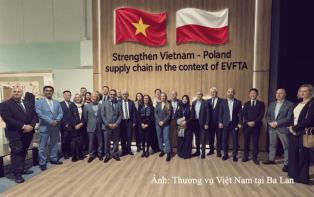
It is one of the few economies that enjoys comprehensive trade agreements with both CPTPP members and the European Union through the EU–Việt Nam Free Trade Agreement (EVFTA).
This unique position allows the country to serve as a bridge connecting businesses, investors and supply chains across the Indo-Pacific and Europe.
Experts at the forum noted that this dual integration provides Việt Nam with significant advantages as multinational companies diversify production networks and seek alternative investment destinations.
Combined with continued improvements in infrastructure, logistics and the investment environment, the country's extensive network of free trade agreements has strengthened its competitiveness as a regional manufacturing and export hub.
Driving future growth
Digital transformation also featured prominently during the discussions.
Participants emphasised that future trade growth will increasingly depend on digital commerce, cross-border data flows and interoperable regulatory frameworks.
Closer dialogue between CPTPP economies and the EU could facilitate the development of compatible digital standards while reducing unnecessary compliance costs for businesses operating across multiple jurisdictions.
Small and medium-sized enterprises (SMEs), in particular, stand to benefit from greater regulatory coherence.
Despite accounting for the majority of businesses in most economies, SMEs often face disproportionately high costs when entering overseas markets.
Simplified customs procedures, greater transparency and digital trade facilitation could enable more smaller firms to participate in international commerce.
Green growth represented another major pillar of the forum.
As governments strengthen climate commitments and introduce carbon-related regulations, businesses are increasingly required to demonstrate sustainable production practices.
Participants said cooperation between CPTPP economies and the EU could accelerate investment in renewable energy, clean technologies and low-carbon manufacturing while helping companies adapt to evolving environmental requirements.
For Việt Nam, this transition is expected to become an important driver of long-term competitiveness.
As global buyers increasingly prioritise sustainable supply chains, domestic enterprises will need to invest in cleaner production, energy efficiency and environmental governance to maintain export market access.
Canada's experience in clean technology, energy transition and sustainable resource management offers considerable potential for expanded cooperation with Việt Nam.
Business representatives attending the forum pointed to growing opportunities in areas such as green finance, critical minerals, agricultural innovation and digital infrastructure.
They also encouraged governments to continue improving investment facilitation and regulatory transparency to attract higher-quality foreign direct investment.
Strengthening partnerships
The forum further highlighted the importance of maintaining an open multilateral trading system at a time when protectionist pressures are rising worldwide.
Rather than viewing regional trade agreements as competing frameworks, participants argued that stronger connections between CPTPP and the EU could reinforce global economic stability while encouraging broader cooperation on emerging trade issues.
Analysts noted that Việt Nam's proactive role in convening the dialogue reflects its increasingly prominent position in regional economic governance.
Having successfully implemented a wide range of next-generation free trade agreements over the past decade, the country is now seeking to contribute not only as a beneficiary of global integration but also as a facilitator of international economic cooperation.
As the CPTPP Chair in 2026, Việt Nam is expected to continue promoting initiatives that strengthen supply chain resilience, digital connectivity, sustainable development and closer engagement with external partners.
The Canada–Việt Nam Forum demonstrated that these objectives increasingly align with broader efforts to enhance cooperation between the Indo-Pacific and Europe.
While concrete policy outcomes will take time to materialise, participants agreed that continued dialogue among governments, businesses and research institutions will be essential to translating shared ambitions into practical collaboration.
In an increasingly uncertain global economy, they said, partnerships grounded in openness, trust and common standards will remain among the strongest foundations for long-term resilience and sustainable growth. — VNS