Việt Nam launches drive to boost private sector, reform State enterprises
The initiative aims to translate Party and State policies on public and private sector development into concrete action toward long-term national development goals.
HÀ NỘI — Deputy Prime Minister Phạm Thị Thanh Trà has signed Decision No 463/QĐ-TTg, issuing a nationwide emulation plan aimed at accelerating private sector development while improving the performance and efficiency of State-owned enterprises (SOEs).
The initiative aims to translate Party and State policies on public and private sector development into concrete action toward long-term national development goals.
The plan seeks to renew development thinking, mobilise national resources more effectively, and build collective momentum to overcome challenges, creating favourable conditions for enterprises, particularly private ones, to expand rapidly, sustainably, and efficiently. SOEs are tasked with playing a pioneering and guiding role in economic restructuring, driving growth, strengthening national competitiveness, and supporting modernisation and deeper international integration.
The Government aims to stimulate innovation and entrepreneurial ambition, encouraging businesses to accelerate digital transformation and green transition, adopt advanced technologies, and enhance science and technology applications. The initiative is expected to raise labour productivity, optimise resource utilisation, generate employment, increase state budget revenues, strengthen social welfare, and promote sustainable development.
Under the plan, Việt Nam targets average GDP growth of at least 10 per cent annually during the 2026–30 period. Labour productivity is projected to increase by about 8.5 per cent per year, while the digital economy is expected to account for roughly 30 per cent of GDP.
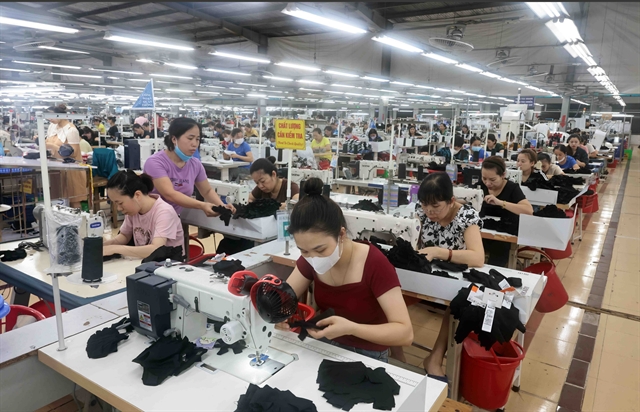
The country aims to have nearly 2 million operating enterprises, equivalent to 20 businesses per 1,000 people, including at least 20 large corporations engaging in global value chains. The private sector is forecast to expand by 10–12 per cent annually, contributing 55–58 per cent of GDP, generating 35–40 per cent of total State budget revenue, and employing around 84–85 per cent of the workforce.
For SOEs, the plan targets 50 companies ranked among Southeast Asia’s 500 largest enterprises, with one to three entering the global top 500. At least three state-owned commercial banks are expected to join Asia’s top 100 lenders by total assets.
Việt Nam also aims to rank among the top three ASEAN countries and top five in Asia in technological capability, innovation capacity, and digital transformation.
A key component of the initiative is the development of a programme supporting 1,000 leading enterprises pioneering innovation, digitalisation, green transition, circular economy models, and the growth of high-tech and emerging industries.
To realise these goals, Government agencies are tasked with shifting from administrative management toward development facilitation and modern governance, while taking decisive action to accompany and support businesses in achieving fast and sustainable growth.
Priority will be given to improving and synchronising the legal framework to ensure transparency and consistency, removing institutional bottlenecks, strengthening decentralisation, and creating a fair and enabling environment for all economic sectors to access and utilise national resources.
The plan also emphasises building an open, stable, secure and business-friendly environment, powered by digital transformation, green transition, smart technologies and automation, to enhance regional and global competitiveness.
Authorities will assist enterprises in accessing land, capital, natural resources, and high-quality human resources, while supporting intellectual property development and the adoption of advanced standards and quality management systems.
Support policies will focus on startups, innovative enterprises, and firms investing in research and development, workforce training, technological application, digital transformation, green transition, technology transfer, and integration into global value and supply chains.
The initiative further promotes industrial cluster development, trade promotion, production and supply cooperation, and public–private partnership (PPP) models, while strengthening linkages among domestic companies and between Vietnamese and foreign-invested enterprises. It also encourages business households to formalise operations, small firms to scale up, and large enterprises to evolve into global and multinational corporations.
Enterprises are encouraged to enhance operational efficiency through digital transformation, green transition, circular economy practices, and the development of high-tech, automation, artificial intelligence, and emerging technology sectors. Businesses are expected to integrate science and technology into products and services, reduce costs, increase revenues and profits, and expand distribution networks. — VNS