Việt Nam International Financial Centre: a catalyst for growth, not Dubai rival
The Vietnam International Financial Centre (VIFC) is a purpose-built channel for foreign capital to help close Việt Nam’s estimated US$1.5 trillion funding gap to industrialise the country, legally structured like Dubai’s DIFC but not meant to compete with it, according to VinaCapital Fund Management JSC.
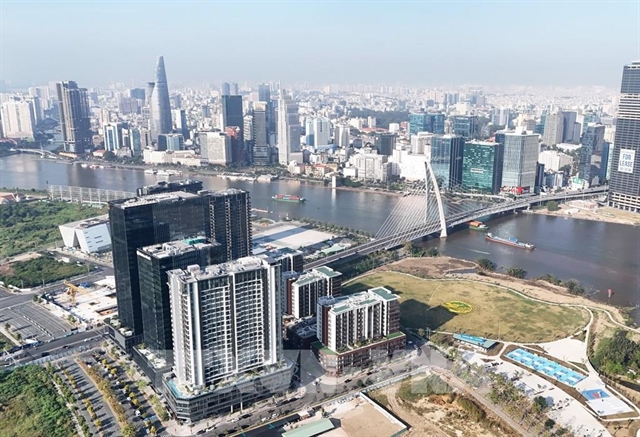
HCM CITY — The Vietnam International Financial Centre (VIFC) is a purpose-built channel for foreign capital to help close Việt Nam’s estimated US$1.5 trillion funding gap to industrialise the country, legally structured like Dubai’s DIFC but not meant to compete with it, according to VinaCapital Fund Management JSC.
The establishment of the VIFC has attracted much attention over the past 18 months.
In little more than a year, the project has progressed from an ambitious concept to an officially established institution, with its legal framework drafted earlier this month. While the centre is expected to take another year before becoming fully operational, enthusiasm for its potential remains strong.
Despite the attention it has received domestically, few international financial professionals remain clear about the VIFC’s purpose; some mistakenly view it as an attempt to compete with Dubai and other more established IFCs.
Michael Kokalari, chief economist at VinaCapital, which is one of the seven founding members of the VIFC, said: "The goal of the VIFC is to make it easier for foreigners to invest in and profit from Việt Nam's economic development. Its establishment was motivated by Việt Nam’s estimated $1.5 trillion funding gap – money Việt Nam needs in the coming years to industrialise the country."
In contrast, Dubai’s IFC was a centre for wealthy people to park and manage money; its establishment was motivated by the desire to attract high-value economic spillovers associated with the finance industry to Dubai such as highly paid fund management professionals, corporate law firms, and luxury real estate development, he said.
VIFC was economically closer to New York’s during America’s industrialisation since it primarily aimed to channel foreign capital into infrastructure and other projects.
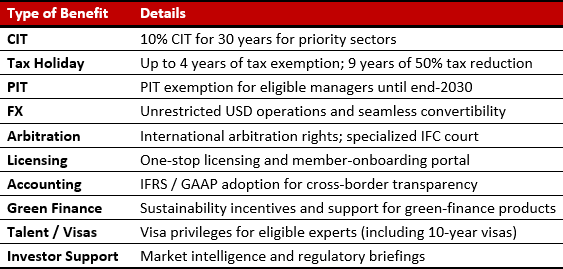
Legally, it was closer to Dubai’s DIFC since a special set of laws would apply within it and financial firms operating there would benefit from dedicated regulations and investment incentives.
The initial priorities were to establish banks in the VIFC, followed by asset management firms.
Beyond these initial priorities, activities at the VIFC were expected to expand to include commodities trading of rice and coffee, industrial real estate investment trusts (REITs), digital assets, and trade finance products.
“The primary benefit of the IFC for Việt Nam will be a lower the cost of capital, while the primary benefit to foreign investors will be a much wider range of financial products that enable participation in the growth of the country’s economy.”
Lessons from other IFCs
According to VinaCapital, the key lesson for Việt Nam from other countries that have established international financial centres is that the VIFC should open gradually, starting with a narrow pool of reputable firms while strengthening its executive and supervisory bodies, anti-money laundering enforcement, and beneficial-ownership transparency.
At the same time, broader reforms aimed at improving the business environment outside the financial centre will be essential, given the VIFC's close links with the wider economy.
The experience of the Qatar Financial Centre demonstrates how a phased development strategy can generate significant economic benefits. After initially attracting banks and insurance companies, the centre expanded into legal, consulting and corporate services. By 2020, activity within the centre accounted for nearly 2 per cent of Qatar's GDP and supported more than 15,000 jobs.
Dubai's International Financial Centre offers both opportunities and cautionary lessons. While it helped launch innovative financial products such as REITs, it also faced reputational challenges following the collapse of private-equity firm Abraaj in 2018 amid fraud allegations.
Among international examples, VinaCapital views India’s the International Financial Services Centre at Gujarat International Finance Tec-City, or GIFT-IFSC, as the closest parallel to Việt Nam's ambitions.
Established in 2015, GIFT was designed to encourage financial activities previously done offshore and attract foreign capital into India's domestic economy.
Like the VIFC, it operates under a ring-fenced regulatory framework and focuses on supporting economic development rather than serving as a destination for private wealth management.
According to VinaCapital, two lessons from GIFT stand out for Việt Nam.
First, India consolidated oversight under a single, unified regulator, whereas financial supervision in Việt Nam remains is shared by the State Bank of Vietnam, the State Securities Commission, and the Ministry of Finance, meaning rationalising regulation for the VIFC from day one would reduce friction, it said.
Second, GIFT’s build-out proceeded product by product and took years to gain real traction, reinforcing the case for the VIFC’s deliberately phased rollout.
The next phase
With the legal framework largely in place, the VIFC's immediate priority is to establish a core ecosystem of banks, fund managers, and bond market participants.
Once these foundations are in place, VinaCapital expects rapid growth in new financial products and services, including aviation finance, maritime finance, green finance, carbon markets, fintech solutions, and digital assets.
Trade finance, energy finance and supply-chain finance are natural next steps because they connect directly to Việt Nam’s role in global supply chains, although there is also an enormous need to finance infrastructure development in Việt Nam.
Kokalari said: “However, to realise all of that potential, the VIFC will need to build on its initial foundations with clear product-specific regulations, strong supervisory institutions, credible dispute resolution, a deeper pool of bankers, fund managers, lawyers, accountants, compliance officers, AML/KYC specialists, regulators, and arbitrators; and grow the supply of bankable projects and credible issuers, with audited financials, transparent disclosure, reliable cash flows, and enforceable contracts.”
Progress in these areas would not only strengthen the VIFC itself but also improve Việt Nam's broader financial system, helping reduce financing costs for infrastructure, energy, logistics, housing and small and medium-sized enterprises, enabling the introduction of more financial products and services in the country.
“Looking ahead, the new VIFC can serve as a controlled policy sandbox for innovations such as tokenized securities, AI-driven compliance tools, and blockchain-based settlement, which, if successfully tested on a limited basis, could later be rolled out across Việt Nam’s broader economy.”
Managed well, the VIFC could act as a beachhead for broader financial and economic reform, while lowering Việt Nam’s cost of capital and widening the range of financial products available to foreign investors. — VNS