Việt Nam eyes deeper trade, investment ties with Japan, South Korea
A seminar examined prospects for Việt Nam’s economic engagement with its two major Northeast Asian partners amid tightening technical standards, green transition requirements and shifts in global supply chains.

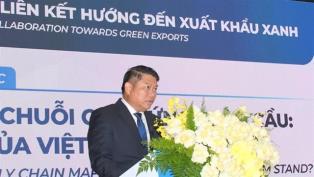
HCM CITY — Việt Nam still has significant room to expand trade and investment cooperation with Japan and South Korea, but domestic businesses must sharpen their strategies and upgrade technological capabilities to remain competitive, experts said at a policy seminar in HCM City this week.
The seminar, organised on Monday by the Centre for International Integration under the HCM City Institute for Development Studies, examined prospects for Việt Nam’s economic engagement with its two major Northeast Asian partners amid tightening technical standards, green transition requirements and shifts in global supply chains.
Vũ Mạnh Đồng, from the Ministry of Industry and Trade’s Department of Overseas Market Development, said Japan remained one of Việt Nam’s most important economic partners across trade, foreign direct investment (FDI), official development assistance and labour cooperation.
Bilateral trade had been underpinned by a network of free trade agreements, including the Việt Nam-Japan Economic Partnership Agreement (VJEPA), the ASEAN-Japan Comprehensive Economic Partnership (AJCEP), the Comprehensive and Progressive Agreement for Trans-Pacific Partnership (CPTPP) and the Regional Comprehensive Economic Partnership (RCEP).
Trade structures between the two countries are largely complementary rather than directly competitive, according to Đồng.
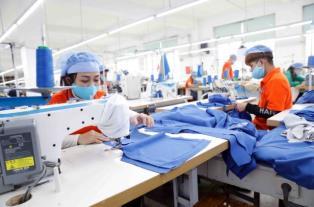
Việt Nam mainly exports textiles and garments, transport equipment and parts, machinery, wood products, seafood, and computers and components to Japan, while importing electronic products and components, machinery and equipment, and iron and steel.
Japan ranked as Việt Nam’s third-largest foreign investor as of November 2025, with 5,698 registered projects and total capital of US$79.27 billion, accounting for about 15 per cent of accumulated FDI.
Investment is concentrated in manufacturing, power and utilities, and real estate, with Thanh Hóa, Hà Nội, HCM City and Bình Dương (now part of HCM City) among the leading destinations.
Despite advantages such as tariff preferences, geographic proximity and a competitive labour force, Vietnamese firms continue to face challenges, including stringent quality standards, particularly for agricultural and seafood products, rising competition from other exporters, limited access to capital and advanced technology, differences in business culture and exchange-rate volatility.
Exports to Japan are expected to continue growing in furniture, textiles, agricultural and aquatic products, food and handicrafts. Frozen fruits and vegetables, deeply processed foods and ready-to-eat products are seen as having strong growth potential.
However, Japan’s regulatory environment is among the strictest globally, according to Phạm Minh Hà, first secretary at the Việt Nam Trade Office in Japan. Electronics must comply with chemical labelling rules, textiles with Japanese Industrial Standards and chemical-control requirements, while vehicles and parts require safety certification under type-approval systems.
Japan has also tightened rules on genetically modified food labelling, legal timber traceability and formaldehyde limits, while shifting to a “positive list” approach for food-packaging materials. Consumer preferences increasingly prioritise safety, traceability, environmental sustainability and health.
To succeed, Vietnamese firms must regularly update regulatory knowledge, strictly control input quality, invest in production technology and adopt long-term market strategies, Hà said.
South Korea also offers major opportunities alongside rising barriers. Phạm Khắc Tuyên, commercial counsellor at Việt Nam’s Embassy in South Korea, said competition based solely on low prices was fading, replaced by a “total value” approach that emphasises transparency, suitability and supply stability.
South Korea is accelerating green and digital transitions while tightening technical barriers, according to Tuyên.
Vietnamese firms face increasingly complex legal and technical standards, mandatory environmental, social and governance (ESG) requirements, pressure to localise and build trust in digital markets, and strict gatekeeping by distribution systems.
South Korea is currently Việt Nam’s largest FDI investor, with accumulated investment of about $92 billion. Major conglomerates such as Samsung, SK and LG are expanding into electronics, semiconductors, artificial intelligence, research and development, energy, batteries and data centres.
Nguyễn Duy Kiên, head of the Northeast Asia and South Pacific Division at the Ministry of Industry and Trade’s Agency for Foreign Trade, said the biggest opportunity for Vietnamese firms would lie in deeper participation in South Korean supply chains, particularly in supporting industries.
However, risks would include overdependence on single buyers, insufficient investment in quality management and limited understanding of Korean business culture.
Vietnamese firms should follow a phased upgrade path, while policymakers shift from traditional investment promotion towards strategic support, including certification assistance, digital transformation and legal advisory services, he said. — VNS