Việt Nam emerges as strategic hub in Asian supply chain shifts
Việt Nam is emerging as a strategic hub in Asian value chains as businesses restructure their regional supply chains amidst geopolitical tensions and shifting consumption patterns, experts said at a business summit in HCM City on Thursday.
HCM CITY — Việt Nam is emerging as a strategic hub in Asian value chains as businesses restructure their regional supply chains amidst geopolitical tensions and shifting consumption patterns, experts said at a business summit in HCM City on Thursday.
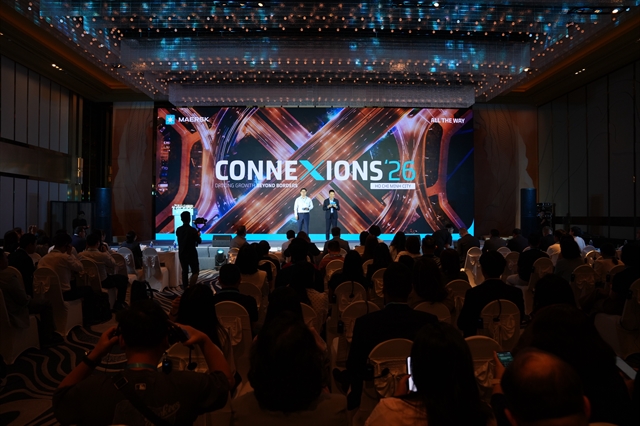
The Connexions 2026 business summit, hosted by Denmark-based integrated logistics company A.P. Moller – Maersk (Maersk), provided a strategic outlook on trade, logistics, and supply chain trends in the Mekong region.
Global trade continues to be affected by geopolitical tensions, tariff changes and rapid shifts in consumption patterns, which has prompted businesses in Asia to restructure their supply chains for greater diversity and resilience.
Given this situation, countries in the Mekong area stand out as potential destinations for the restructuring of supply chains in Asia. Among them, Việt Nam has become a strategic destination within the region and in global value chains.
Kevin Stuart Burrell, Managing Director of Area Managing Director of Maersk Mekong, said the company had identified Việt Nam as a long-term growth cluster within its Asia network.
The country holds an advantage in strategic location, strong economic growth, infrastructure investments and an extensive FTA network.
It also has a young and willing workforce, a growing digital presence and strong environmental commitments.
In 2025, the country's GDP was US$514 billion, growing 8.02 per cent compared to last year, while foreign trade reached US$930 billion.
Furthermore, the Việt Nam-China economic bond is becoming more strategic as part of this wider structural transition.
This was demonstrated by bilateral trade turnover reaching a record US$252 billion in 2025, a 26.5 per cent increase over the previous year.
China remains Việt Nam’s largest source of materials, machinery and intermediate goods, while Việt Nam plays a rising role as both a manufacturing base and an export gateway to global markets.
The complementary strengths of the two countries are accelerating the development of cross-border supply chain ecosystems.
In addition, Burrell highlighted the Vietnamese Government's efforts to improve the investment environment and refine the legal framework, as well as to attract foreign direct investment (FDI).
However, he noted that the implementation of infrastructure projects should be further accelerated to meet Việt Nam's development needs.
Furthermore, the country’s logistics sector faces a workforce shortage, particularly as a segment of truck drivers moving abroad for higher wages is putting pressure on the domestic labour supply. Therefore, developing and retaining talent in Việt Nam to ensure growth within the industry is crucial, he added. — VNS