Việt Nam draws up criteria needed for strategic SOEs to drive growth
Việt Nam needs a broader set of performance indicators that would go beyond profit and State budget contributions to include innovation capacity, digital transformation, labour productivity and environmental, social and governance standards.

HÀ NỘI — Việt Nam is drawing up criteria for a list of large State-owned enterprises (SOEs) in strategic sectors as part of a broader effort to build globally competitive national enterprises.
Under the Politburo’s Resolution 79-NQ/TW, the Government has set a target of placing up to three Vietnamese companies among the world's 500 largest firms and 50 in the top 500 Asian enterprises by the end of the decade.
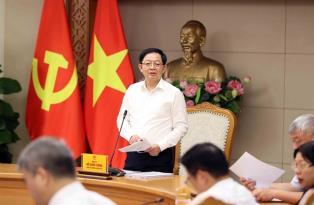
Nguyễn Thu Thủy, deputy director of the Ministry of Finance's State Enterprise Development Department, said drawing up criteria for large SOEs in strategic sectors is critical to promote their development towards the goal set in Resolution 79.
She said the ministry is reviewing international ranking criteria, including asset size, equity value and other financial indicators, to determine an appropriate framework for Việt Nam.
The selection process will not rely solely on the current size of enterprises, but will also take into account their long-term growth potential, Thuỷ noted. Companies operating in priority sectors could be included even if they have not yet reached a large scale.
Thuỷ said recent amendments to laws governing State capital management and investment have expanded the authority of SOEs in areas such as business strategy, investment decisions, organisational restructuring and wage policies.
The Ministry of Finance is also studying a range of preferential mechanisms covering financial resources, salary policies and governance arrangements to strengthen the competitiveness of State-owned firms, including performance-based reward schemes.
Thủy said companies now have greater authority to determine salary and bonus funds, which is expected to create stronger incentives to improve performance. Proposed bonus levels could range from 5 to 10 per cent of profits exceeding planned targets.
Economist Nguyễn Đình Cung stressed the importance of institutional reform in developing globally competitive enterprises.
He said that pilot programmes should initially focus on established firms, such as Petrovietnam, Petrolimex and Viettel, adding that providing them with clear strategic goals, sufficient resources and greater operational independence is crucial.
SOEs will need to master science and core technologies across value chains to maintain their leading role, he said, noting that achieving this goal would require substantial investment and a willingness to accept a higher degree of risk.
He said that SOEs should be assessed based on their overall performance rather than the success or failure of individual projects, particularly in areas involving technological innovation, where higher risks are inevitable.
Economica Vietnam CEO Lê Duy Bình called for a broader set of performance indicators that would go beyond profit and State budget contributions to include innovation capacity, digital transformation, labour productivity and environmental, social and governance standards.
The implementation of Resolution 79 would require SOEs to gradually adopt governance standards promoted by the Organisation for Economic Co-operation and Development.
Stronger market discipline would also help improve the efficiency and competitiveness of SOEs, he said, adding that greater transparency and accountability would be essential to achieve the Government's ambition of building companies capable of competing with leading firms in Asia and globally. — VNS