Việt Nam, Canada launch blended finance initiative
Việt Nam and Canada on Tuesday launched a new blended finance initiative designed to unlock private investment for climate enterprises, marking another milestone in bilateral cooperation to promote green growth, innovation and sustainable private sector development.
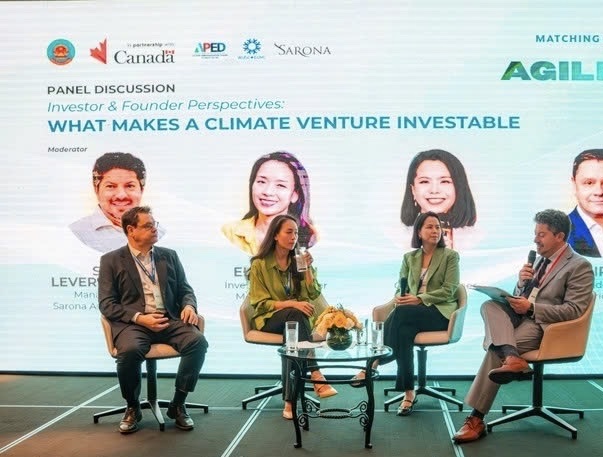
HCM CITY — Việt Nam and Canada on Tuesday launched a new blended finance initiative designed to unlock private investment for climate enterprises, marking another milestone in bilateral cooperation to promote green growth, innovation and sustainable private sector development.
The initiative, unveiled through the Matching Grant Facility (MGF) under the Advancing Growth, Innovation and Leadership for Enterprises (AGILE) project, aims to use official development assistance (ODA) as catalytic capital to reduce investment risks and attract significantly greater private financing into climate-focused businesses.
Under the model, every dollar of Canadian ODA is expected to mobilise around five dollars of private capital, demonstrating how concessional public funding can leverage commercial investment to accelerate climate action and business innovation.
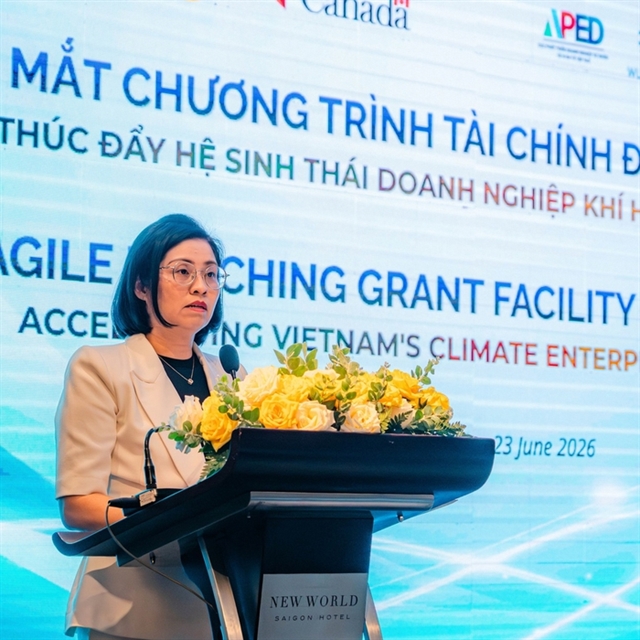
Speaking at the launch ceremony, Trịnh Thị Hương, deputy director general of the Agency for Private Enterprise Development under the Ministry of Finance, said the Matching Grant Facility is more than a financial support mechanism, serving as a pilot model for innovative finance in Việt Nam.
She said the programme is designed to connect public development assistance with private investment while generating practical experience for policymakers in developing future financing mechanisms for green and innovative enterprises.
"The facility is expected to demonstrate how a relatively small amount of concessional funding can mobilise significantly larger private investment while strengthening cooperation among government agencies, investors, business support organisations and climate enterprises," Hương said.
According to her, the programme reflects the Government's efforts to diversify financing sources for innovative businesses and accelerate the development of a more sustainable climate entrepreneurship ecosystem.
The launch follows the rollout of the AGILE project earlier this year by the Ministry of Finance in partnership with Global Affairs Canada, the Embassy of Canada in Việt Nam, the World University Service of Canada (WUSC) and Sarona Asset Management.
The five-year project, valued at CAD9.75 million (approximately US$7.1 million), runs from 2025 to 2029 and aims to strengthen Việt Nam's climate enterprise ecosystem while expanding access to finance for innovative businesses, particularly those led by women.
The project focuses on three key pillars: strengthening business support organisations serving climate enterprises, improving access to investment for gender-responsive climate businesses, and promoting greater use of gender-lens investing among financial institutions and investors.
Climate enterprises are playing an increasingly important role in developing technologies and business solutions that help reduce greenhouse gas emissions, improve resource efficiency and strengthen communities' resilience to climate change.
However, many startups and small businesses continue to face difficulties securing commercial finance because investors often regard early-stage climate ventures as carrying higher technological and market risks.
The new facility seeks to narrow that financing gap by combining public development funding with private investment while providing technical assistance to improve enterprises' investment readiness.
Participating enterprises will receive capacity-building support, mentoring and advisory services to strengthen business models, improve corporate governance and prepare for future fundraising.
Organisers expect the programme to support 56 climate enterprises, with priority given to women-led businesses and companies integrating gender equality into their operations.
Speaking at the official launch of the AGILE project in February, Deputy Minister of Finance Đỗ Thành Trung said climate change remains one of the greatest challenges facing Việt Nam's sustainable development, making innovation and private sector participation increasingly important.
He said climate enterprises not only create economic value but also develop practical solutions to address environmental challenges, contributing to the country's green growth strategy and commitment to achieve net-zero emissions by 2050.
However, many promising businesses continue to face obstacles, including limited access to finance, technical expertise and investor networks.
Innovative financing mechanisms such as blended finance could therefore play an important role in helping climate enterprises scale up and attract long-term investment, he added.
Also speaking at the AGILE launch, Canadian Ambassador to Việt Nam Jim Nickel reaffirmed Canada's commitment to supporting Việt Nam's green transition through innovative financing solutions.
He said Global Affairs Canada would work with the Ministry of Finance, the World University Service of Canada (WUSC) and Sarona Asset Management to use official development assistance as catalytic capital to reduce investment risks and mobilise private investment for climate enterprises.
Nickel said the project would strengthen the capacity of domestic business support organisations, particularly those supporting women-led climate enterprises, helping businesses become investment-ready and better positioned to attract commercial financing.
He added that the initiative aligns with Canada's renewed international development approach, which promotes shared prosperity through stronger investment partnerships, greener supply chains and expanded trade opportunities between Canadian and Vietnamese businesses.
The initiative comes as Việt Nam accelerates efforts to mobilise private capital to meet its climate commitments.
According to international development organisations, achieving the country's green growth and net-zero ambitions will require investment far beyond the capacity of public budgets alone, making blended finance an increasingly important tool for attracting institutional and private investors.
Experts say the Matching Grant Facility represents one of the first programmes in Việt Nam to explicitly apply a blended finance approach to climate entrepreneurship, combining concessional funding, technical assistance and investor engagement within a single mechanism.
Beyond supporting individual enterprises, the facility is expected to strengthen the broader innovation ecosystem by fostering closer collaboration between government agencies, investors, accelerators, universities and business support organisations. Lessons learned from the pilot programme are also expected to inform future policies on innovative finance and climate investment.
As Việt Nam continues implementing reforms to strengthen the private sector and advance green growth, the organisers said the programme could serve as a model for mobilising significantly larger pools of private capital through targeted use of development assistance, helping climate enterprises expand their impact while supporting the country's long-term sustainable development goals. — VNS