Universities ramp up AI investment as employers report graduate skills gap
According to the report, the gap partly reflects differences in how educational institutions and businesses approach AI. While universities tend to focus on teaching students to use existing AI tools, employers expect graduates to go further by applying AI to solve real-world problems.
HÀ NỘI — Việt Nam is among the markets rapidly adopting AI, with 96 per cent of surveyed higher education leaders saying their institutions are investing in the technology.
However, only 15 per cent of employers in Việt Nam rate recent graduates as excellent in the key competencies required to work in AI-integrated environments.
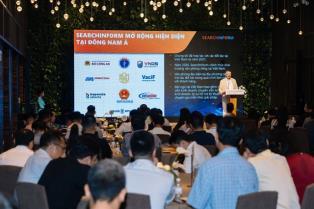
These are among the main findings of a study titled AI Readiness: Building the Bridge from Higher Education to Work released in Hà Nội on Tuesday by Pearson, a global education company, in partnership with Amazon Web Services (AWS), Amazon’s cloud computing services provider.
The study surveyed six markets, including Brazil, Malaysia, Saudi Arabia, the UK, the US and Việt Nam, to assess students’ readiness to apply AI skills as they transition from higher education to the workplace.
Its findings show that 90 per cent of surveyed higher education leaders in Việt Nam consider the pace of AI-driven workplace change to be ‘extremely fast’ or ‘very fast’, 23 percentage points above the global average of 67 per cent. All respondents expected this pace to accelerate further over the next two years.
In response to this trend, educational institutions are stepping up investment in AI. Some 96 per cent of surveyed university and college leaders said their institutions were investing in the technology, while 84 per cent reported regularly engaging with businesses to understand market needs.
On the student side, more than 52 per cent of Vietnamese students rated their readiness to work in AI-integrated environments at between eight and 10 on a 10-point scale. This was the highest level of self-reported confidence among the six nations surveyed.
However, employer feedback points to a significant gap between students’ confidence and the actual demands of the labour market. Across eight competency areas, only 15 per cent of employers in Việt Nam rated recent graduates as excellent in the key skills needed to work in AI-integrated environments, on average.
The eight areas assessed were subject-matter knowledge; adaptability; effective use of AI tools; creativity and innovation; application of academic knowledge to practical work; commitment to continuous learning; communication and collaboration; and critical evaluation of AI-generated outputs.
According to the report, this gap partly reflects differences in how educational institutions and businesses approach AI. While universities tend to focus on teaching students to use existing AI tools, employers expect graduates to go further by applying AI to solve real-world problems.
Technical skills therefore would need to be combined with creativity, critical thinking, data analysis, communication and collaboration, the report said.
The challenge is not unique to Việt Nam. Across the six markets surveyed, 53 per cent of employers reported difficulties finding recent graduates with AI skills that meet workplace requirements.
According to Pearson and AWS, the major challenge facing young workers today is not access to AI tools, but the ability to combine effective AI use with essential human skills.
The report recommends that students gain exposure to and hands-on experience with AI throughout their studies, rather than simply learning how to operate specific tools. AI should be integrated into core curricula and teacher training to ensure that graduates’ practical AI capabilities are better aligned with labour market demands.
For higher education institutions, the report recommends shortening curriculum review cycles, developing flexible learning pathways and stackable credentials, strengthening AI-related pedagogical training for lecturers, and expanding opportunities for students to apply AI in real-world projects and earn academic credits for their work.
Businesses can help narrow the skills gap by participating in advisory boards, sponsoring practical projects and providing lecturers with opportunities to gain experience in business environments.
Policymakers, meanwhile, are encouraged to continue refining regulations and policies to create a legal framework for integrating international digital skills certifications into university programmes.
Pearson’s Director of Higher Education for Asia-Pacific Eklavya Bhave said Việt Nam was moving rapidly amid the AI wave, but a skills gap remained.
He said curricula, skills assessments and credentials needed to be connected through a clear pathway that would enable students to turn learning outcomes into sustainable career opportunities.
Yashinta Bahana, director of APJ Market Expansion and Strategic Partnerships for Training and Certification at AWS, said Vietnamese students had demonstrated a strong willingness to embrace AI and a positive outlook on the technology.
The next priority would be to translate that potential into practical capabilities through hands-on training and stronger collaboration between educational institutions and businesses, she said. — VNS