Twenty-five banks granted extra credit room for social housing, industrial property loans
The State Bank of Việt Nam (SBV) has allowed 25 commercial banks to exclude additional lending for social housing, industrial parks and export processing zones from their 2026 real estate credit growth limits, in a move aimed at directing more capital into priority sectors.
HCM CITY — The State Bank of Việt Nam (SBV) has allowed 25 commercial banks to exclude additional lending for social housing, industrial parks and export processing zones from their 2026 real estate credit growth limits, in a move aimed at directing more capital into priority sectors.
Under new guidance issued by the central bank on Saturday, outstanding loans extended to these segments between January 1 and December 31, 2026, that exceed their levels at the end of 2025 will not be counted toward banks’ real estate credit growth ceilings for the year.
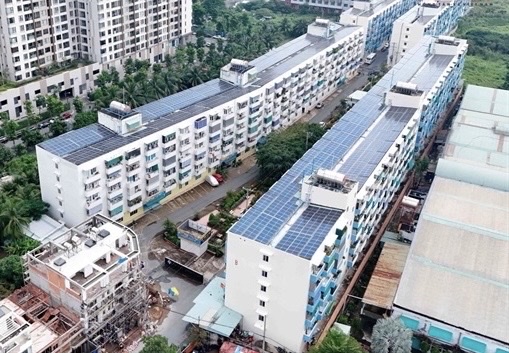
The policy aims to create greater room for lenders to expand financing for social housing projects and industrial infrastructure, in line with the Government’s strategy to support affordable housing development, industrial production and socio-economic growth.
The mechanism applies to 25 commercial banks, including major lenders such as VietinBank, Agribank, BIDV, MSB, Sacombank, Eximbank, Nam A Bank, ACB, Saigonbank and Techcombank.
By excluding additional lending to these categories from overall real estate credit controls, the SBV aims to encourage banks to channel more funding into productive and socially beneficial property segments while maintaining oversight of speculative lending.
The central bank said credit growth had accelerated steadily since the start of the year to meet rising capital demand in the economy, with total outstanding loans reaching more than VNĐ19.4 quadrillion (US$737 billion) as of April 28, up 4.42 per cent from the end of 2025 and 18.26 per cent year-on-year.
Outstanding loans to the agriculture and rural development sector stood at VNĐ4.3 quadrillion, accounting for around 22.2 per cent of total credit, while lending to small and medium-sized enterprises reached nearly VNĐ3.8 quadrillion, or about 20 per cent.
Credit growth to export-oriented enterprises and high-tech firms also expanded strongly, up 11.2 per cent and 18.81 per cent respectively in the first quarter.
Meanwhile, outstanding green credit exceeded VNĐ780 trillion, while loans subject to environmental and social risk assessments totalled more than VNĐ5.1 quadrillion.
As of mid-March 2026, total outstanding loans under social housing programmes had reached approximately VNĐ41 trillion.
Of the total, the Vietnam Bank for Social Policies had disbursed more than VNĐ25 trillion, while commercial banks had extended over VNĐ16 trillion.
Experts said the preferential treatment could help accelerate the rollout of social housing projects and improve credit access for industrial park developers, both of which are key to sustaining Việt Nam’s manufacturing expansion and meeting rising demand for affordable urban housing. — VNS