Traceability reshapes consumer behaviour, supply chains
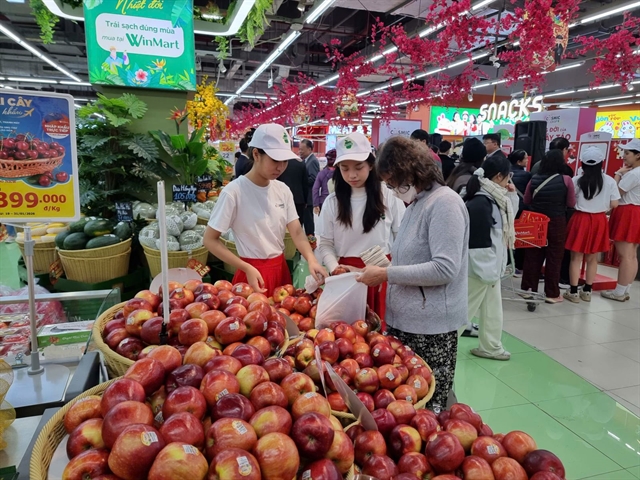
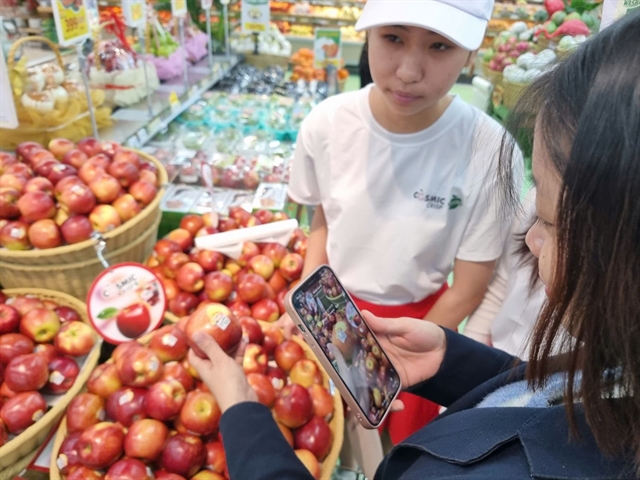
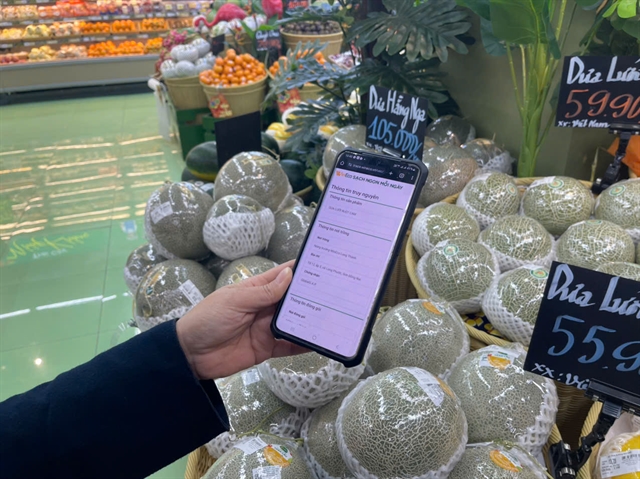
At supermarkets, convenience stores and traditional markets, scanning QR codes to check product origin and supply-chain information is becoming more common.
HÀ NỘI — Traceability systems are increasingly influencing how Vietnamese consumers buy and how businesses manage goods, as concerns over product origin, quality and authenticity grow amid rising cases of counterfeiting and trade fraud, experts have said.
Growing focus on product origins
From QR codes on food packaging to more advanced platforms using big data, artificial intelligence and blockchain, traceability is becoming a core requirement rather than an optional add-on in Việt Nam’s production and distribution systems.
Vietnamese consumers, who once prioritised price, appearance and familiar brands, are now placing greater emphasis on transparency and trust. At supermarkets, convenience stores and traditional markets, scanning QR codes to check product origin and supply-chain information is becoming more common.
“I used to hesitate when buying food because the origin was unclear,” said Bùi Thị Hà, a resident in Hà Nội’s Tây Hồ Commune.
“Now, with traceability codes, I feel more secure and am willing to pay more for products that are transparent.”
The shift is putting pressure on companies and authorities to make supply chains more transparent in order to remain competitive and ensure consumer confidence, according to experts.
Việt Nam has promoted traceability at the national level since 2019, when the Prime Minister approved a project to develop and manage a nationwide traceability system under Decision No 100/QĐ-TTg.
According to Bùi Bá Chính, director of the Ministry of Science and Technology's National Numbering and Barcodes Centre, all 34 provinces and cities following administrative reorganisation have developed traceability plans, focusing on key product groups and One Commune One Product items. More than 25,000 businesses have joined the system to date.
Authorities say traceability has helped improve responses to food safety incidents and strengthened efforts to combat smuggling and commercial fraud.
Traceability is also aligned with Việt Nam’s broader digital transformation agenda.
A Politburo resolution issued in December 2024 identified science, technology, innovation and digital transformation as strategic priorities, highlighting technologies such as AI, blockchain and smart traceability as drivers of productivity and economic competitiveness.
Traceability boosts long-term brand value
While some companies initially viewed traceability as an added cost, many now see it as a long-term investment in brand value.
One hundred ancient Shan Tuyết tea trees in a protected raw material area managed by the Tuyên Quang Province-located Thượng Sơn Medicinal Tea Cooperative, a key supplier to Núi Đèn Medicinal Tea JSC, have been fitted with RFID tags to enable material identification. This initiative lays the groundwork for completing the traceability system and issuing a digital passport for each finished product.
Analysts say that such systems are helping Vietnamese exporters move away from competing on volume alone and toward higher-value competition based on quality, data and brand reputation.
Despite progress, Việt Nam’s traceability landscape remains highly fragmented. A lack of unified standards and a common data language is seen as one of the biggest obstacles.
According to Nguyễn Đức Lê, director of the Domestic Markets Management Department under the Ministry of Industry and Trade, multiple traceability systems are currently operating in parallel.
Within the same supply chain, some companies apply GS1 standards, while others rely on self-generated codes, proprietary QR systems and data stored on isolated servers, complicating nationwide integration and verification.
In agriculture, traceability data is largely self-declared by businesses and individual producers, with limited verification by State authorities, according to Nguyễn Bảo Trung, deputy director of the Digital Conversion Department and Information Resource Data under the Ministry of Agriculture and Environment.
Fragmented production structures and the cost of maintaining traceability systems remain major barriers for cooperatives and small-scale producers.
Further complicating matters, export markets apply different technical requirements for traceability, making data reuse and synchronisation across systems more difficult.
Unified legal framework needed
"Traceability is not only a market requirement but also a prerequisite for transparency, product quality and consumer protection," said Chu Hoàng Hà, vice president of the Vietnam Academy of Science and Technology.
"The application of technologies such as RFID, the Internet of Things, blockchain, big data and artificial intelligence will underpin the development of a modern, secure and interconnected traceability ecosystem," he said.
To ensure effective application of technology, experts suggest that Việt Nam should have a unified legal framework, stronger data-verification roles for ministries and agencies, and expanded public-private partnerships to help businesses, particularly small and medium-sized enterprises, access traceability technologies at manageable costs.
A representative of the Ministry of Agriculture and Environment said the Government was preparing a decree on product identification and traceability, which would clarify the responsibilities of each participant in the supply chain and establish a coordinated legal basis for data connection and sharing. — VNS