Top leader calls 2026 pivotal year, warns double-digit growth will be challenging
Top leader says 2026 will mark the start of a new development phase under Việt Nam's latest five-year plan, though acknowledges that sustaining double-digit economic growth will be challenging as traditional drivers lose momentum.
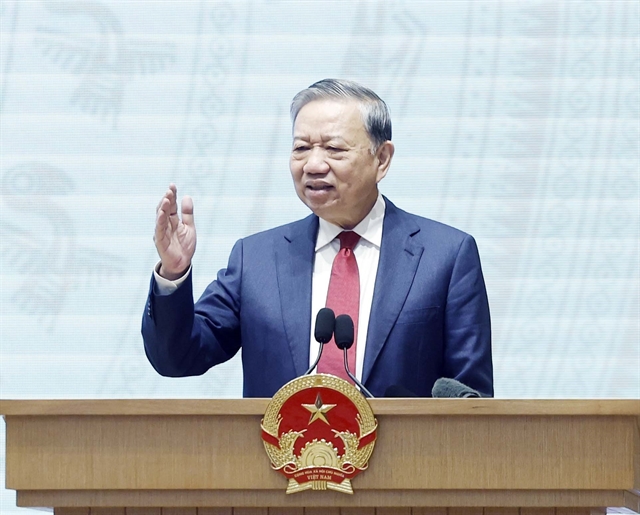
HÀ NỘI — Việt Nam's top leader has described 2026 as a decisive year for shaping the country’s long-term development path, while acknowledging that the double-digit economic growth target will be challenging amid mounting structural constraints.
Communist Party General Secretary Tô Lâm was speaking at Thursday’s government conference reviewing performance in 2025 and outlining priorities for 2026.
He said 2026 would usher in a new development phase tied to implementation of the Party’s 14th Congress resolution and the five-year socio-economic plan for 2026–2030.
“2026 is a very important year in shaping the development model and long-term growth trajectory of the country,” the Party chief said, adding that achieving GDP growth of 10 per cent or more would be challenging.
Despite global uncertainty, Việt Nam has maintained macro-economic stability and posted broad-based gains across multiple sectors, he said, helping to lift up living standards and enhance the country’s international standing.
These achievements, he added, form a foundation for pursuing faster growth in the years ahead.
At the same time, the General Secretary pointed to waning momentum from traditional growth drivers, enduring weaknesses in productivity and competitiveness, and the limits of existing policy tools.
“Old ways of doing things no longer meet new requirements,” he said.
Against this backdrop, Party chief Lâm called for a fundamental shift in development thinking, governance practices and resource allocation, alongside deeper decentralisation and more decisive reforms.
He urged ministries and local authorities to dismantle institutional bottlenecks that are locking up capital and investment, and to move away from a compliance-driven administrative mindset towards one that actively supports development.
Clear lines of responsibility are essential, he said, to prevent delays and the avoidance of inaccountability.
Macro-economic stability will remain a core priority, with continued efforts to control inflation and better coordinate fiscal and monetary policy through market-based tools rather than administrative measures.
Credit should be channelled more forcefully into productive and priority sectors, he said, while speculative and non-productive activities must be restrained.
The General Secretary also outlined plans to improve the investment climate, expand decentralisation and cut compliance costs for businesses and citizens.
He cautioned against over-regulation, including what he described as a reflex to ban activities seen as difficult to manage, and called for inspections and audits to be carried out without harassment or abuse.
On the financial sector, he said authorities should study mechanisms for the controlled resolution of weak banks and tackle long-standing issues such as cross-ownership and relationship-based lending.
More broadly, the Party leader said Việt Nam must accelerate its shift towards a growth model anchored in productivity, innovation and technology, placing human capital, science and technological capacity at the centre of its long-term strategy.
He described this as critical to avoiding the middle-income trap and sustaining high growth.
The Government is urged to restructure the economy towards greener, more digital and circular models, while using digital transformation and innovation to breathe new life into traditional growth sectors.
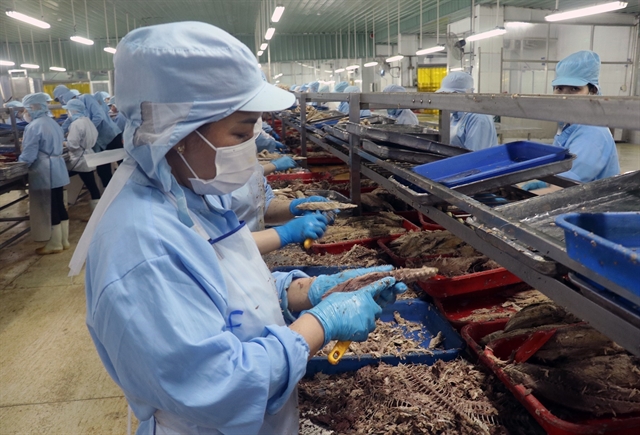
Private enterprises, he said, should be given greater scope to expand, including the emergence of large domestic conglomerates capable of taking part in major infrastructure and high-technology projects.
Infrastructure development featured prominently in his remarks, as he called for focused investment in transport corridors, railways, airports, seaports, energy and digital infrastructure, with tangible progress required in 2026.
Energy security, particularly the expansion of clean power, was described as essential, alongside broader 5G coverage, research into 6G, data centre development and early steps towards semiconductor manufacturing.
Public investment, he said, should play a stronger catalytic role in mobilising private capital, with the aim of improving capital efficiency over time.
The General Secretary also highlighted labour market restructuring, the expansion of English as a second language in schools and the gradual introduction of artificial intelligence and robotics into general education.
He called for targeted support for leading universities and strategic research programmes to underpin long-term development.
Other priorities included the development of cultural industries such as film, cultural tourism and performing arts, expanded social housing construction, school building in border areas, climate adaptation, environmental protection and improved management of land, real estate and rare earth resources.
“A new opportunity is opening up, but opportunity only becomes reality through effort and action,” Party Chief Lâm said.
He also underscored the role of economic and technology diplomacy, the integration of economic development with national defence and security, and preparations to host APEC 2027.
Prime Minister Phạm Minh Chính said the Government would fully incorporate the General Secretary’s guidance, including the ambition of pursuing double-digit growth from 2026 onwards, while maintaining macro-economic stability and strengthening strategic autonomy.
He said rapid growth must be accompanied by fiscal discipline, controlled public debt, social equity, environmental protection and improved living standards.
Stability, the Prime Minister added, remains a prerequisite for development, and Việt Nam will continue to invest in defence and security capabilities alongside economic priorities. — VNS