Textile and garment industry repositions strategy amid global economic volatility
Supply chains are under strain from stricter compliance requirements, rising logistics costs, tougher standards imposed by international brands, rapidly changing purchasing policies in major markets, tariff measures and the growing emphasis on sustainable development.
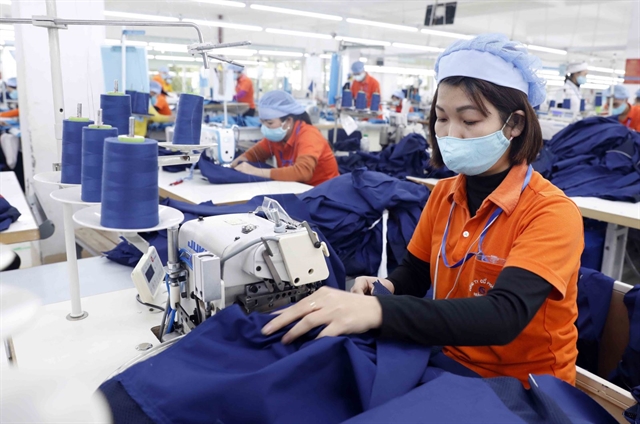
HÀ NỘI — The textile and garment industry is accelerating strategic adjustments to adapt to an increasingly volatile global economy, marked by shifting trade policies, market uncertainty and mounting pressure on supply chains.
Vũ Đức Giang, chairman of the Vietnam Textile and Apparel Association (VITAS) delivered this statement during a conference in Hà Nội on Tuesday.
Giang said that the sector is facing significant challenges as global economic fluctuations intensify.
Supply chains are under strain from stricter compliance requirements, rising logistics costs, tougher standards imposed by international brands, rapidly changing purchasing policies in major markets, tariff measures and the growing emphasis on sustainable development.
"These factors are forcing the industry to urgently reposition its medium- and long-term development strategy,” Giang said.
In response, the industry has established and implemented three core strategic pillars. The first is market diversification. Previously reliant on a limited number of traditional export destinations, Vietnamese textile and garment products are now exported to 138 markets worldwide, helping reduce risks and enhance resilience against external shocks.
The second pillar focuses on diversifying partners and customers. By expanding its client base beyond a small number of major brands, the industry has improved its negotiating position, increased flexibility in adapting to new purchasing models and reduced dependency risks.
The third pillar is product diversification. Enterprises are gradually shifting away from simple processing toward higher value-added products that better meet increasingly diverse market demand and emerging consumer trends.
To support these strategies, the industry is implementing five key solution groups. Notably, a comprehensive greening programme is being rolled out, positioning sustainable development not only as a compliance requirement but also as a prerequisite for deeper integration into global value chains, according to Giang.
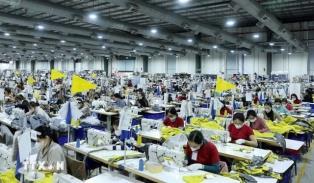
At the same time, textile and garment enterprises are stepping up the adoption of science and technology, automation and robotics, while gradually integrating artificial intelligence into production and supply chain management. These measures are expected to play a critical role in enhancing productivity, improving quality and strengthening the industry’s long-term competitiveness.
Giang said the evolving global context is creating significant opportunities for the industry, particularly through strategies aimed at diversifying export markets, customers and product portfolios.
However, he stressed that these opportunities can only be fully realised if enterprises can participate more deeply in global value chains. This requires greater proactivity in areas such as design, technology adoption, raw material development and brand building, enabling Vietnamese textile and garment firms to move up the value ladder and strengthen their competitiveness in international markets.
Strong resilience amid global economic challenges
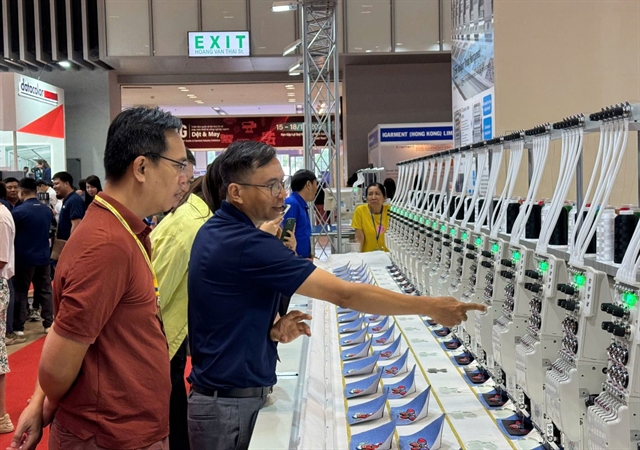
Trần Thanh Hải, deputy director of the Import-Export Department under the Ministry of Industry and Trade (MoIT), said that 2025 concluded against a backdrop of persistent global economic challenges, marked by heightened uncertainty and unpredictable developments.
Despite these headwinds, Hải noted that Việt Nam’s textile and garment businesses have demonstrated strong resilience, a proactive mindset and flexible adaptability. He highlighted that the US implementation of reciprocal tariff measures has acted as a catalyst for the industry to restructure and move up the value chain.
Many textile and garment enterprises have responded swiftly by shifting toward high value-added products, while at the same time diversifying export markets. This strategic adjustment, Hải said, has enabled businesses to turn external pressures into opportunities for innovation and sustainable growth.
However, he warned that the local textile and garment industry is facing mounting challenges amid an increasingly complex and unpredictable global trade environment.
He pointed to the growing use of trade defence measures, alongside tighter technical, environmental and labour-related barriers in major markets. Beyond competitive pricing and product quality, importing countries are now imposing stringent requirements on traceability, carbon emissions, circular economy practices and social responsibility.
At the same time, regional and global competition is intensifying. Many countries continue to benefit from lower labour costs, while major competitors are accelerating their technological recovery and upgrading production capacity. Without sustained innovation, Hải warned, Việt Nam's textile and garment industry risks losing its competitive edge.
A persistent bottleneck remains the low level of localisation of raw materials and components, particularly in weaving, dyeing and finishing. This weakness limits domestic value addition and leaves businesses vulnerable to external market fluctuations.
Against this backdrop, he said the industry must prioritise several key directions, including restructuring toward higher value-added production, developing domestic supply chains, making more effective use of free trade agreements and treating green transformation as a core competitive advantage.
Efforts to strengthen human resources and accelerate digital transformation are also critical, he noted.
Looking ahead, the MoIT will continue to support and create favourable conditions for the textile and garment sector to sustain its role as one of Việt Nam’s key export industries.
Hải noted that 2025 represents a pivotal year for the industry’s global integration. Việt Nam’s textile and garment export turnover is likely to reach US$46 billion by the year-end, up 5.6 per cent year-on-year, reflecting a strategy focused on quality enhancement and strong technological transformation.
The result has helped Việt Nam maintain its position among the world’s top three textile and garment exporters, further affirming its growing stature in the global market, he concluded. —VNS