Tax policies take centre stage in drive for double-digit growth
The challenge is not simply to reduce the tax burden, but to ensure that businesses turn the resources released into investment, innovation, jobs and higher productivity
HÀ NỘI — Việt Nam’s ambition to achieve double-digit economic growth is placing tax policy at the centre of efforts to unlock business investment, sustain production and strengthen the competitiveness of the private sector.
As companies face rising input costs, uneven purchasing power and intensifying competition, tax reductions, payment extensions and administrative reforms are being deployed to ease financial pressures and create more room for expansion.
However, the challenge is not simply to reduce the tax burden, but to ensure that businesses turn the resources released into investment, innovation, jobs and higher productivity to consolidate the foundations for faster economic growth, experts said.
Relief for businesses
Tax measures are built around three priorities, including reducing tax liabilities, supporting cash flow and lowering compliance costs, which together are intended to strengthen businesses' capacity to invest and operate, while supporting the government's broader growth ambitions.
The scale of the measures is substantial.
The Ministry of Finance’s statistics showed that tax and fee exemptions and reductions, together with land-rent relief, amounted to about VNĐ185.6 trillion (US$7.17 billion) in the first nine months of 2026, while payment extensions totalled around VNĐ60 trillion.
Over the same period, state budget revenue reached VNĐ2.18 quardillion, up 12.1 per cent from a year earlier.
The robust revenue growth showed that fiscal support for businesses can coexist with strong revenue collection, underpinning the Government's strategy of nurturing future revenue while easing financial pressures on the business community, Minister of Finance Ngô Văn Tuấn said.
Tax reductions lower state revenue in the short term but the money retained by businesses can be reinvested in production, expansion and income generation, he said.
The additional cash from tax payment extensions can help companies purchase raw materials, pay suppliers, maintain employment and fulfil orders while helping preserve supply chains and productive capacity.
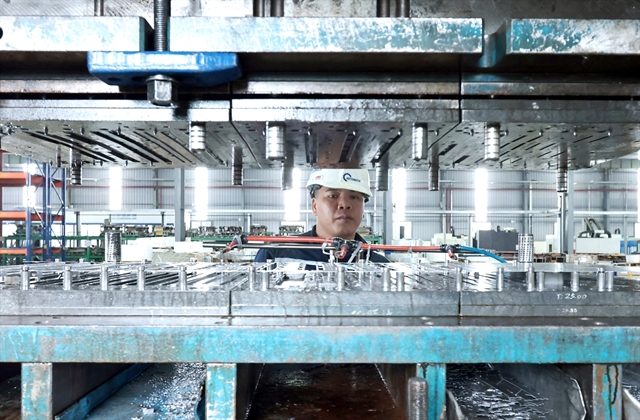
Nguyễn Thị Hương, director of a plastics and packaging manufacturer, said tax relief has already provided additional resources for expansion. She said her company had saved more than VNĐ1 billion through tax reductions and payment extensions, including a cut in value-added tax (VAT), and used the money to invest in machinery and expand production.
Việt Nam is also expanding electronic tax filing and payment services while standardising taxpayer records and improving links between government databases in a shift from traditional tax administration towards a modern, data-driven approach to improve tax management, streamline procedures and reduce compliance costs.
Nguyễn Thị Thu Hà from the Revenue Administration and Development Board under the Vietnam Tax Authority said recent tax policy changes were aimed at reducing financial burdens, improving cash flow, expanding incentives for smaller businesses and lowering compliance costs through administrative reform and digitalisation.
From relief to growth
Lý Phương Duyên, an associate professor at the Academy of Finance, said tax policy should be assessed not only by how much revenue it collects immediately, but also by its ability to nurture future revenue through investment, production expansion and innovation.
A tax incentive delivers lasting economic value when it encourages businesses to invest, develop technology, conduct research or expand their operations, she stressed.
Still, strong revenue growth in the short term does not guarantee the Government will have sufficient resources to sustain broad tax relief in the years ahead.
“Tax policy needs to shift from preventing a short-term slowdown towards developing production capacity over the longer term,” said Nguyễn Văn Phụng, former Director of the Large Taxpayer Office under the Vietnam Tax Authority.
Phụng was quoted by Đầu Tư (Investment) newspaper said VAT reductions should be assessed periodically by product and service category, taking into account how much of the tax cut is passed on to consumers through lower prices, changes in consumption, business revenue, employment and cash flow.
Such assessments would help determine whether the measures generate additional economic activity and deliver sufficient benefits to justify extending them beyond 2026, he said.
Tax payment extensions should instead focus on businesses with genuine production and commercial operations that face temporary liquidity pressures, while avoiding support that merely postpones obligations for entities at risk of insolvency or with poor tax compliance, Phụng added.
Future decisions to continue, narrow or end relief measures should be based on criteria announced in advance rather than blanket extensions, he said.
Phụng said an effective tax framework for double-digit growth must encourage investment, innovation and production expansion, ensure fairness, transparency and relative neutrality across economic sectors, and preserve a sufficiently stable revenue base to fund development, social welfare and macroeconomic stability.
Đậu Anh Tuấn, deputy secretary general of the Vietnam Chamber of Commerce and Industry (VCCI), said small and micro enterprises should receive greater attention in tax and financial support policies, particularly through simpler declaration and payment procedures. — VNS