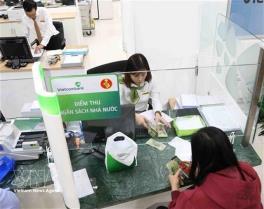
Tax authority eases transition to new tax declaration system for household businesses
Việt Nam's tax authorities are rolling out support measures to help millions of household businesses adjust to significant changes in the country’s tax regime as mandatory tax declaration replaces the long-standing lump-sum tax system from January 1, 2026.

HCM CITY — Việt Nam's tax authorities are rolling out support measures to help millions of household businesses adjust to significant changes in the country’s tax regime as mandatory tax declaration replaces the long-standing lump-sum tax system from January 1, 2026.
At a workshop on Thursday organised by Tuổi Trẻ (Youth) newspaper in co-operation with the General Department of Taxation, officials emphasised that during the early stages of implementation, the focus will be on guidance and support rather than enforcement as sole proprietors and micro-enterprises adapt to the new requirements.
Leaders from the tax department reassured businesses that the transition will be accompanied by ongoing education and practical assistance.
Under the reformed system, household businesses and individuals are required to self-report and self-calculate their tax liabilities based on actual revenue and activities, replacing the previous flat, lump-sum tax model.
Authorities have also raised the revenue threshold for tax exemption to VNĐ500 million (US$19,000) per year, meaning many small operators will pay no value-added tax (VAT) or personal income tax if their annual turnover remains below this level.
Emphasis on support, not penalty
Tax officials acknowledge that many small operators are unfamiliar with the detailed requirements of invoicing, electronic record-keeping and declaration procedures.
At the workshop, Mai Sơn, deputy director of the General Department of Taxation, said the priority for tax authorities in the early months of 2026 will be to offer guidance, reminders and real-time support, rather than pursuing aggressive inspections or penalties for procedural errors.
Officials also made a key clarification for business owners concerned about potential retroactive tax liabilities: revenue figures declared under the new system for the 2026 tax year will not be used as a basis to retroactively assess or collect taxes under the previous lump-sum regime.
The emphasis on assistance over punitive action aims to calm the anxiety of many small traders who are still grappling with the practicalities of tax declaration, including electronic invoicing requirements and seasonal fluctuations in sales.
Tax authorities have indicated that administrative penalties for incorrect invoice usage or late filings have been simplified and eased to reflect the scale of the sector.
Challenges for small operators
Several household business owners shared their experiences at the event, highlighting real-world challenges.
For instance, operators of online apparel stores and small food vendors expressed uncertainty about how to issue invoices for low-value sales or how to account for delivery fees and marketplace transactions in their tax records.
Tax officials responded with concrete guidance, clarifying that certain additional charges such as delivery fees could be excluded from reported revenue where appropriate.
Việt Nam’s overhaul of tax administration for household businesses is part of a broader digitalisation effort.
The General Department of Taxation is modernising its systems to include automated prompts, data-linked electronic invoicing and integrated platforms to make tax filing more user-friendly.
Officials invited technology partners to expand digital solutions, including simplified invoicing tools and mobile tax declaration services that reduce the technical burden on small business operators.
From January 1, 2026, laws repealing the lump-sum tax for household businesses took effect, requiring self-declaration of both VAT and personal income tax.
Under the new framework, operators with revenue below VNĐ500 million per year are exempt from VAT and personal income tax altogether, while those above the threshold must calculate their tax obligations based on actual revenue and allowable deductions.
Tax authorities have pledged to continue outreach and education efforts throughout the year, aiming to help all household enterprises navigate the first filings successfully. — VNS