
The domestic market should not be viewed simply as a lifeline when exports face difficulties, but as a long-term market where companies can build brands, develop products and increase value added.
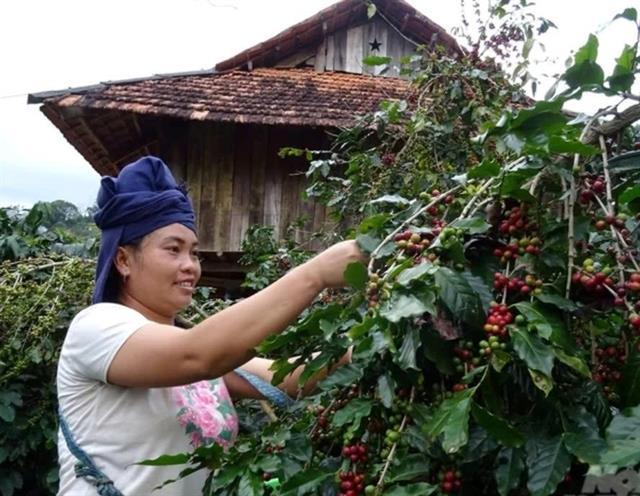
Changes in anti-deforestation rules are important for Việt Nam whose timber, coffee and rubber supply chains are closely integrated with international markets.
Việt Nam is optimistic about achieving around US$9 billion in exports in 2026, supported by higher production, growing investments in value-added processing, and the advantages from complying with the European Union Deforestation Regulation.
The EUDR, which requires companies to prove that products placed on the EU market are not linked to deforestation, will make comprehensive farm-level traceability a prerequisite for exports.
Việt Nam needs to accelerate the development of a unified national database for farming areas to comply with the European Union''s anti-deforestation regulation (EUDR) and support the digital transformation of agriculture, experts said at a conference on Tuesday.
Việt Nam aims to complete provincial forest boundary databases and maps befor the end of this year in a move critical to helpin the timber industry adapt with the European Union’s anti-deforestation rules and maintain exports.
Việt Nam has been officially classified as a “low-risk” country under the European Union’s new Anti-Deforestation Regulation (EUDR), according to a recent announcement by the European Commission (EC) in Brussels.