Stock market offers tactical opportunities in August as valuations improve: SSI
Việt Nam’s stock market could offer tactical trading opportunities in August as valuations become more attractive, foreign selling eases, and margin-related selling pressure subsides, although elevated interest rates remain a key constraint on a broader recovery, according to SSI Research’s latest Monthly Market Review & Outlook.
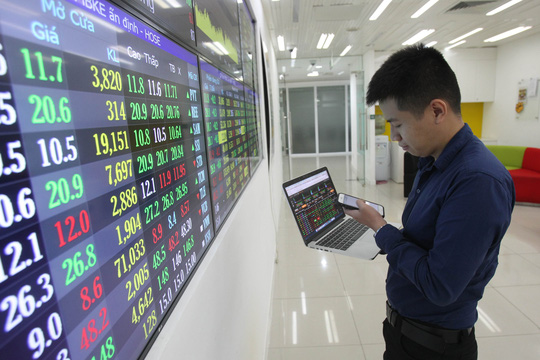
HCM CITY — Việt Nam’s stock market could offer tactical trading opportunities in August as valuations become more attractive, foreign selling eases, and margin-related selling pressure subsides, although elevated interest rates remain a key constraint on a broader recovery, according to SSI Research’s latest Monthly Market Review & Outlook.
It said August has historically been one of the more favourable months for Vietnamese equities, with gains recorded in eight of the past 10 years and positive returns averaging around 5 per cent during those eight years. Even the two negative years, in 2017 and 2019, saw only modest declines of 0.1 per cent and 0.8 per cent.
The outlook follows a sharp correction in July, when the VN-Index fell 6.7 per cent from June to 1,735.8, although it recovered about 4 per cent from its intra-month low of 1,668.
The correction reflected a combination of domestic and external pressures, including legal concerns surrounding several listed companies, elevated interest rates and a more uncertain global backdrop amid geopolitical tensions.
Valuations have become more attractive, with 2026 forward P/E of 12.2 times, or around 9.5 times excluding Vingroup related stocks, approaching levels seen during periods of market stress such as the Covid-19 sell-off in 2020 and the tariff-driven correction in 2025.
Many stocks have also returned to price levels seen in 2023, despite their earnings having increased two- to four-fold since then.
Another supportive factor is the likely easing of margin-related selling pressure. Margin balances increased by VNĐ26.7 trillion in the second quarter, or 6 per cent quarter-on-quarter, contributing to market vulnerability during July's sharp correction.
With part of this leverage likely unwound during the sell-off, forced selling pressure should gradually subside over the coming one to two months, creating a more constructive backdrop for short-term market performance.
However, SSI Research maintains a tactical rather than structural view of the market, as interest-rate pressure is likely to persist through the second half amid strong credit demand and the Government’s ambitious growth targets.
For August, it recommends shifting the focus from the index level to positioning, favouring sectors linked to capacity creation, including industrial parks, logistics, power, building materials, and infrastructure contractors.
It recommends selectivity towards banks while viewing consumption as relatively stable.
Foreign selling eases
Market liquidity remained subdued in July, with average daily trading value at VNĐ19.3 trillion (US$730 million), only marginally below VNĐ19.9 trillion in June, but still well below the VNĐ28 trillion daily average recorded in the first seven months of the year.
But foreign investor activity improved. Net selling moderated to VNĐ11.9 trillion in July, the smallest monthly outflow in five months, even as cumulative foreign outflows in the first seven months topped VNĐ92.3 trillion.
SSI Research expects foreign selling pressure to ease further in August ahead of the first tranche of passive inflows expected in September following FTSE Russell’s upgrade of Việt Nam to Emerging Market status.
It also sees potential for Việt Nam to benefit from a broader reallocation of global capital. After strong first-half gains driven by AI and semiconductor-related themes, several regional markets have faced increased profit-taking pressure.
In contrast, Việt Nam offers a combination of resilient earnings growth, more attractive valuations, and relatively light foreign positioning, creating favourable conditions for incremental capital inflows, SSI Research said.
However, upgrade-related inflows should be viewed as a technical catalyst rather than a substitute for confirmation of foreign-exchange stability, earnings quality, and market investability, it cautioned. — BIZHUB