Spring Fair 2026: the mountain-crossing journey of highland sellers
The Pu Ta Leng Co-operative alone has directly sold around 140 tonnes of noodles, mainly through TikTok Shop.

HÀ NỘI — Amid the rapidly spreading wave of the digital economy, e-commerce is increasingly asserting its role as a vital distribution channel for both large enterprises and small producers in remote and hard-to-reach areas.
In Lai Châu, a mountainous province that still faces many challenges, the story of the Pu Ta Leng Co-operative shows how e-commerce can become a shortcut for highland agricultural products to reach a broad market.
Speaking with reporters from the Vietnam News Agency, Pu Ta Leng Co-operative Director Vũ Bích Hồng recalled that her journey began in a rather simple way.
Starting from spontaneous online selling, she gradually learned how to do e-commerce more systematically, and step by step integrated this model into the co-operative’s operations.
“I have opened up an additional market alongside the traditional distribution channel over the past two years,” she said.
Not stopping at selling her own products, over the past year Hồng has also shared her digital business experience with local residents through online classes on the Zoom platform and in-person training sessions, mainly in the communes of Sìn Hồ and Bình Lư.
Notably, the recently launched 'Bình Lư Rising' movement, implemented with the support of local authorities, has attracted around 200 participants.
After just one month of operation, the initiative helped establish about 30 sellers operating effectively on e-commerce platforms, especially TikTok Shop, achieving results that exceeded initial expectations.
Hồng also recommended that relevant authorities strengthen efforts to invite experts directly from e-commerce platforms to conduct on-site training for residents, while also building a local team of core trainers to provide hands-on guidance and work with sellers on real-world implementation.
The e-commerce story of the Pu Ta Leng Co-operative is not confined to digital platforms alone.
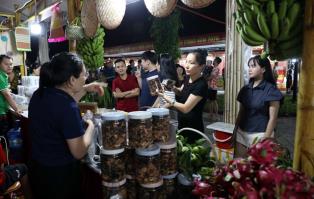
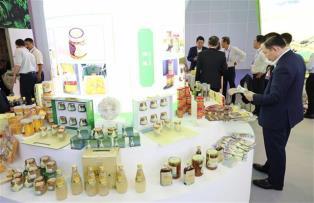
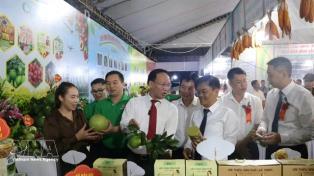
Participating in the first Spring Fair in 2026, Hồng took on two roles: as a co-operative representative showcasing and selling her family’s Vietnamese ginseng glass noodle products, and as a group leader bringing newly successful e-commerce households to Hà Nội to exchange experiences, learn and promote Lai Châu specialties to consumers in the capital.
“The most interesting thing is that while promoting our booth, we did not just receive individual online orders; we also saw wholesale orders in large quantities, something that was very difficult to achieve when selling only through traditional methods,” Hồng said.
Concrete figures highlight the clear change. The Pu Ta Leng Co-operative alone has directly sold around 140 tonnes of noodles, mainly through TikTok Shop.
Beyond that, the Sìn Hồ earth ginseng brand is also gradually gaining wider recognition, with nearly 600 tonnes sold on e-commerce platforms over a period of about five months.
E-commerce has truly become a connecting bridge, helping to shorten geographical distances and compensate for limitations in marketing and brand building, which were barriers that had long been significant for people in highland areas, she said.
Looking ahead, Hồng said she hopes to replicate the Pu Ta Leng Co-operative’s online business model in other localities, while gradually moving toward exporting Lai Châu agricultural products to international markets.
“In the domestic market, each region’s specialties have their own strengths. But overseas markets still offer a lot of room for Vietnamese agricultural products,” she noted.
Once a brand is established, products standardised and a firm foothold secured in the domestic market, large-scale exports will help create stable, long-term employment for people in highland areas, Hồng added.
The Pu Ta Leng Co-operative’s story shows that e-commerce makes access to markets easier, with just a smartphone, a digital storefront and timely support. — VNS