Shift needed from production to value creation in farm, forestry exports
Traceability, supply-chain transparency, standards and data are becoming critical to building trust and moving up the value chain, a seminar heard on Tuesday.
HÀ NỘI — Việt Nam needs to move beyond being a major producer and supplier of agricultural and forestry products and gain greater control over higher-value parts of global supply chains, experts said at a conference on Tuesday.
Traceability, supply-chain transparency, standards and data are becoming critical to build trust and move up higher tin the value chain, Tô Xuân Phúc, managing director for forest policy, trade and finance at Forest Trends said at the conference on opportunities for Việt Nam to move up agricultural and forestry value chains.
When businesses can clearly demonstrate quality, origin and their ability to deliver on commitments, they will have more opportunities to participate in higher-value stages, from product development and technology to creating new market standards, he noted.
The goal of exports should therefore not only to show what Việt Nam can produce but to demonstrate that Vietnamese companies have the capacity to develop products and create value, he said.
Bottlenecks in major industries
Wood, coffee and rubber have established strong positions in international markets, but local companies still have limited influence over product development, technology, standards, branding and other areas where much of the value is created, Phúc said.
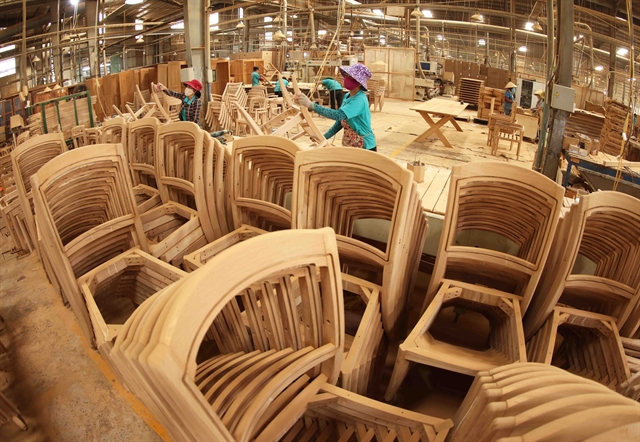
The domestic wood industry has expanded sharply over the past two decades with exports of wood, furniture and handicrafs rising from about US$300 million 20 years ago to $17.2 billion in 2025, generating a trade surplus of nearly $12 billion, according to Nguyễn Quốc Khánh, chairman of the Vietnam Timber and Forest Product Association (VIFOREST).
However, Việt Nam remains a manufacturing hub, with most Vietnamese companies still operating under original equipment manufacturing (OEM) arrangements and producing according to designs and specifications supplied by partners. Original design manufacturing (ODM) and original brand manufacturing (OBM), which give companies greater control over product design, development and branding, remain less common.
This means companies can produce on a large scale but have limited influence over product specifications, standards and the share of value retained in the supply chain.
He urged domestic producers to invest more in design, branding, sustainability, transparency and traceability, while shifting from responding to market demands to anticipating them, Khánh said.
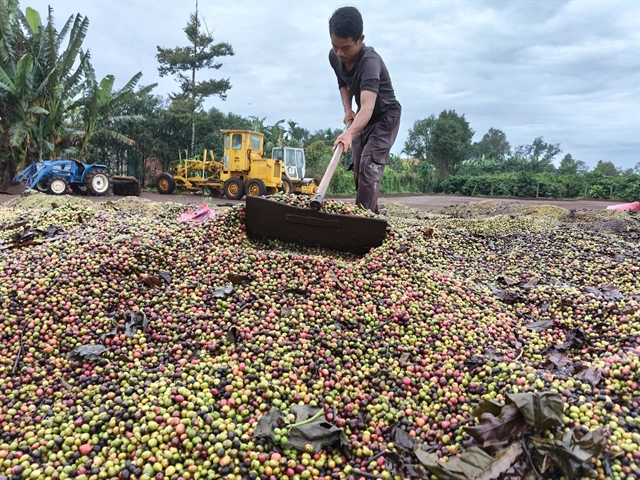
For coffee, the challenge is turning production volume into greater value.
Thái Như Hiệp, vice chairman of the Vietnam Coffee and Cocoa Association, said that Việt Nam has a strong position in coffee production, particularly robusta, but high output alone is not enough unless the sector can take greater control of quality and data.
Global buyers are increasingly demanding evidence of product origin, production processes, sustainability and emissions reductions.
International standards should not be considered only as export conditions but opportunities to enhance competitiveness, he added, urging stronger cooperation among exporters to create common value, he said.
For rubber, Việt Nam ranks fourth globally in production and third in exports. However, most export value still comes from natural rubber and relatively basic processed products, while technical rubber and other higher-value products account for a relatively small share, according to Nguyễn Viết Tượng, former vice chairman of the Vietnam Rubber Association,
The industry needs to shift its focus from volume to value by investing in deeper processing, product development, standards, traceability and branding, Tượng said.
Not just selling more
Experts said Việt Nam’s supply capacity is growing, but in many cases its companies remain in the position of complying with the rules rather than helping to shape them.
To change that position, local producers and exporters need to invest in technology, product development, branding and data-management capabilities.
Industry associations need to strengthen their roles in connecting companies, providing information, forecasting markets and representing sector interest while regulators need to develop policies, standards and data infrastructure that allow businesses to participate more deeply in global value chains.
Data is becoming increasingly important, experts said. Information on raw-material areas, output, quality, traceability, emissions and markets is not only useful for management but is directly linked to companies’ ability to meet buyer requirements and access higher-value market segments.
In the first eight months of 2026, Việt Nam’s agricultural, forestry and fishery exports reached nearly $49.3 billion. — VNS