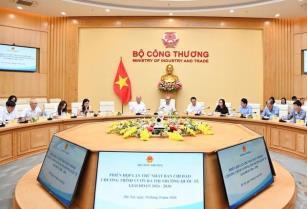
Resolution 68 opens new pathways for Vietnamese brands in regional, global markets
More than a year after the implementation of the Politburo’s Resolution 68-NQ/TW on private sector development, Việt Nam has introduced a range of new mechanisms and policies aimed at removing institutional bottlenecks, expanding investment space and unlocking resources for businesses.
HÀ NỘI — More than a year after the implementation of a Politburo resolution on private sector development, Việt Nam has introduced a range of new mechanisms and policies aimed at removing institutional bottlenecks, expanding investment space and unlocking resources for businesses.
Reforms from Resolution 68-NQ/TW are not only creating fresh momentum for the private sector, but are also opening greater opportunities for Vietnamese brands to integrate more deeply into regional and global value chains.
Dr Bùi Thanh Minh, deputy director of the Office of the Private Economic Development Research Board under the Prime Minister’s Advisory Council for Administrative Procedure Reform, said that Resolution 68 has helped foster a stronger entrepreneurial spirit through a series of concrete policy measures.
Among the most notable initiatives are Decree 20/2026/ND-CP guiding the implementation of special mechanisms for private sector development, the Prime Minister’s Decision approving the programme to develop 1,000 pioneering enterprises during 2026–2030 and another decision approving a programme aimed at training 10,000 chief executive officers by 2030.
Official data from the National Statistics Office under the Ministry of Finance shows that in the first four months of 2026, Việt Nam recorded 77,800 newly established enterprises with total registered capital of nearly VNĐ785.4 trillion (US$29.9 billion), representing a 50.7 per cent increase in the number of new firms and 60.1 per cent in capital year-on-year.
Several major corporations have also proposed and participated in strategic national projects, including high-speed railways, the international financial centre and maritime hubs, reflecting growing confidence within the business community, built on shifts in thinking and policies.
Despite these positive signals, businesses continue to face multiple challenges, including limited access to capital and land, labour shortages, technological transformation pressures, policy uncertainty and high administrative compliance costs.
During the first four months of the year, more than 15,000 enterprises completed dissolution procedures, nearly double the figure recorded during the same period last year.
Minh stressed that private sector confidence could only be strengthened through substantive reforms that allow enterprises to feel tangible improvements, including faster administrative procedures, lower compliance costs, reduced legal risks and fairer access to resources and markets.
To further realise the objectives of Resolution 68, he proposed three major priorities. First, Việt Nam should continue building a transparent, stable and predictable business environment to encourage long-term investment, particularly in strategic infrastructure, high technology, digital economy, green growth, logistics, energy and innovation.
Second, administrative reform and implementation efficiency should be put at the centre. Recent Government efforts to simplify procedures and business conditions, including the removal of 184 administrative procedures and 890 business conditions, are expected to reduce compliance costs and processing times by more than 50 per cent.
Third, Việt Nam should focus on developing a group of pioneering enterprises with the capacity to compete globally. These firms should not only possess large-scale operations, but also demonstrate strengths in governance, technology, innovation, finance, ESG standards and international competitiveness, Minh noted.
Such enterprises could help build stronger domestic supply chains while enabling Vietnamese brands to penetrate deeper into regional and global markets.
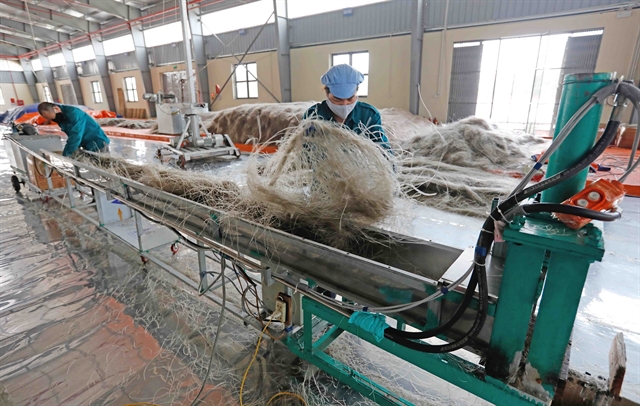
The impact of Resolution 68 has also become increasingly visible at the enterprise level. According to Dong Tam High-Tech Agriculture Joint Stock Company, for example, the resolution has provided an important strategic impetus for private enterprises to accelerate transformation.
Dong Tam General Director Nguyễn Văn Lưu said the company has pursued a dual transformation strategy over the past year, combining digital transformation with greener and more sustainable production models.
Lưu said the biggest change brought by Resolution 68 is not only reflected in a 50 per cent increase in revenue, but also in a shift in business thinking, from “selling what the company has” to “providing what the market needs”, while ensuring environmental responsibility and digital transparency.
He suggested the Government support cooperatives and enterprises in standardising digital traceability systems and carbon emissions data in line with international standards. He also called for a legal framework for carbon credits and mechanisms to value specialised agricultural assets, enabling businesses to gain better access to green financing for sustainable investment. — VNS