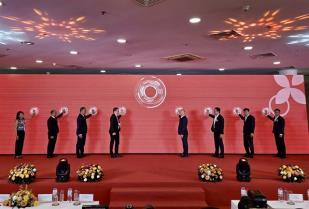
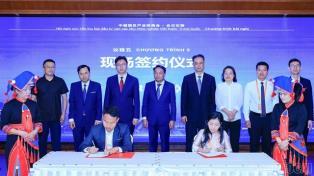
Rail&Cons 2026 seeks to promote domestic railway capability
Organised by the Vietnam Society of Civil Engineers (VSCE) in cooperation with Camel Events, the Rail & Cons Industry Week 2026 features specialist conferences, technology exhibitions, business-to-business (B2B) networking, technology demonstrations and the final round of the Startup-Cons Innovation Challenge.
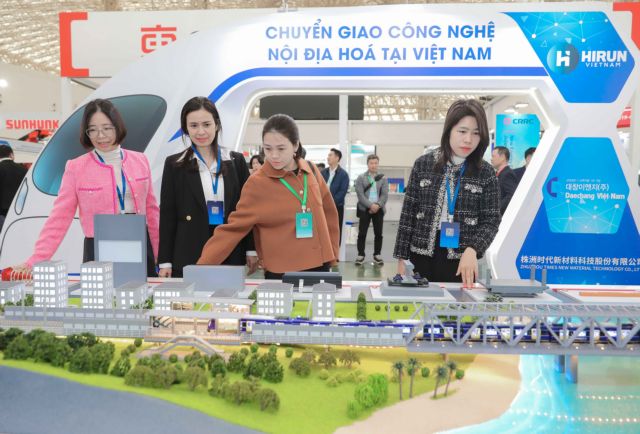
HÀ NỘI — More than 100 domestic and international brands, businesses and manufacturers in railway, construction and infrastructure have gathered in Hà Nội for Rail&Cons Industry Week 2026, a three-day event seeking to promote the development of domestic railway industry as Việt Nam advances major railway projects.
The event, which opened on November 11, brings together industry experts, policymakers, investors, manufacturers and technology providers to discuss opportunities for developing Việt Nam’s railway industry, strengthening domestic manufacturing and expanding participation in major infrastructure projects.
Organised by the Vietnam Society of Civil Engineers (VSCE) in cooperation with Camel Events, the Rail & Cons Industry Week 2026 features specialist conferences, technology exhibitions, business-to-business (B2B) networking, technology demonstrations and the final round of the Startup-Cons Innovation Challenge.
VSCE chairman Trần Đình Tùng said the railway market could exceed US$200 billion over the next decade, offering significant opportunities for the construction and railway industries.
He said Việt Nam needed to move beyond building modern infrastructure towards mastering technology, improving operational capabilities, developing engineering talent and establishing domestic industrial capacity.
Achieving these goals required cooperation among government agencies, researchers, universities, investors, businesses and engineers to promote technology transfer, test new solutions and build capabilities through practical projects, he said.
Tạ Tuấn Dương, deputy director of Hoa Phat Dung Quat Special Steel and Rail Joint Stock Company, said strengthening domestic manufacturing was increasingly important as investment in railway infrastructure expanded.
Hoa Phat Group is investing in a plant to manufacture railway rails, rail fastening components and special steel products for railway infrastructure with an aim to improve domestic material supply and participate more deeply in the industry's value chain, he said.
Pointing out that opportunities for Vietnamese also include operation, maintenance, spare parts replacement, repairs and system upgrades, experts said Việt Nam should also accelerate the establishment of two to three railway industry clusters to bring together manufacturing facilities, testing laboratories, training centres and logistics services.
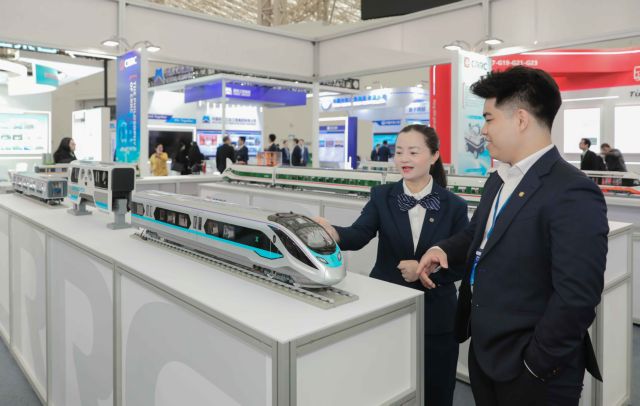
For the 2026-35 localisation roadmap, the focus should be on improving technological capabilities, quality management and compliance with specialised technical standards.
Products considered for domestic production include materials, structural components, mechanical equipment, electrical systems and other technically demanding components, experts said.
Nguyễn Ngọc Cường, director of the National Data Centre, called for data architecture and connectivity to be incorporated into railway planning and investment from the outset, alongside greater research and application of AI and data science in infrastructure monitoring and operations.
He also highlighted the need to ensure cybersecurity, data protection and operational safety, particularly given the strategic importance of railway infrastructure.
At the event, experts also discussed technologies for building tunnels, bridges and viaducts, as well as sensors, digital models and common data environments to monitor settlement, structural displacement and stress throughout construction, operation and maintenance.
Discussions also stressed that urban railway projects should be managed as integrated systems, rather than as separate construction, equipment and consultancy packages, experts said.
Workforce development was also identified as a priority, experts said, urging a shifting from training based primarily on academic disciplines towards competency frameworks linked to specific jobs, including engineering, signalling, telecommunications, power supply, rolling stock, train operations, dispatching and station management.
B2B meetings scheduled for November 13 will give businesses opportunities to meet potential partners, exchange requirements and explore participation in the supply chains of railway and infrastructure projects.
Việt Nam is preparing major railway investments, including the proposed North-South high-speed railway, estimated to cost $67.34 billion, as well as expanded urban railway networks in Hà Nội and Hồ Chí Minh City. — BIZHUB/VNS