Property market sees investor screening as high interest rates add pressure
These developments have quickly fed through to the market, with liquidity declining and transaction activity slowing in the first quarter of 2026
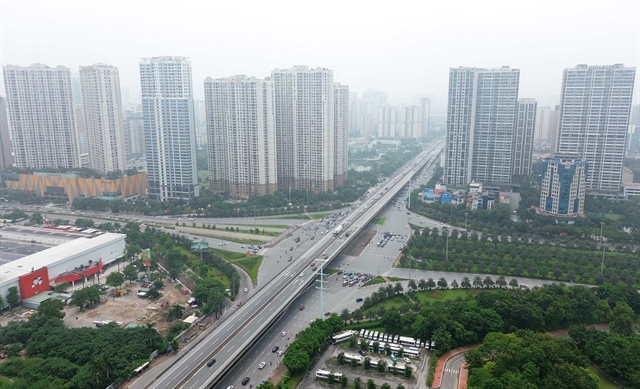
HÀ NỘI — Rising lending rates for real estate in the early months of the year have placed considerable pressure on both developers and homebuyers, creating investor screening on Việt Nam's property market, according to Savills Vietnam.
This marks a necessary adjustment phase aimed at restructuring the market and its product offerings towards greater transparency and sustainability.
In practice, mortgage rates at several banks have climbed sharply in recent months, at times reaching 15-16 per cent per annum. This has significantly increased the cost of capital, directly affecting borrowers’ repayment capacity as well as investment decisions.
These developments have quickly fed through to the market, with liquidity declining and transaction activity slowing in the first quarter of 2026. Following the Lunar New Year, buyers have become more cautious amid ongoing macroeconomic uncertainties, including the capital’s long-term urban planning direction and interest rate volatility. As a result, decision-making timelines have lengthened, dampening overall market momentum.
Savills Vietnam reported that in the first quarter of 2026, new apartment supply reached about 6,108 units, down both quarter-on-quarter and year-on-year. Transaction volume followed a similar trend, with mid-range (Grade B) apartments accounting for the majority, representing around 79 per cent of total units sold.
From a corporate perspective, elevated interest rates coupled with tighter credit conditions have increased financing costs and constrained access to capital - particularly for projects with weaker feasibility.
Meanwhile, highly leveraged investors, especially those with short-term strategies, are facing heightened risks, as cash flow pressures may force them to sell at a loss and exit the market.
“Only developers with solid financial foundations, stable cash flow, and diversified capital-raising capabilities will have sufficient resources to continue project development and offer appropriate interest rate support to buyers," said Đỗ Thị Thu Hằng, senior director, Advisory Services, Savills Hanoi.
"This process will eliminate weaker players while retaining those with strong risk management capabilities and the ability to balance profitability with long-term customer support.
“The market is entering a period of deep and extensive consolidation. Access to funding from banks and investment funds will be subject to more rigorous scrutiny, with priority given to projects that demonstrate strong feasibility and meet genuine market demand.”
Amid tightening liquidity, the divergence between different groups of developers has become more pronounced than ever. A growing preference for reliability has led buyers to focus their attention on financially robust and reputable developers.
While stronger firms are leveraging mergers and acquisitions to expand their market share, weaker players – particularly those that have relied excessively on financial leverage – are becoming trapped in a cycle of stagnation.
For these companies, aggressive restructuring or market exit appears increasingly unavoidable as access to fresh capital becomes more limited.
Despite the significant challenges posed by rising interest rates, this situation also presents an opportunity to reshape the market into a more transparent and sustainable one.
Following this period of consolidation, homebuyers are likely to benefit from a wider selection of high-quality projects developed by reputable developers. Continued investment in infrastructure will also make it easier for buyers to access more affordable developments in suburban areas.
Overall, rising lending rates should not be seen merely as a short-term obstacle, but rather as a rigorous test of the capabilities of all market participants.
Looking ahead, strong financial capacity, developer credibility and experience, along with adaptive management strategies, will be the key factors determining the resilience and long-term sustainability of real estate enterprises. — VNS