Premature baby survives after 32-day battle to prolong high-risk pregnancy in Hà Nội
The case involved a mother who had previously experienced five pregnancy losses, making the latest pregnancy particularly challenging for both the family and the medical team.

By Thu Trà
HÀ NỘI — A baby girl born at just 25 weeks and five days of gestation and weighing only 750 grams, has survived after 80 days of intensive neonatal care, following a high-risk pregnancy in which doctors at Phenikaa University Hospital worked for 32 days to delay delivery and improve her chances of survival.
The case involved a mother who had previously experienced five pregnancy losses, making the latest pregnancy particularly challenging for both the family and the medical team.
Lê Thị Thùy Linh, who already has a six-year-old daughter, had hoped for another child for years.
"Our family is determined to do everything possible to protect both the mother and the baby, and we sincerely hope the doctors will stand by them throughout this journey," said Hoàng Thị Hải Yến, Linh's mother.
Her pregnancy was closely monitored by a multidisciplinary team led by Nguyễn Thị Sim, deputy director of Phenikaa University Hospital, involving specialists in obstetrics, fetal medicine, anaesthesiology, intensive care, laboratory diagnostics, genetics and clinical pharmacy.
Hồ Khánh Dung, deputy director of the hospital's Fetal Medicine Centre, said: "When we first encountered Linh, she was 12 weeks pregnant.
"She had a very difficult obstetric history, having experienced five consecutive miscarriages or preterm births between 18 and 27 weeks, none of which resulted in bringing a baby home.
"This was not merely a high-risk pregnancy; it was a case that required specialised monitoring and intensive care."
Linh underwent cervical cerclage at 12 weeks to help prevent premature delivery. However, she was admitted to hospital at 21 weeks and one day, after developing a shortened cervix and bulging amniotic membranes, indicating a high risk of preterm birth.
The fetus weighed approximately 400 grams at the time, leaving little chance of survival if delivered immediately. Doctors therefore sought to prolong the pregnancy for as long as medically possible, balancing the benefits of further fetal development against risks to the mother.
Linh said that high-risk pregnancies often require continuous, 24-hour administration of medication to suppress uterine contractions.
"Time seemed to pass so slowly," she said.
"I just counted the days until my next ultrasound appointment, when I could see my baby and hear her heartbeat."
32 days of intensive monitoring
Over the following 32 days, medical teams monitored Linh around the clock, tracking vaginal bleeding, uterine contractions, infection risks, signs of labour and foetal development.
Doctors from different departments regularly reviewed clinical data and adjusted treatment to maintain the pregnancy while keeping the mother within safe clinical limits.
"After each shift, we breathed a sigh of relief, knowing we had kept the baby in the womb for another day, giving her a better chance of survival after birth," Dr Dung said.
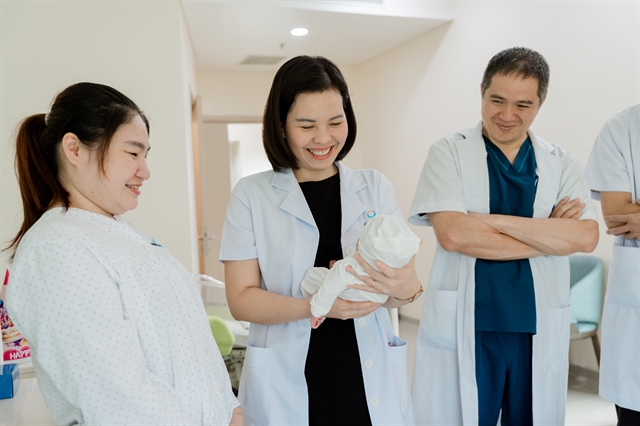
On June 18, at 25 weeks and five days of gestation, Linh developed strong uterine contractions and the fetus descended into the birth canal. Doctors decided to remove the cervical stitch and proceed with delivery.
The baby girl, nicknamed Gấu (Bear) by her family, was born weighing only 750 grams.
Seeing her daughter for the first time, Linh was struck by how tiny she was, although she had long limbs resembling her father's.
"At the hospital, we called her Gấu (Bear), and she has proven to be as strong as her name suggests," Linh said.
Emergency treatment for mother and baby
Immediately after delivery, the neonatal team began resuscitation and intensive care for the extremely premature infant. At the same time, Linh developed postpartum haemorrhage caused by uterine atony.
Obstetric, anaesthesiology and critical care specialists worked together to control the bleeding using an intrauterine balloon tamponade and administering two additional units of blood products. The intervention saved Linh's life and preserved her uterus.
"When I caught sight of a doctor under the surgical lights, it felt as though I were seeing a guardian angel," Linh said.
"Looking into their eyes, I felt an immense sense of relief and peace – and then I drifted into unconsciousness."
She was discharged on June 24, while her daughter remained in the neonatal unit for intensive treatment. Twelve days later, Linh returned to the hospital to hold and care for her baby.
After 80 days of neonatal treatment, Gấu was discharged on September 6, weighing 2.6kg. At a subsequent follow-up visit, her weight had increased to 5.2kg.
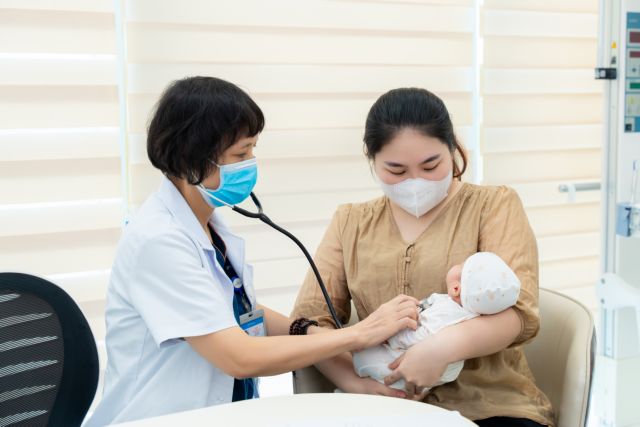
Taking the baby home brought new responsibilities and anxieties, Linh said, but also immense happiness for the family, including her six-year-old daughter, grandparents and great-grandparents, Linh said.
For the medical team, the outcome reflected 32 days of continuous monitoring, coordinated decision-making and emergency intervention, followed by 80 days of specialised neonatal care.
Phùng Quang Thủy, head of the hospital's Gynecology Department, said the case highlighted the collective role of healthcare professionals in managing complex maternal and neonatal conditions.
"I believe that every healthcare professional is, in their own way, a guardian angel," Dr Thủy said. —VNS