PM urges SMEs to aim higher towards 2 million businesses target by 2030
PM Hưng expected the next 20 years should be a period in which Vietnamese SMEs grow not only in number but also in quality, productivity, technology, management capacity and scale to contribute to the government's target of double-digit economic growth during 2026-30.
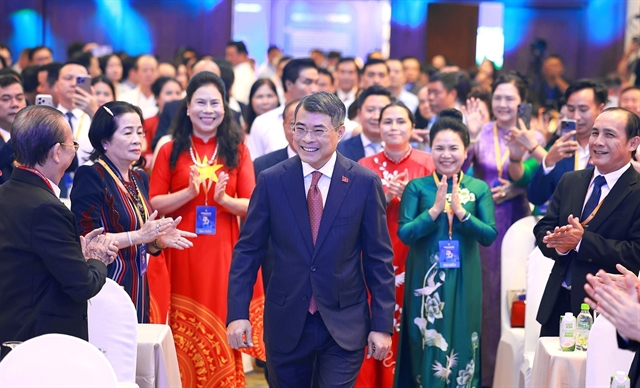
HÀ NỘI — Prime Minister Lê Minh Hưng has urged small and medium-sized enterprises (SMEs) to nurture bigger ambitions and strengthen their competitiveness to contribute to realising the Government’s target of 2 million businesses operating in the country by 2030.
Speaking at a ceremony marking the 20th anniversary of the Vietnam Association of Small and Medium Enterprises (VINASME) and its receipt of the first-class Labour Order in Hà Nội on August 25, the PM said the government will continue improving the business environment and reduce compliance costs and time for businesses.
“The Government creates, associations connect and businesses pioneer,” PM Hưng said. outlining the government's approach to supporting the private sector.
SMEs currently account for nearly 98 per cent of operating businesses in Việt Nam and provide jobs, incomes and livelihoods for about 6.5 million workers but remained limited in management capacity, finance, human resources and resilience, he said.
The private sector needs to grow in scale and productivity, strengthen technological capabilities and integrate more deeply into value chains while expanding in domestic, regional and international markets, the PM said.
The government will focus on improving the investment and business environment, removing overlapping and unnecessary regulations and cutting administrative procedures and business conditions, particularly those related to taxation, customs and access to land, he said.
“Policies must be stable and easy to understand and implement, while discipline in enforcement must be strengthened”, he said, calling for stricter enforcement and action against avoidance of responsibility.
PM Hưng also called for better access to capital, land and production space for SMEs.
The State Bank of Vietnam should encourage credit institutions to develop products suited to different groups of businesses and priority sectors, make greater use of data and technology in credit assessments and shorten processing times, he said.
Science and technology, innovation, digital and green transformation should become major drivers of higher productivity, while digitalisation and green transformation should not simply become additional costs for businesses, he stressed.
“Technology must translate into higher productivity, lower costs and broader markets,” the PM added.
The government will also develop mechanisms to encourage large and foreign-invested companies to increase purchases from domestic suppliers, transfer technology, provide training and develop Vietnamese suppliers, while helping SMEs meet standards to join supply chains.
PM Hưng urged SMEs themselves to upgrade their capabilities, saying micro businesses should strive to become small businesses, small firms should grow into medium-sized ones and medium-sized companies should aspire to become large enterprises capable of competing in regional and global markets.
Government support and assistance from business associations were important but could not replace companies' own efforts, he said.
Businesses should use technology, innovation, digital and green transformation and high-quality human resources to improve productivity, while restructuring operations, improving governance, increasing financial transparency, standardising processes and strengthening risk management, he said.
The PM also urged companies to shift from a purely competitive mindset towards greater cooperation and supply-chain links, saying cooperation could itself be a means of competition and a way for small businesses to build greater strength.
VINASME urged to strengthen role

Looking ahead, Hưng called on VINASME to strengthen its role as a bridge between the government and businesses and to help more eligible household businesses convert into formal enterprises as Việt Nam seeks to reach about 2 million operating businesses by 2030.
He urged VINASME to help SMEs improve governance, productivity, quality and competitiveness and strengthen links with large enterprises, foreign-invested companies, banks, investment funds, research institutes, universities and international organisations.
PM Hưng expected the next 20 years should be a period in which Vietnamese SMEs grow not only in number but also in quality, productivity, technology, management capacity and scale to contribute to the government's target of double-digit economic growth during 2026-30.
VINASME Chairman Nguyễn Văn Thân said the association will significantly change its operating model under the Politburo's resolutions on science, technology and private-sector development.
The association will move beyond helping businesses address individual difficulties towards building their capacity to develop, innovate, adapt and compete over the long term, he said.
Focus will be on helping businesses improve management, digital transformation, innovation, human resources and market access, while supporting them in joining regional and global value chains, he said.
Thân said VINASME will strive to become stronger in quality, deeper in activities and broader in representation, including gradually expanding its role to household and individual businesses.
At the ceremony, VINASME launched its digital platform VINASME, designed as a central digital access point connecting SMEs with policy information, consultancy, technology solutions, business opportunities, finance and other resources to promote digital transformation and strengthen SME competitiveness.
The association signed memorandums of understanding with banks and financial institutions including BIDV, BVBank, MBBank, ACB and UOB to expand financial links for SMEs.
It also signed a cooperation agreement with the Vietnam-Australia Science and Expert Association (VASEA), a non-profit organisation in Australia, aimed at helping Vietnamese businesses gain access to experts, technology, investment, partners and the Australian market. — VNS