Non-life insurers see profits squeezed as climate risks intensify
Beyond short-term financial pressures, the industry is also facing structural changes as climate risks intensify and competition over premiums becomes more pronounced.
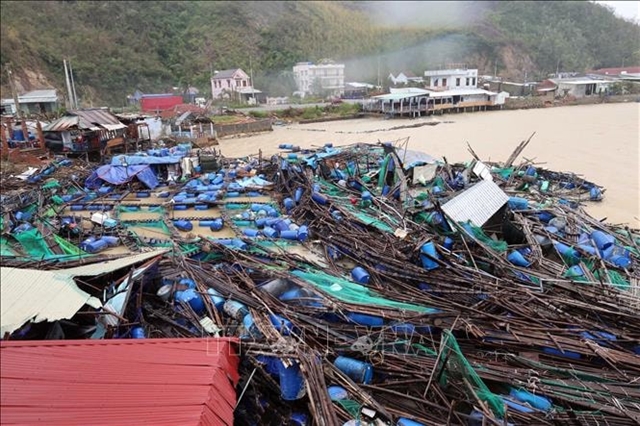
HÀ NỘI — Profits at several listed non-life insurance companies fell sharply in the fourth quarter of 2025 after a series of natural disasters pushed compensation costs higher, underscoring the growing impact of climate risks on the sector, according to industry insiders and experts.
Financial statements from 13 listed insurers show total premium revenue, including both direct insurance and reinsurance, reached VNĐ13.7 trillion in the quarter, an increase of about 6 per cent compared with the same period in 2024.
Net revenue from insurance operations rose by 5 per cent to around VNĐ22.1 trillion. The improvement in revenue, however, was overshadowed by rising costs. Insurance business expenses climbed 8 per cent during the quarter, largely due to a spike in claims related to storms and flooding.
As compensation payments increased, profitability from core insurance operations weakened. Ten of the 12 insurers that disclosed detailed figures recorded a decline in gross profit from insurance activities. In total, gross profit from underwriting fell by 32 per cent year-on-year to approximately VNĐ1.27 trillion.
To cushion the impact, some insurers relied more heavily on financial investment income. PJICO, PTI and ABIC reported financial income growth ranging from 21 to 27 per cent, while Vinare recorded a rise of roughly 32 per cent. For the sector as a whole, financial investment income reached about VNĐ3.82 trillion in the fourth quarter, up 16 per cent from a year earlier.
Even so, stronger investment returns could not fully compensate for weaker underwriting performance. With operating expenses also increasing, total pre-tax profit of the listed non-life insurers dropped 9 per cent year-on-year to roughly VNĐ1.64 trillion.
Insurance expert Trần Nguyên Đán said the financial performance of non-life insurers was closely tied to compensation payments because most policies are short-term, typically lasting one year.
Revenue and claims were therefore recorded within the same accounting period, meaning profits fluctuate depending on the scale of payouts.
“When compensation rises sharply, profits inevitably decline,” Đán said.
In Việt Nam, storms and floods often cause the most severe damage to vehicles, residential buildings, factories and production facilities — areas typically covered by property insurance.
Companies with a higher share of property insurance in their portfolios tend to be more exposed during years marked by severe weather events. Financial reports partly reflect this pattern. During the fourth quarter of 2025, gross profit from insurance operations dropped markedly at several firms, including Military Insurance (MIC), PetroVietnam Insurance (PVI), Bao Minh Insurance (BMI) and Saigon–Hanoi Insurance (BSH).
The need to maintain liquidity for potential claims also shapes insurers’ investment strategies. Most companies allocate a large portion of their investment portfolios to relatively safe and liquid assets, such as bank deposits, certificates of deposit and government bonds. While these assets help ensure that insurers can meet sudden compensation payments, they generally offer lower returns.
Igloo Việt Nam General Director Tracy Dao said at a recent industry workshop that natural disasters and climate change were increasingly becoming routine operational risks affecting infrastructure, supply chains and business activity.
To adapt, insurers were gradually moving away from standardised products toward solutions tailored to specific customer groups.
Alongside traditional offerings, such as property and engineering insurance for large projects, companies were developing microinsurance products with simpler structures and lower premiums. These products were intended to expand insurance access for informal workers and employees in smaller businesses. —VNS