Ninh Bình draws next-wave foreign direct investment
Ninh Bình province is accelerating efforts to position itself as a next-generation industrial hub by attracting high-quality foreign direct investment (FDI) focused on high technology, green manufacturing, and sustainable growth.
NINH BÌNH — Ninh Bình province is accelerating efforts to position itself as a next-generation industrial hub by attracting high-quality foreign direct investment (FDI) focused on high technology, green manufacturing, and sustainable growth.
With an improving investment climate and upgraded industrial infrastructure, the northern province is strengthening its reputation as a reliable destination for foreign investors.
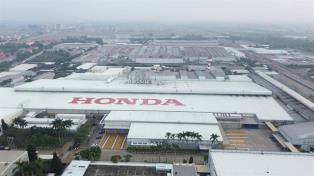
The motorcycle and component manufacturing project of Honda Vietnam has operated at Đồng Văn II Industrial Park since 2014 with total investment exceeding US$211 million and annual designed capacity of 1.1 million motorcycles. The project has become one of the province’s flagship FDI ventures, contributing strongly to industrial growth, exports, and budget revenue while supporting the expansion of local supply chains.
In 2024, the company contributed nearly VNĐ1.6 trillion ($61 million) to the provincial budget. Despite continued economic headwinds in 2025, Honda Vietnam maintained stable operations, contributing over VNĐ1.579 trillion in budget revenue while employing more than 2,700 workers with average monthly income of about VNĐ10 million.
Sayaka Arai, General Director of Honda Vietnam, said the company highly values Ninh Binh’s investment environment and long-term industrial development strategy, particularly its focus on developing a skilled workforce. She also expressed hope for continued provincial support in developing social welfare facilities for employees and expanding long-term operations.
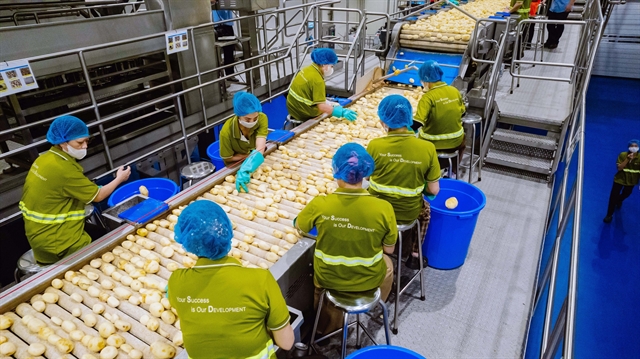
Wistron Infocomm Vietnam, an enterprise with 100 per cent capital from Taiwan (China), began operations at Đồng Văn III Industrial Park in 2021 with registered capital exceeding $360 million USD. The company manufactures information and communications technology products including laptops, tablets, and other electronics.
The company has steadily expanded operations and now employs more than 12,800 workers, becoming a major contributor to local industrial output and export turnover.
Lin Su-Ming, General Director of Wistron Infocomm Vietnam, said provincial authorities have provided strong support throughout the company’s investment and operational process, particularly in procedures for foreign experts, labour recruitment, customs clearance, logistics, transport connectivity, and power infrastructure.
Alongside Honda Vietnam and Wistron Infocomm Vietnam, a growing number of FDI enterprises in sectors such as electronics, computer equipment, textiles, garments, and protective products are expanding operations and increasing investment in the province.
In the first four months of 2026, Ninh Bình licensed 39 new projects, including 14 FDI projects, with newly registered capital totaling $112 million and more than VNĐ5.4 trillion. The province also approved capital increases for 102 projects worth an additional $546 million and over VNĐ12 trillion, reinforcing its attractiveness to investors.
Following administrative consolidation, the province now holds a strategic position linking major economic regions. Rather than pursuing investment volume alone, the province is prioritising high-tech, high-value, and environmentally sustainable projects.
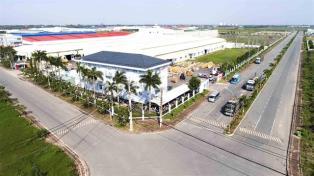
It currently hosts 20 operational industrial parks. By the end of the first quarter of 2026, these parks were home to 1,136 investment projects, including 551 FDI projects, with total registered capital reaching $10.73 billion and more than VNĐ135 trillion.
Ninh Bình’s development strategy is structured around three growth corridors: the northern zone will focus on high-tech industry, innovation, and workforce training; the eastern zone will drive the marine economy; while the southern zone will prioritise tourism, cultural industries, and clean industry.
From 2026 onward, the province plans to attract strategic investors with strong financial capacity, advanced technology, and modern governance standards, while strengthening regional connectivity and industrial ecosystems.
According to Nguyễn Vũ Chiến, Deputy Head of the Ninh Bình Economic Zones and Industrial Parks Management Board, the province is promoting industrial development based on circular economy and green growth models, encouraging clean technologies, resource efficiency, and lower emissions.
Ninh Bình is also intensifying outreach to key markets including the Republic of Korea, Japan, the European Union, and Singapore, while leveraging next-generation trade agreements such as the Comprehensive and Progressive Agreement for Trans-Pacific Partnership (CPTPP), European Union – Việt Nam Free Trade Agreement (EVFTA), and Regional Comprehensive Economic Partnership (RCEP) to attract higher-quality FDI inflows.
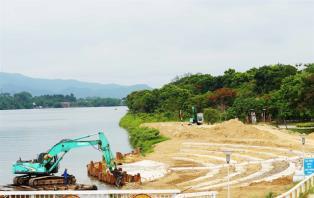
To sharpen its competitive edge, the province is accelerating key infrastructure projects, including regional transport links, new industrial parks, and coastal economic zones, while also streamlining administrative procedures and improving public services.
Provincial authorities continue to maintain regular dialogue with businesses to quickly address bottlenecks and improve investor confidence. — VNA/VNS