New tax incentives to encourage long-term investment in open-end funds
The new policy focuses on reducing investment costs while directing capital towards more sustainable investment activities.
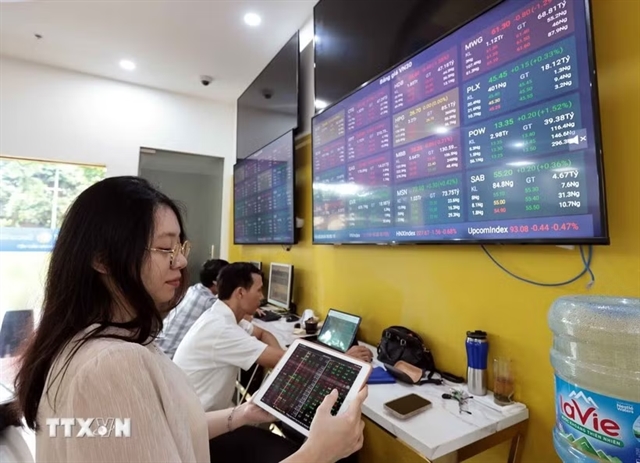
HÀ NỘI — Việt Nam's revised Personal Income Tax Law takes effect on July 1, introducing tax incentives for investors in open-end funds as part of efforts to encourage long-term and professional investment in the capital market.
The new policy focuses on reducing investment costs while directing capital towards more sustainable investment activities.
Under the revised law, investors who hold fund certificates for more than two years will be exempt from personal income tax on fund certificate transfers.
Instead of paying the current tax of 0.1 per cent on the transaction value upon sale, long-term investors will retain the full value of their investment gains after July 1.
The new regulation distinguishes long-term investment strategies from short-term trading and is expected to encourage investors to keep capital invested for longer periods.
The law also cuts the tax on dividends distributed by investment funds by half, from 5 per cent to 2.5 per cent.
Previously, the 5 per cent dividend tax was regarded as relatively high, prompting many open-end funds to limit dividend distributions in order to maximise returns for investors. The lower tax rate is expected to give fund managers greater flexibility to distribute dividends more regularly, providing investors with a steadier source of income.
According to Vietcombank Fund Management (VCBF), the changes represent more than a tax adjustment.
VCBF said the new incentives send a clear policy message prioritising long-term and professional investment. The fund manager expects the tax measures to strengthen confidence among retail investors, while encouraging more disciplined and sustainable investment through fund products.
The policy also aligns with the broader objective of building a more balanced and sustainable investor base for Việt Nam's capital market.
The stock market has long been dominated by retail investors, whose transactions account for up to around 85 per cent of total market liquidity. While this has supported active trading, it has also contributed to heightened market volatility, particularly during periods of sharp corrections.
According to the Ministry of Finance, Việt Nam had 43 operating fund management companies as of the end of September 2025, with total assets under management (AUM) of approximately VNĐ806 trillion (US$30.6 billion), up from VNĐ435 trillion in 2020, representing average annual growth of about 20 per cent.
However, the country's AUM-to-GDP ratio currently stands at only around 6 per cent, well below Thailand's level of more than 20 per cent and Malaysia's approximately 60 per cent, indicating significant room for further expansion of Việt Nam's asset management industry.
The additional tax incentives are intended to support the development of the domestic fund management industry, while encouraging retail investors to shift from direct stock investment to investing in and holding fund certificates.
This policy is also consistent with the objectives set out in Việt Nam's Stock Market Development Strategy to 2030, which highlights the need to build a more balanced investor structure through a greater role for institutional investors. — BIZHUB/VNS