New resolution bolsters property market: experts
Việt Nam News reporter Thu Ngân interviewed experts to discuss the changes Party Resolution 21 could bring to the real estate market.
The Central Committee of the Communist Party of Việt Nam released a resolution on July 28, 2026, outlining key policy directions for amending the Land Law and related legislation, known as Resolution 21 for short. Việt Nam News reporter Thu Ngân interviewed experts to discuss the changes it could bring to the real estate market.

An Nguyễn, senior director of CBRE Vietnam, Hà Nội branch
Resolution 21 is likely to push Việt Nam's real estate market away from a land-speculation-driven model and toward a development- and utilisation-driven model. Land remains valuable, but the ability to generate value from development, operations and redevelopment may become increasingly important relative to simply owning land.
Resolution 21 seeks to strengthen transparency and legal certainty through the protection of legally established land rights, the development of a unified national land database and greater disclosure of planning, legal and transaction information. These measures are expected to improve investor confidence, streamline due diligence processes, reduce legal risks and enhance the attractiveness of Việt Nam's real estate market to institutional and foreign investors.
A central theme of Resolution 21 is the promotion of efficient land use through anti-speculation measures and financial and tax policies aimed at discouraging idle land holdings. This signals a gradual shift in market focus from land ownership and appreciation alone toward the ability to develop, operate and create value from land. Active developers, industrial park operators, rental housing investors, and asset managers are likely to benefit, while passive land banking and strategies reliant on rezoning gains may become less attractive.
Resolution 21's support for rental housing, urban redevelopment, infrastructure-linked projects and productive land use is likely to influence future investment allocation. As policy incentives become more aligned with long-term development objectives, capital may increasingly flow into build-to-rent housing, affordable housing, urban renewal projects, industrial parks and logistics real estate, rather than purely speculative land accumulation.
Beyond improving valuation transparency, Resolution 21 signals a shift in how land value is managed within the economy. The policy direction suggests that increases in land value arising from public planning decisions, infrastructure investment and urban development should be shared more broadly among society, affected land users, developers and the State, rather than accruing primarily to those who happen to own land at a given point in time.
Supported by integrated land databases and more transparent valuation mechanisms, this approach could reduce speculative behaviour, improve fairness in compensation and land acquisition and encourage investment strategies focused on development, productivity and long-term value creation rather than pure land appreciation.
By establishing a clearer framework for condominium lifespan management, demolition, reconstruction and the redevelopment of ageing apartment buildings, Resolution 21 has the potential to unlock substantial urban renewal opportunities. This is particularly relevant for Hà Nội, HCM City and other major urban centres with large stocks of ageing residential buildings. Developers with expertise in urban regeneration and large-scale redevelopment may be among the key beneficiaries of this policy direction.
Resolution 21 seeks to establish a clearer framework linking condominium ownership, building lifespan and redevelopment rights, providing a more certain legal basis for the redevelopment and reconstruction of ageing apartment buildings while promoting more efficient urban land use.
The most immediate impact could be the unlocking of large-scale urban redevelopment opportunities, particularly in Hà Nội and HCM City, where fragmented ownership and complex approval processes have long hindered the reconstruction of older apartment blocks. Developers with urban renewal expertise are likely to benefit significantly.
The reform may lead to more differentiated condominium pricing. While location will remain a primary driver of value, buyers and investors are likely to place greater emphasis on building fundamentals, including construction quality, maintenance track record, property management capability, remaining useful life and redevelopment prospects.
Consequently, the valuation gap between well-maintained and poorly maintained projects may widen over time. Newer developments may command premiums for their longevity and certainty, while older projects will increasingly be evaluated based on both their physical condition and redevelopment potential.
For older projects in prime urban locations, redevelopment potential may become a major source of value and, in some cases, outweigh the depreciation of the existing structure. At the same time, construction quality, maintenance standards and property management are likely to become more important considerations for buyers.
Overall, if implemented effectively, the reform could improve housing quality, support urban regeneration and create a more mature condominium market in which values are determined not only by location and land scarcity, but also by building quality, management quality, remaining economic life and redevelopment prospects.
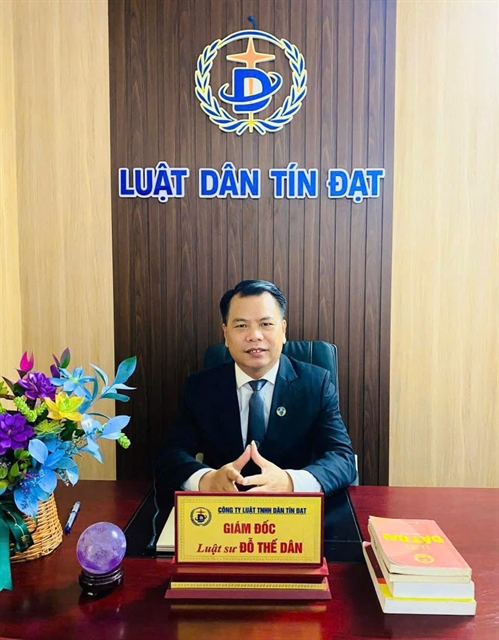
Lawyer Đỗ Thế Dân, director of Dân Tín Đạt Law Firm
Resolution 21 represents a significant development in land policy. Following the implementation of Resolution 18 [issued by the Party in June 2022], many provisions were institutionalised in the Land Law, Housing Law and Real Estate Business Law, helping unlock resources. However, there are still shortcomings in terms of planning, land prices, land finance and the handling of pending projects.
Therefore, Resolution 21 is not only a continuation but also an adjustment towards enhancing the quality of market operations. While Resolution 18 focused on institutional improvements, Resolution 21 emphasises modern, transparent and effective governance in allocating land resources.
Once institutionalised, these orientations can make the market more transparent, reduce reliance on incomplete information and enhance the role of data in valuation and investment.
I believe that Resolution 21 will create three notable changes.
First, Resolution 21 promotes a shift from administrative management to modern governance, based on digital data, digital transformation and the application of technology. At the same time, it establishes a land information system connected to population data, taxes, planning and real estate data. This helps reduce information asymmetry, which is one of the causes of market distortions.
Second, the role of the State in determining land prices is clarified through regulation, control and decision-making based on data, scientific methods, transparency and openness. When land prices more accurately reflect market data, businesses' pricing and investment decisions will change significantly.
Third, Resolution 21 emphasises the use of financial tools and taxes to curb speculation, hoarding and land abandonment while promoting a transparent and sustainable real estate market. This can create a more selective market where entities with real capacity and efficient land use will have an advantage.
In terms of capital flows, this could have a notable long-term impact.
Previously, a portion of real estate capital relied more on expectations of land price appreciation rather than actual operational efficiency. This resulted in land being held for the long term without generating corresponding economic value.
Resolution 21 aims to address speculation, hoarding and land abandonment while also increasing the cost of inefficient land use. When implemented cohesively, capital flows could gradually shift towards assets that generate stable cash flows, such as industrial real estate, rental housing and commercially efficient land use projects.
However, this is a long-term trend that depends on the institutionalisation of policies as well as conditions in capital, credit and taxation markets. If the orientations of Resolution 21 are effectively implemented, the Vietnamese real estate market could transition from a model heavily reliant on price expectations to one that values productive use and the cash flow-generating potential of assets.

Trang Lê, country head, JLL Vietnam
Resolution 21 marks a landmark shift, transitioning the national mindset from land-area management to value-based governance and optimised economic efficiency. This shift directly supports the institutionalisation of Việt Nam's real estate market.
The core impacts of this policy are structured across three key areas.
In land finance and pricing, the resolution decentralises land valuation to local authorities through digital databases, enhancing transparency and eliminating dual-pricing. Meanwhile, heavy taxes on idle land and the recapture of land value generated by public infrastructure deter hoarding, securing sustainable revenues for the State budget.
In the real estate market, transparent public land auctions and mandatory cashless transactions encourage market participation from highly capable, well-capitalised developers, effectively channelling investment into sustainable, value-driven segments.
In socio-urban development, transparent land pricing accelerates site clearance and minimises disputes in public projects. Coupled with clearer guidelines on older building safety and defined lifespans for apartment buildings, these reforms ensure public safety and enhance national competitiveness.
Overall, the proper implementation of Resolution 21 will materially improve transparency and reduce legal risk in the market.
We see two major shifts that will reshape the market. First, the investment focus will shift from land value appreciation to the operational performance of the asset. New rules aligning land valuation with market prices will increase upfront costs, making rapid, speculative profits from land much more difficult. The effect is that investors must now focus on generating stable cash flow from rent and operations, where the quality of construction, building management and tenant satisfaction become the key drivers of profitability.
Second, developers will have to operate more efficiently or restructure. New policies will make it more expensive and riskier to hold large land banks without developing them. This shift is expected to support healthy M&A and joint venture activities, as developers reassess their portfolios to concentrate capital on flagship projects. This transition not only unlocks a fresh pipeline of opportunities for institutional investors but also fosters a more mature, sustainable market.
Ultimately, the rapid changes triggered by Resolution 21 demand swift strategic adjustments from both developers and investors. To maintain a competitive edge in this evolving landscape, key market players must refine their business plans and elevate their operational capabilities. Going forward, continued collaboration between the public and private sectors regarding implementation timelines will help ensure a seamless transition. Providing this structured support will not only sustain market progress but also bolster private sector confidence in the nation's long-term strategic goals.
In terms of capital flows, change will not happen overnight, but the implementation of Resolution 21 is poised to trigger a profound structural shift in both the quality of capital and its target destinations.
Ultimately, while the regulatory transition introduces near-term adjustments, these reforms are expected to move the market toward a healthier balance of long-term retail buyers and institutional-grade investment. — VNS