Ministry draft includes several amendments to petrol business decree
The State will no longer periodically announce base prices. Instead, wholesale and retail distributors will have the right to independently decide and announce retail prices within their distribution systems based on the price formula stipulated in the new decree.
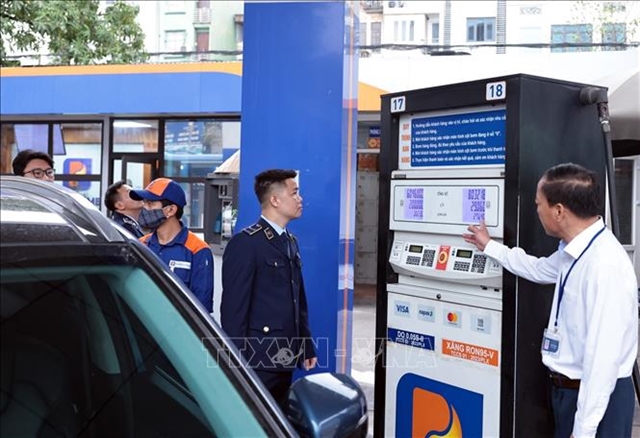
HÀ NỘI — The Ministry of Industry and Trade (MoIT) is seeking feedback on a draft decree on petroleum businesses that includes several reforms.
The draft decree, which will replace Decree 83/2014/NĐ-CP dated September 3, 2014 and other decrees related to the trade or sale of petrol and other fuels, aims to complete the legal framework for the petroleum business.
It is also intended to ensure national energy security, improve the effectiveness of State management and meet the requirements of the petroleum market in the new era.
Under the draft decree, the MoIT will abolish the eligibility certificates issued to petrol distributors, shifting to a post-inspection management approach based on distributors’ reports, registrations and declarations to reduce administrative burdens.
Another important reform is making the petrol price management mechanism more market-based, empowering businesses while simultaneously strengthening the responsibility and supervision of State management agencies.
The State will no longer periodically announce base prices. Instead, wholesale and retail distributors will have the right to independently decide and announce retail prices within their distribution systems based on the price formula stipulated in the new decree.
After adjusting prices, distributors are responsible for declaring the prices and sending notifications to the management agency for inspection and supervision.
For remote and rural areas, distributors’ retail prices must not exceed the highest price announced by the primary distributor in the same area, thereby ensuring social welfare.
The State will only announce one factor, standard business costs, that will affect distributors' prices, helping to prevent unreasonable price increases.
Under the draft decree, conditions for petrol wholesale distributors will be amended to enhance the capacity, responsibility and sustainability of businesses participating in the market.
Distributors must have at least 36 consecutive months of operation in the petrol trade to ensure sufficient experience and operational capacity.
They must also own depots that can store a total capacity of at least 15,000cu.m of petrol and at least 10 retail petrol stations, instead of being allowed to lease them, as was previously the case.
The draft adds the responsibility to ensure a total fuel supply of at least 100,000cu.m per year. Petrol distribution businesses that fail to meet this level for two consecutive years will have their licences revoked.
Another aim under the draft decree is to minimise intermediaries and create a seamless supply chain from sourcing to distribution. The types of petrol retail businesses (fuel retail agents or franchisees) and petroleum distribution businesses are merged into a single unified type, called petroleum distribution businesses, to fully reflect the distribution activities (wholesale and retail) of these businesses.
To meet management requirements in the new era, the draft decree specifies regulations on digital transformation and transparency in petroleum business operations.
Wholesale and retail distributors are required to connect to the MoIT's network to provide data on storage facilities, inventory, total supply, distribution systems and price declarations, creating a basis for closely monitoring supply and demand and market developments.
The draft also adds the responsibility of wholesale distributors in ensuring the rights of retail distributors to whom they supply petrol.
Under the draft decree, specific regulations to strengthen national energy security are also supplemented. Petroleum product distributors are permitted to export and import raw materials and petroleum products to regulate supply when approved by the MoIT.
Regulations on identifying abnormal price fluctuations to carry out price stabilisation measures in crises are also added in the draft decree. Petroleum distributors must maintain a minimum reserve to ensure a 20-day supply and limit the risk of market disruption. — BIZHUB/VNS