Major firms face delisting risks due to shareholding concentration
This phenomenon has plagued various state-owned enterprises that have transitioned to publicly traded status but continue to maintain absolute control by the state.
HÀ NỘI — Several billion-dollar companies in Việt Nam are facing the imminent risk of losing public company status and being delisted from stock exchanges as highly concentrated shareholding structures squeeze out minority investors and raise fresh concerns over governance and market sustainability.
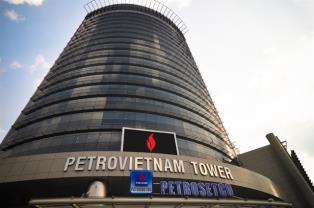
The issue is increasingly visible across the market. Recently, PV Gas announced that it no longer meets the criteria to be classified as a public company. As of August 29, 2025, PV Gas had 17,495 shareholders, but PetroVietnam held a dominant 95.76 per cent of the voting shares, leaving just 4.24 per cent in the hands of the remaining 17,494 minority shareholders.
Such a structure fails to meet the minimum requirement for public companies, which requires at least 10 per cent of voting shares to be held by a minimum of 100 non-majority shareholders.
A similar picture is unfolding at PetroVietNam Low Pressure Gas Distribution (PV GAS D). Its parent company, PV Gas, controls 50.5 per cent of the capital, while two Japanese strategic partners, Tokyo Gas Asia and Saibu Gas Holdings, hold 25 per cent and 21 per cent, respectively.
Together, these three major shareholders account for 96.5 per cent of PV GAS D’s capital, leaving only 3.5 per cent spread among 1,642 small shareholders.
Legally, these ownership structures do not comply with Article 32 of Securities Law No. 54/2019/QH14, which was amended to strengthen shareholding diversification. If non-compliance persists for one year, companies are required to submit a request to the State Securities Commission to revoke their public company status. This would effectively bar their shares from listing on the Hồ Chí Minh Stock Exchange (HoSE), the Hà Nội Stock Exchange (HNX or UPCoM.
The lack of space for minority shareholders is far from an isolated case. Data show that many large enterprises, including several with market capitalisations exceeding US$1 billion, still fail to meet minimum external ownership thresholds.
This problem is particularly prevalent among state-owned enterprises that have transitioned to public company status while retaining overwhelming state control.
In November 2025, Vinacomin - Minerals Holding Corporation announced it also no longer qualified as a public company, with its parent holding 98.1 per cent of its capital.
Several prominent companies listed on both HoSE and HNX display similarly concentrated ownership. The Bank for Investment and Development of Vietnam has 79.7 per cent of its shares held by the State Bank of Vietnam, while KEB Hana Bank owns a further 14.8 per cent. The Vietnam Rubber Group is 96.8 per cent owned by the Ministry of Finance, and Binh Son Refining and Petrochemical JSC has 92.1 per cent of its shares controlled by PetroVietnam.
On the UPCoM market, large corporations face comparable challenges. Airports Corporation of Vietnam has 95.4 per cent ownership by the Ministry of Finance, while Viettel Global is 99.01 per cent owned by Viettel Group.
The loss of public company status due to insufficient minority shareholding is not new. In 2024, several companies, including Vietnam Electric Cable Corporation, officially lost their public designation after failing to meet ownership requirements.
The pattern continued in 2025, affecting well-known firms such as Bibica, which lost public status when its parent, PAN Group, held more than 98 per cent of its capital. Viwasupco also withdrew from public status, as its largest shareholders, Gelex Group and Gelex Electricity, controlled 62.46 per cent and 35.95 per cent, respectively.
Vinacafe Biên Hòa stands out as an extreme case, with parent company Masan Beverage controlling 98.79 per cent of voting shares, leaving just 1.21 per cent held by 538 other shareholders.
In response, many companies are seeking ways to dilute dominant stakes. At Binh Son Refining, plans are under consideration to divest part of PetroVietnam’s holding to raise the proportion of externally held shares. PV Gas and PV GAS D are pursuing similar strategies to attract strategic partners.
Becamex IDC has previously announced plans to auction 300 million shares to reduce state ownership below 74 per cent. However, unfavourable market conditions have delayed the plan, while an alternative proposal to publicly offer an additional 150 million shares failed to secure sufficient shareholder approval. — BIZHUB/VNS