Logistics sector needs stronger infrastructure, regional linkage: Deputy PM
Việt Nam needs to develop logistics infrastructure and transport connectivity based on economic regions and supply chains rather than administrative boundaries, Deputy Prime Minister Hồ Quốc Dũng said, urging stronger multimodal links and a shift towards modern, green and smart logistics.
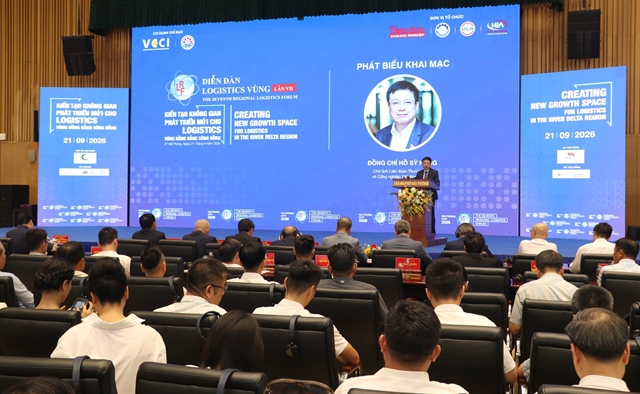
HÀ NỘI — Việt Nam needs to improve logistics infrastructure, strengthen links between transport modes and shift away from fragmented, administrative planning to unlock the sector's potential, Deputy Prime Minister Hồ Quốc Dũng said on Monday.
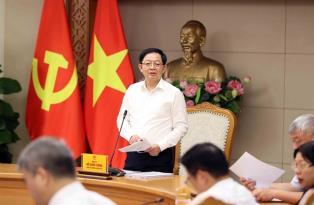
Speaking at the 7th Regional Logistics Forum in Hải Phòng, Deputy PM Dũng said logistics should be viewed not simply as a support service but as a key component of national economic infrastructure that directly affects the competitiveness of goods, businesses and the economy.
"Logistics has no administrative boundaries," the Deputy PM said, calling on provinces and cities to develop the sector around economic regions, economic corridors and supply chains rather than within separate administrative boundaries.
Việt Nam's logistics services have grown by an average 14-16 per cent annually and contribute about 4.5-5 per cent of gross domestic product with more than 34,000 businesses are involving in the sector. But logistics still faces bottlenecks, including heavy reliance on road transport, limited capacity in other modes and weak connections between transport networks, production areas, warehouses and seaports, pushing up the cost.
Under Việt Nam's logistics development strategy for 2025-35, with a vision to 2050, the country aims to maintain average annual logistics growth of 12-15 per cent and gradually cut logistics costs to around 12-15 per cent of GDP.
The strategy also calls for stronger digital and green transformation and the development of modern logistics centres capable of connecting with regional and international markets.
The Deputy PM called for the strategy to be implemented with clear priorities and measurable results, while ensuring logistics infrastructure is developed in line with national, regional and local transport plans. Road, rail, maritime, inland waterway and air transport should be better integrated with ports, production centres and logistics facilities, he said.
He also urged regulations on logistics, multimodal transport, maritime and inland waterway transport, customs, trade, e-commerce and investment to be reviewed to remove overlapping or inconsistencies.
Seaports should become the centre of a modern, green and smart logistics ecosystem, Deputy PM Dũng said, highlighting gateway ports including Lạch Huyện and Nam Đồ Sơn in the north, Đà Nẵng, Vân Phong and Quy Nhơn in central region, and Cát Lái, Cái Mép-Thị Vải and Hòn Khoai in the south.
"Geographical advantages only become competitive advantages when they are transformed into infrastructure, services and connectivity," he said.
In addition, Việt Nam should attract major shipping lines, international port operators, regional distribution centres, global logistics companies and technology investors to establish long-term operations in the country, he added.
He stressed that the government would continue improving institutions, developing infrastructure and strengthening the investment and business environment to facilitate long-term and sustainable investment in the logistics industry.
Red River Delta
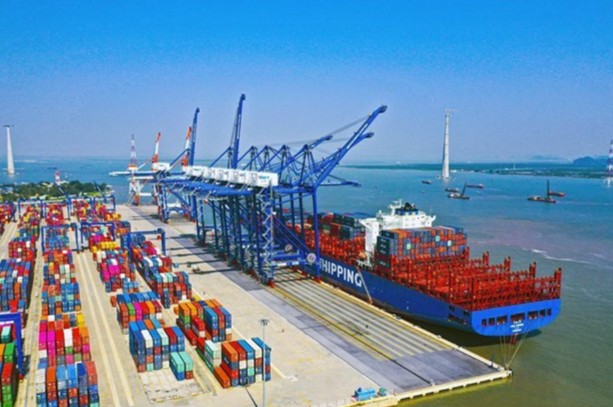
The Red River Delta has significant potential to become a logistics hub because of its position as a gateway connecting northern Việt Nam with the rest of the country and international markets.
Deputy PM Dũng called for better production planning and coordinated development of transport, urban and logistics infrastructure to build an integrated regional network.
Local authorities should strengthen cooperation along major economic corridors, including the North-South corridor, the Lào Cai-Hà Nội-Hải Phòng-Quảng Ninh border trade corridor and the coastal belt linking Ninh Bình, Nam Định, Thái Bình, Hải Phòng and Quảng Ninh.
Hải Phòng should take a leading role in developing an integrated model linking seaports, logistics, industry, trade and urban development, particularly around the Lạch Huyện and Nam Đồ Sơn port areas. The model should be connected with the Đình Vũ-Cát Hải Economic Zone and the city's free trade zone.
Hải Phòng's logistics sector grew by more than 10 per cent annually on average during 2021-25 and contributed about 13.5 per cent of the city's gross regional domestic product, according to Hải Phòng Party Committee Secretary Lê Ngọc Châu.
By 2030, the city plans to have 73 seaports with a combined length of more than 23 km together with more than 300 inland ports and terminals.
The Lạch Huyện port complex is being expanded and is expected to remain a major deep-water port in northern Việt Nam and an international gateway for the region.
Hải Phòng is also developing logistics databases, digital applications and e-commerce while improving connections between transport modes. Strategic infrastructure projects include the Lạch Huyện and Nam Đồ Sơn ports, expansion of Cát Bi International Airport, the Lào Cai-Hà Nội-Hải Phòng railway and coastal and inter-regional highways.
Vietnam Chamber of Commerce and Industry (VCCI)'s Chairman Hồ Sỹ Hùng said Việt Nam's logistics market was worth about US$40-42 billion, equivalent to roughly 10 per cent of GDP, with average annual growth of 14-15 per cent, about twice the global average.
The expansion of trade and free trade agreements are creating opportunities for logistics businesses to expand internationally, attract investment and develop human resources to international standards, he said. — VNS